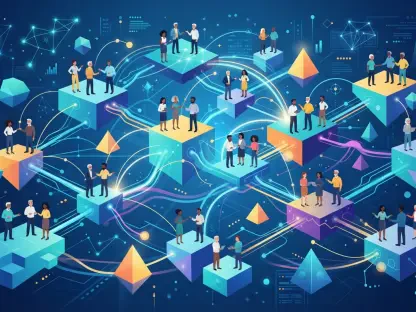

The fragmentation of labor in professional services and retail often stems from employees having to manually reconcile data across various software platforms. This invisible friction, often referred to as the “Pro Shop Moment,” occurs when a staff member must bridge the gap between disconnected digital systems through sheer memory and manual workarounds to fulfill a standard customer request. Whether at a boutique hotel reception or a high-stakes law firm, these hidden inefficiencies drain productivity and create bottlenecks where information frequently gets stuck. Business technology veteran Clive Mayhew, drawing on leadership experience at Netscape Australasia and GOLF.AI, argues that the solution lies not in adopting more general software, but in pivoting toward vertical artificial intelligence. This specialized approach prioritizes the unique rules and workflows of a particular niche. By mapping these problems before selecting tools, leaders ensured that automation served a defined purpose rather than just adding complexity.
Designing for Specificity: Moving Beyond General Intelligence
The shift from horizontal to vertical AI represents a fundamental change in how modern organizations approach digital transformation initiatives. General-purpose AI tools often lack the nuanced understanding required to navigate complex industry regulations or specialized technical requirements. Instead of purchasing broad, standalone platforms that attempt to be everything to everyone, successful leaders began focusing on applications tailored to their specific market segment. This strategy involved integrating technology that speaks the language of the business, whether that meant understanding the mechanics of a golf swing for a sports application or the intricacies of property law for a legal firm. By embedding industry logic directly into the software, companies reduced the need for extensive human intervention during routine processing tasks. This targeted deployment allowed the technology to manage information categorization while preserving human judgment for high-level decision-making.
Identifying these specific “Pro Shop Moments” required a deep dive into the actual daily activities of the workforce, rather than relying on abstract management theories. Many organizations discovered that their employees were spending up to thirty percent of their time acting as human glue between software applications that did not communicate with each other. This realization prompted a move toward a more integrated architectural model where AI agents functioned as seamless connectors. By focusing on these routine workflows, businesses could transform hidden manual efforts into transparent, data-driven outcomes. The primary goal was to ensure that every customer inquiry had a clear, automated path from initiation to resolution. When the workflow was properly mapped, the AI could predict the next necessary step based on historical data and specific industry rules. This transition not only boosted efficiency but also improved morale by removing the repetitive, mind-numbing tasks that lead to burnout.
Execution Strategies: The Forward Deployed Engineer Framework
To navigate this transition effectively, many firms adopted a structured methodology known as the Forward Deployed Engineer (FDE) playbook. This practical framework encouraged a hands-on approach where leaders personally conducted a “Front Door Audit” to observe exactly where and how customer requests entered the organizational ecosystem. Instead of treating AI as a distant IT project, this model placed technical strategy directly in the hands of operational managers who understood the nuances of the business. By tracking a single, live workflow from start to finish, teams could identify the specific data requirements and human oversight points necessary for a successful automation. This meticulous focus on the journey of a request ensured that the resulting AI solution was grounded in reality rather than theoretical potential. Leaders who embraced this methodology found that they did not need to become technologists themselves; instead, they needed to be experts in the movement of work through their departments.
Despite the clear benefits of vertical integration, recent industry research from organizations like MYOB highlighted that many mid-market leaders still faced significant hurdles regarding skills shortages and legacy system compatibility. While the appetite for productivity gains remained high, the gap between desire and implementation often stemmed from a lack of internal expertise in managing sophisticated AI deployments. To overcome these obstacles, businesses began prioritizing the upskilling of existing staff to act as supervisors for AI-driven processes. This evolution shifted the employee’s role from a manual data entry specialist to a strategic overseer who monitored the AI for accuracy and handled complex edge cases. Furthermore, addressing integration issues meant moving away from isolated data silos and toward a more unified data environment. By resolving these structural barriers, companies positioned themselves to fully capitalize on specialized AI, ensuring the technology acted as a force multiplier for human talent.
Strategic Evolution: Turning Operational Insights into Action
The successful adoption of vertical AI required a departure from traditional software procurement cycles toward a more iterative and niche-focused strategy. Organizations that prioritized the mapping of their unique workflows before investing in large-scale infrastructure achieved far greater returns on their technology investments. They moved beyond the initial hype of generative tools to build robust systems that internalized their specific industry expertise and operational rules. By conducting thorough audits of their front-end processes, these leaders identified the exact points where human intervention was truly valuable versus where it was merely a symptom of broken systems. They implemented clear protocols for data governance and established specialized roles to bridge the gap between technical potential and daily business needs. This proactive stance allowed firms to cultivate a culture of continuous improvement where AI tools evolved alongside the changing demands of the modern market.
Looking ahead toward 2027 and 2028, the most resilient businesses focused on refining their vertical AI stacks to anticipate customer needs before they were even articulated. They moved from reactive troubleshooting to predictive service models by leveraging the deep industry data captured within their specialized frameworks. Strategic leaders initiated ongoing reviews of their operational bottlenecks, ensuring that every technological update served to further streamline the path of a customer request. By maintaining a focus on industry-specific logic, these companies avoided the pitfalls of generic automation and instead created a competitive advantage rooted in operational excellence. The transition to vertical AI proved to be a fundamental reimagining of how professional services and retail sectors functioned at their core. Ultimately, the integration of these specialized tools provided a clear roadmap for any organization looking to turn manual labor into streamlined, transparent success while empowering their human workforce.