
Organizations often find themselves trapped in a cycle where sophisticated sensor networks and cloud architectures perform flawlessly in controlled tests but fail to generate a single dollar of measurable profit during real-world deployments. This phenomenon, frequently described as “pilot purgatory,” serves as a stark reminder that technical excellence does not inherently translate into commercial success. While engineering teams focus on low-latency connectivity and battery longevity, the actual barriers to scalability often involve human resistance, misaligned incentives, and a lack of integration with existing operational workflows. When a project stays in a state of perpetual experimentation, stakeholders eventually lose interest, leading to the quiet decommissioning of what could have been a transformative asset. To escape this trap, leaders must shift their focus from the “how” of the technology to the “why” of the business value, ensuring that every connected device serves a specific, validated purpose that justifies the substantial investment required for a global rollout.
Readiness Metrics: Identifying the Critical Dimensions
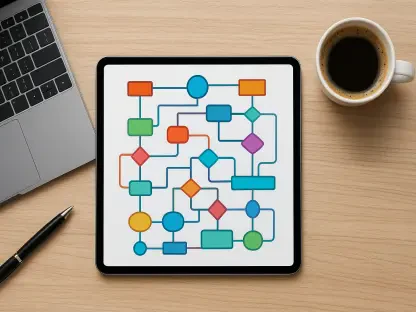
Navigating the complexities of a large-scale deployment requires a multi-dimensional analysis of how a connected solution interacts with the existing corporate ecosystem. The current industry standard for this evaluation is the “readiness diamond,” a framework that maps the tension between technology, market demand, business viability, and organizational sustainability. Without a balanced approach, a project might excel in one area—such as having a cutting-edge sensor array—while failing catastrophically in another, such as failing to provide a clear financial return. Many initiatives collapse because they address a technical curiosity rather than a systemic business problem, leading to a lack of executive support when the initial pilot funding runs out. By evaluating these four dimensions simultaneously, companies can identify potential failure points early in the development cycle, allowing them to pivot their strategy before significant resources are wasted on a solution that the market does not actually need or want.
Balancing Technical Impact with Market Value
A primary cause of friction in the Internet of Things space is the disconnect between the “buyer” who authorizes the purchase and the “user” who interacts with the device on a daily basis. While a manager might be enthusiastic about the high-resolution data streams provided by a new monitoring system, the field technicians may find the hardware cumbersome or disruptive to their established routines. If a connected tool adds complexity to a worker’s day without providing an immediate, tangible benefit, adoption rates will plummet, and the resulting data will be inconsistent or low-quality. To mitigate this risk, development teams must engage in deep ethnographic research to understand the daily lives of the end-users. This ensures that the technology is viewed as an asset that simplifies tasks—such as automating manual inspections—rather than a surveillance tool or an additional administrative burden. Success depends on the user perceiving the value of the system as clearly as the executive leadership does.
Analyzing Business and Organizational Sustainability
Financial viability is often the most significant hurdle when transitioning from a small-scale demonstration to a full-scale industrial rollout. The “status quo” is a powerful competitor, and unless a connected solution can demonstrate a vastly superior return on investment compared to existing manual processes, it will likely be rejected by budget committees. Beyond the initial acquisition cost of the hardware, organizations must account for the long-term operational expenses associated with managing thousands of connected endpoints, including data storage, security patches, and connectivity fees. Furthermore, organizational readiness implies that the company has the internal infrastructure and cross-functional teams necessary to support the product for its entire lifecycle. This requires a shift in corporate culture where Information Technology and Operational Technology departments work in close coordination. Without this alignment, the project risks becoming a siloed experiment that cannot scale or adapt to the evolving needs of the enterprise.
Beyond Prototyping: Validating the Business Case
Moving past the pilot phase requires a fundamental shift from conducting a Proof of Concept to establishing a Proof of Viability. While a typical technical test demonstrates that data can flow from a sensor to a cloud dashboard, it does not prove that the data creates enough value to justify the cost of the system. A Proof of Viability, in contrast, tests the financial and operational hypotheses that underpin the entire project, asking whether the solution can survive in a competitive commercial environment. This involves setting rigorous key performance indicators that are tied directly to business outcomes, such as a reduction in asset downtime or an improvement in resource allocation. By focusing on viability early, companies can separate high-potential projects from those that are merely technologically interesting. This disciplined approach ensures that the organization only commits to a massive scale-up when there is a clear, evidence-based path to profitability that has been validated through real-world application.
Shifting from Proof of Concept to Proof of Viability
Establishing viability requires rigorous field research to document the “value chain” and confirm that the technology delivers a measurable improvement in efficiency. This process involves tracking how data moves through the organization and ensuring that it reaches the right decision-makers at the right time to trigger a productive action. For example, a vibration sensor on a motor is only valuable if the alert it generates leads to a maintenance intervention that prevents a catastrophic failure. If the alert is ignored or buried in a sea of other notifications, the technology has failed to deliver its intended value. Validating this chain of events requires close observation of how human operators interact with the system alerts and identifying any bottlenecks that prevent the data from being actionable. Without this level of granular validation, a company is essentially gambling on technology through blind faith, hoping that the mere presence of sensors will somehow lead to improved operational performance and financial gains.
Integrating AI and Establishing Operational Reliability
Modern technological advancements have provided new ways to bridge the gap between initial experimentation and full-scale commercialization, particularly through the use of Artificial Intelligence. AI has emerged as a particularly potent tool during the validation phase, helping teams to analyze complex data sets and extract meaningful insights from thousands of hours of user interaction and sensor logs. By using AI to identify patterns and anomalies, organizations can refine their business cases and improve the accuracy of their predictive models before deploying them across a global fleet. However, the introduction of AI also necessitates a focus on operational reliability and security, as these systems become central to the business’s core functions. Trust is earned through performance, transparent data handling, and a commitment to long-term support. A project that cannot be trusted to operate reliably will never achieve the scale required to be truly transformative for the entire organization.
Final Considerations: Strategic Integration for Sustainable Growth
Industry leaders discovered that the transition from a pilot to a commercial product required a fundamental reorganization of how technology and business goals were aligned. It was found that by prioritizing human-centric design and rigorous financial validation, companies were able to bypass the typical obstacles that stalled previous initiatives. The most successful implementations were those where the operational teams took ownership of the project from the very beginning, ensuring that the technology solved real-world problems. Furthermore, the use of AI as a research partner allowed for faster iteration and more accurate forecasting of the project’s long-term impact. By moving away from isolated experiments and toward integrated, value-driven strategies, the industry established a new standard for how connected technologies should be developed and deployed. This disciplined approach eventually transformed the perception of the Internet of Things from an experimental novelty into a critical component of industrial strategy, providing a clear roadmap for others to follow.