
Imagine a world where the vast, unpredictable expanse of the ocean becomes a safer, more manageable domain through the power of technology—a world where ships, ports, and marine facilities are seamlessly connected to prevent accidents and protect the environment. The Electronics and Telecommunications Research Institute (ETRI) of South Korea has turned this vision into reality with the successful testing of the world’s first real-world Maritime Internet of Things (MIoT) communication network. This groundbreaking system employs sensors and devices to gather critical marine data, focusing on real-time safety management and environmental monitoring. By proving its effectiveness in challenging ocean settings, such as the West and South Seas of Korea, ETRI’s innovation is poised to redefine maritime operations. This achievement goes beyond a mere technical feat; it lays the foundation for new industries driven by maritime data and strengthens national safety infrastructure, promising a transformative impact on how the maritime world navigates its future.
Breaking New Ground in Maritime Connectivity
The MIoT network developed by ETRI represents a significant leap forward in maritime communication technology, leveraging the 450MHz band, a dedicated public frequency secured by South Korea’s Ministry of Oceans and Fisheries. This independent system integrates base stations, terminals, core networks, and application services to ensure robust data transmission across harsh marine environments. During extensive testing, the network demonstrated its capability by achieving communication over distances of up to 35 kilometers, a remarkable feat considering the obstacles posed by open water. Furthermore, it supported the simultaneous connection of 30 devices, indicating its potential for scalability and broader implementation. This technological breakthrough, rooted in international standards set by the 3rd Generation Partnership Project (3GPP), marks a pivotal moment in adapting IoT solutions to the unique demands of the sea, setting a precedent for future advancements in maritime safety and operational efficiency.
Beyond its technical prowess, the MIoT network’s development underscores a strategic vision for enhancing maritime infrastructure on a global scale. The ability to transmit data reliably over long distances in real-world ocean conditions addresses a critical gap in existing communication systems, which often struggle with the isolation and unpredictability of marine settings. This system’s design prioritizes resilience, ensuring that vital information can be shared without interruption, even in remote areas far from land-based support. Such reliability is essential for applications ranging from emergency response to routine monitoring of marine assets. As a result, ETRI’s innovation not only showcases cutting-edge technology but also establishes a framework for safer navigation and smarter management of maritime resources, with implications that could ripple across international waters and influence global standards for ocean connectivity.
Proving Effectiveness Through Real-World Trials
The practical deployment of the MIoT network involved meticulous planning and strategic placement of equipment in key maritime locations. Base stations were established at prominent lighthouses such as Odongdo in Yeosu and Maldo in Gunsan, with terminals positioned at various ports and test sites across the region. These setups enabled the seamless exchange of real-time data, including GPS coordinates, battery status, and other critical metrics, transmitted at consistent intervals. The network’s performance was impressive, maintaining connectivity over distances of up to 35 kilometers between base stations and remote terminals, demonstrating its suitability for vast ocean expanses. This successful testing phase highlights the system’s readiness to handle the complexities of maritime environments, offering a reliable solution for data collection and communication where traditional systems often fall short.
Equally noteworthy is the MIoT network’s capacity to manage multiple connections simultaneously, a feature that sets it apart as a scalable solution for maritime needs. During trials, the system supported 30 devices at once across navigational aid sites, with commercial test equipment suggesting the potential to expand to as many as 1,000 concurrent connections. This scalability is crucial for widespread adoption, as it ensures the network can accommodate the growing number of connected devices in modern maritime operations, from small boats to large-scale infrastructure. The ability to handle such a volume of data without compromising performance positions this technology as a cornerstone for future maritime safety initiatives, capable of adapting to increasing demands and evolving challenges in ocean management.
Designing for the Unique Demands of the Sea
Unlike terrestrial Narrow Band Internet of Things (NB-IoT) systems, ETRI’s MIoT network is meticulously engineered to address the distinct challenges of the marine environment, marking a significant departure from conventional approaches. It incorporates low-power transmission and reception technology tailored for ocean conditions, ensuring efficiency even in remote and resource-scarce settings. Additionally, the system prioritizes safety-critical messages, allowing for swift and reliable communication during emergencies, a feature that differentiates it from other maritime networks like LTE-Maritime, which focus on high-volume data transfer. This specialized design makes the MIoT network a complementary asset, enhancing overall connectivity by filling gaps left by existing systems and providing a robust framework for maritime data exchange.
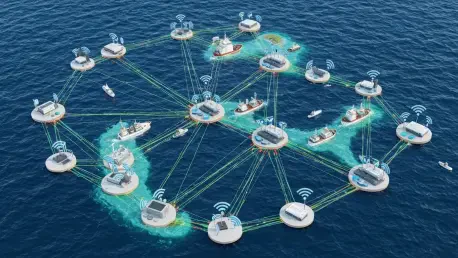
The tailored functionality of the MIoT network also enables the creation of a dense communication web across vast sea areas, mirroring the connectivity seen in land-based systems. By focusing on low-cost, low-power devices, it ensures accessibility and sustainability, making it feasible for widespread deployment in diverse maritime contexts. This approach not only boosts operational efficiency but also strengthens safety measures by ensuring that critical information reaches the right parties without delay. The emphasis on adapting to ocean-specific challenges reflects a deep understanding of the maritime domain’s needs, positioning ETRI’s innovation as a pivotal tool for transforming how marine environments are monitored and managed, ultimately reducing risks and enhancing preparedness for unforeseen events.
Broad Applications for Safety and Sustainability
The potential applications of the MIoT network extend far beyond basic communication, offering transformative benefits for maritime safety and environmental stewardship. By facilitating real-time tracking of small boats, life jackets, and other floating objects, the system significantly enhances public safety, enabling faster and more effective emergency responses. It also supports the efficient management of navigational aids, fishing gear, and aquaculture facilities, streamlining operations for stakeholders across the maritime sector. Such capabilities reduce operational risks and improve resource allocation, ensuring that maritime activities are conducted with greater precision and security, thereby safeguarding both human lives and valuable assets in unpredictable ocean conditions.
Equally important is the network’s role in environmental monitoring and climate crisis response, as it enables the collection of comprehensive marine data on weather patterns, ecological changes, and pollution levels. This information can be shared with public institutions for research and policy development, fostering informed decision-making to address pressing environmental challenges. The ability to provide real-time insights into ocean conditions empowers authorities to devise strategies that mitigate the impact of climate change on marine ecosystems. By integrating safety enhancements with sustainability goals, the MIoT network offers a dual benefit, reinforcing maritime infrastructure while contributing to broader societal objectives of environmental protection and resilience against global challenges.
Shaping the Future of Maritime Innovation
Looking ahead, plans to expand the MIoT network across the East, West, and South Seas of Korea starting in 2026 signal a commitment to scaling this technology for nationwide coverage by the decade’s end. This phased approach will allow for continuous refinement, ensuring the system meets evolving maritime demands while validating its effectiveness on a larger scale. Alignment with national strategies for navigational aids and marine information systems further underscores the network’s role in modernizing South Korea’s maritime framework. Such forward-thinking initiatives position the country as a potential leader in global maritime digital transformation, setting an example for how targeted innovation can address complex challenges in specialized fields.
On an international level, the success of ETRI’s MIoT network holds promise for influencing global standards and fostering collaboration. Contributions to standardization efforts by bodies like the International Organization for Marine Aids to Navigation could pave the way for widespread adoption of similar technologies worldwide. The potential establishment of cooperative centers for navigational aids in Korea and the export of maritime IoT solutions highlight the economic and diplomatic opportunities tied to this advancement. As the technology continues to evolve, its impact will likely extend beyond national borders, encouraging shared progress in maritime safety and environmental management across the globe.
Reflecting on a Milestone for Safer Seas
Reflecting on this groundbreaking achievement, ETRI’s successful verification of the MIoT communication network marked a defining moment in maritime technology. The rigorous testing in the demanding conditions of Korea’s coastal waters proved the system’s reliability and opened new pathways for data-driven safety measures. Its capacity to connect multiple devices over vast distances and adapt to ocean-specific challenges demonstrated a level of innovation that reshaped expectations for maritime communication. As a result, this milestone laid a robust groundwork for enhancing national safety infrastructure and responding to environmental concerns with unprecedented precision. Moving forward, the focus should shift to accelerating the network’s expansion, refining its capabilities through ongoing trials, and fostering international partnerships to standardize and share this transformative technology, ensuring that the benefits of safer, smarter seas reach far and wide.