
The very architecture designed to offer anonymity in digital transactions is now being championed as the ultimate guarantor of financial integrity, a paradox that reshapes modern finance. As digital assets move from the fringes to the core of the global economy, the question of trust is no longer academic but a fundamental pillar of market stability. This shift demands a new paradigm, one where transparency is not an afterthought but is woven into the fabric of the currency itself, challenging long-held beliefs about how financial systems should operate securely.
Beyond the Hype: Guaranteeing Integrity in the Future of Digital Currency
The technology’s association with anonymity presents a significant paradox when proposed as a foundation for trust. Initially embraced for its pseudonymous nature, blockchain is now being re-evaluated for its capacity to create an unprecedented level of transparency. This duality forces a re-examination of what it means to secure a financial system. The integrity of digital currency hinges not on concealing identities but on making transactions and their histories permanently and publicly verifiable, a concept that is fundamentally altering financial compliance.
This evolving perspective is championed by experts like Clément Santerre, Chief Compliance Officer at Meria, who argues that blockchain’s core characteristics reshape our understanding of money. He views the technology not just as a platform for volatile assets but as a foundational element for future currency systems built on provable trust. Santerre’s work demonstrates that transparency and accountability, once seen as operational burdens, are now strategic assets in building a resilient financial ecosystem. His insights suggest that trust is no longer just about institutional reputation but about verifiable, on-chain data.
The Global Challenge of Navigating Fractured Digital Asset Regulation
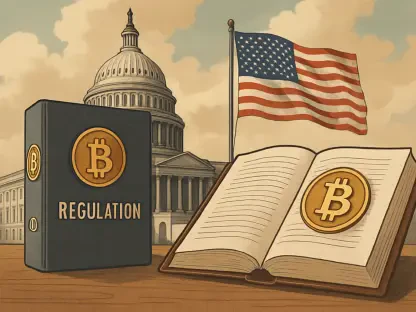
In an era of complex, cross-border financial activity, the need for a new trust model is critical. Traditional regulatory frameworks, often confined by national borders, struggle to keep pace with the decentralized and global nature of digital assets. This discrepancy creates a fractured regulatory landscape where compliance in one jurisdiction does not guarantee acceptance in another. A universally verifiable ledger offers a potential bridge, creating a common ground for trust even where legal standards differ.
To navigate this environment, a proactive, risk-based methodology is essential for aligning with diverse international frameworks. Santerre highlights that Meria’s approach involves meticulous assessments of local regulatory expectations, enabling the firm to tailor its operations accordingly. This strategy moves beyond a one-size-fits-all compliance model, recognizing that effective risk management in the digital asset space requires a nuanced understanding of each market’s unique legal and cultural context.
Successfully operating in the global digital asset space requires bridging significant operational, regulatory, and cultural hurdles. Firms must not only implement robust technological safeguards but also foster a culture of compliance that can adapt to rapid changes. The challenge lies in integrating advanced on-chain monitoring with a deep understanding of geopolitical risk factors, ensuring that the business can grow sustainably without compromising its integrity.
The Anatomy of On-Chain Trust and How Transparency Exposes Illicit Activity
Blockchain’s foundational characteristics build trust through immutable transparency and accountability. Every transaction is recorded on a distributed ledger that cannot be altered or deleted, creating a permanent and auditable history. This inherent transparency acts as a powerful deterrent to illicit activity, as every movement of funds is open to scrutiny. For compliance professionals, the ledger is not just a record of transactions but a source of verifiable truth.
This transparency allows seasoned experts to develop an instinct for identifying red flags that threaten client security. Over time, analysts learn to recognize patterns and behaviors indicative of fraudulent schemes or money laundering. Santerre emphasizes that deep expertise is crucial for interpreting on-chain data correctly, as sophisticated actors continuously develop new methods to obscure their activities. This human element, combined with powerful analytics, transforms a public ledger into a proactive security tool.
Key indicators of illicit finance are often hidden in plain sight on the blockchain. Transactions linked to mixers, services designed to obfuscate the origin of funds, are a primary red flag. Similarly, the use of instant exchanges that bypass standard know-your-customer protocols can signal an attempt to evade compliance. Vigilant monitoring for any association with illicit activities, such as CSAM-related transactions, is critical for maintaining a secure and trustworthy platform.
Insights from the Front Line on Building Verifiable Trust
According to Clément Santerre, his work in compliance has profoundly transformed his view of trust and currency. He no longer sees money as an abstract concept guaranteed by a central authority but as a system whose integrity can be mathematically verified. This perspective, born from hands-on experience, underscores a shift toward a model where trust is earned through evidence rather than reputation alone, a principle he applies to both his professional and personal financial decisions.
A firsthand experience illustrates the power of this approach. Santerre recounted an incident where he prevented a significant fraudulent transfer by analyzing the destination addresses in real-time. The on-chain data revealed a connection to a known illicit entity, allowing his team to intervene before the client’s funds were lost. This anecdote highlights how real-time traceability moves compliance from a reactive, report-based function to a proactive, protective one.
This rapidly evolving landscape demands more than just technical knowledge; it requires deep expertise and adaptability. The ability to make sound, instantaneous decisions based on complex data sets is what separates effective compliance from procedural box-ticking. The constant emergence of new technologies and obfuscation techniques means that continuous learning and adaptation are critical for professionals on the front line of digital finance.
The Modern Compliance Toolkit for a Secure Digital Ecosystem
Leveraging advanced data analytics is essential for enhancing compliance and enabling confident business expansion. Meria’s integration of comprehensive TON blockchain data via Chainalysis, for example, allowed the firm to expand its service offerings. By gaining clear visibility into transaction histories and risk profiles on a new blockchain, the company could manage its exposure effectively while capitalizing on new market opportunities, proving that robust compliance can be a business enabler.
This technological integration forms the basis of a framework for creating a robust, tailored transaction traceability system. Rather than relying on generic risk scores, firms can build nuanced models that reflect their specific risk appetite and customer base. This allows for more accurate identification of suspicious activity and reduces the number of false positives, improving both security and operational efficiency.
For professionals aiming to excel in this field, utilizing powerful tracing tools like Chainalysis Reactor is a practical necessity. These platforms provide the investigative capabilities needed to unravel complex transaction chains and identify bad actors. Furthermore, pursuing industry certifications elevates an investigator’s skills, providing them with the credentials and knowledge to lead compliance efforts and contribute to building a safer digital asset ecosystem.
The journey toward establishing trust in the digital age was not straightforward. It required moving past the initial paradox of a technology built for anonymity and embracing its capacity for radical transparency. By combining the immutable record of the blockchain with sophisticated analytical tools and the discerning judgment of human experts, a new standard for financial integrity was forged. This synthesis of technology and expertise ultimately provided the verifiable trust that the digital economy needed to mature, transforming how security and accountability were understood in modern finance.