
The sudden realization that a simple light switch requires a round-trip journey to a server halfway across the globe has fundamentally changed how modern homeowners perceive their smart technology. For the better part of a decade, the consumer market was dominated by cloud-reliant devices that offered effortless setup at the cost of long-term stability and personal privacy. When a manufacturer decides to discontinue a product line or an internet service provider experiences a regional outage, these sophisticated “smart” homes often regress into expensive collections of unresponsive hardware. This vulnerability has sparked a significant shift toward local control, a design philosophy that prioritizes the internal network over external dependencies. By shifting the intelligence from a remote data center to a local processor, users regain the ability to manage their environments without fear of server-side failures. This movement is not merely a technical preference but a fundamental reclaiming of digital ownership, ensuring that the technology within a home remains functional, private, and entirely under the inhabitant’s authority regardless of external circumstances.
Establishing a Resilient Network and Intelligent Core
Communication Protocols: Beyond the Limits of Wi-Fi
The cornerstone of a resilient smart home lies in how devices communicate with one another without cluttering the standard Wi-Fi bands. Traditional Wi-Fi is often prone to congestion and interference, especially as the number of connected devices grows, leading to latency and dropped connections. Local-first systems mitigate this by utilizing specialized mesh protocols like Zigbee and Z-Wave, which operate independently of the home’s primary data network. Zigbee creates a robust mesh where each mains-powered device acts as a signal repeater, extending the range and reliability of the entire system. Conversely, Z-Wave operates on a much lower, quieter frequency that avoids the common 2.4 GHz interference from microwave ovens and neighboring routers. These protocols ensure that even if the central router loses its connection to the internet, the switches, sensors, and bulbs can continue to communicate with one another across the internal infrastructure without any interruption.
Furthermore, the recent emergence of Matter and Thread represents an industry-wide effort to create a universal language for local device interaction. Thread is a low-power, self-healing mesh protocol that provides the speed of Wi-Fi with the energy efficiency of Zigbee, all while maintaining a local IP-based architecture. Matter sits on top of this, allowing products from historically competing brands to “handshake” directly without the need for a proprietary cloud-based bridge. This shift allows a motion sensor from one manufacturer to trigger a light bulb from another with millisecond latency, bypassing the need for any external server processing. By adopting these standards, homeowners are building a foundation that is both interoperable and immune to the whims of cloud service availability. This technical evolution ensures that the basic functions of a home remain as reliable as traditional wiring, providing a level of responsiveness that cloud-heavy configurations simply cannot achieve in high-density environments.
Open-Source Intelligence: The Power of Local Hubs
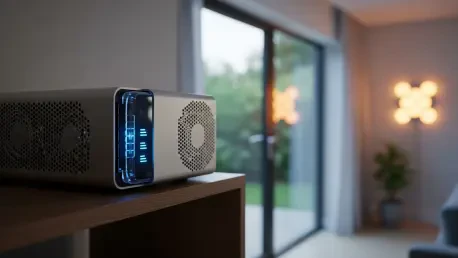
To truly own a smart home, there must be a central “brain” that resides physically within the four walls of the property. Platforms like Home Assistant have become the gold standard for this level of local autonomy, as they are designed to run on modest local hardware such as a Raspberry Pi or dedicated mini-PCs. Unlike proprietary hubs that act as gateways to a company’s cloud, these open-source platforms perform all logic and automation processing on-site. This means that if a user creates a complex automation—such as turning on the hallway lights and lowering the thermostat when a specific door is unlocked—that sequence is executed locally. The absence of a middleman server eliminates the privacy risks associated with sending behavioral data to the cloud and significantly reduces the time it takes for an action to occur. Homeowners gain total transparency into how their data is handled, as the system logs never leave the local storage unless explicitly permitted.
The decentralization of intelligence also protects the home from the inevitable cycle of forced software updates and subscription-based feature gating. When a company manages the “brain” of a home from afar, they can technically remove features or change the user interface overnight, often to encourage a paid service tier. By contrast, a local hub allows the homeowner to choose when and how to update their system, ensuring that a perfectly functional setup remains untouched for years. These hubs also offer the unique ability to bridge different ecosystems into a single, cohesive interface, allowing for a level of customization that is impossible within “walled garden” environments. This approach transforms the smart home from a collection of isolated gadgets into a unified, high-performance machine. The result is an ecosystem that is not only faster and more private but also significantly more durable, as it remains entirely functional even if the original hardware manufacturer ceases to exist.
Enhancing Daily Operations and Security
Reliable Illumination: Lighting Without the Middleman
Lighting is often the most visible and frequently used component of any smart home, making local reliability an absolute necessity for daily comfort. High-end lighting solutions like Lutron Caséta utilize proprietary Clear Connect radio frequencies that are specifically engineered to penetrate walls and avoid interference from other household electronics. Because these systems store schedules and device pairings locally within a bridge or the switches themselves, they respond instantly to a physical press or a programmed scene. Similarly, the Philips Hue system employs a dedicated Zigbee bridge that keeps lighting configurations stored within the local network. This architecture ensures that even during a total internet blackout, a homeowner can still use their voice assistants or mobile apps to control their lights, provided the local Wi-Fi router is still powered. This level of dependability is what separates a truly “smart” home from one that is merely a collection of unreliable internet-connected novelties.
The integration of Matter over Thread is further strengthening this lighting infrastructure by providing a fast, responsive experience that removes the need for brand-specific hubs. When lighting is configured locally, the “popcorn effect”—where lights in a group turn on one by one with a noticeable delay—is virtually eliminated. This is because the command is broadcast directly to the devices over the mesh network rather than being queued in a distant data center. Newer brands are prioritizing this “local-first” hardware to appeal to enthusiasts who demand that their homes remain functional under all conditions. By investing in lighting that does not require a “phone home” check every time a switch is flipped, users avoid the frustration of “device unreachable” errors that plague cloud-based bulbs. This creates a living environment where technology recedes into the background, working with the same invisibility and reliability as the copper wires that provide the power, regardless of the status of the global internet.
Data Sovereignty: Local Video and Safety Response
Security is the most sensitive area of the smart home, where the debate between cloud convenience and local control is most critical. There is a growing movement toward local video storage and on-device artificial intelligence for tasks like person, vehicle, and animal detection. Systems such as Ubiquiti’s UniFi Protect or Reolink cameras allow homeowners to record high-definition footage directly to an on-site network video recorder rather than paying monthly fees for cloud storage. This setup not only saves significant money over several years but also ensures that sensitive video data never leaves the premises, protecting the household from potential server-side data breaches. Because the AI processing happens at the “edge”—meaning on the camera or the local hub itself—the system can identify a package delivery and send a notification almost instantly. This localized processing avoids the lag associated with uploading video clips to a server for analysis, which can be the difference between a timely alert and a missed event.
Beyond surveillance, local control is vital for life-safety systems where every second is crucial during an emergency. Relying on a distant cloud server to process a signal from a leak sensor or a smoke detector can lead to dangerous delays, particularly if the internet connection is unstable during a storm. Local control enables immediate, hard-wired-style responses; for example, a Z-Wave water valve can be paired directly to a leak sensor via a “direct association.” This configuration allows the sensor to tell the valve to shut off the main water line the moment a drip is detected, even if the central hub is offline or the router has lost power. This “guard dog” approach ensures that critical safety decisions are made instantaneously at the source of the problem. By keeping these safety-critical automations local, homeowners gain a level of peace of mind that a cloud-reliant system can never provide. The home becomes a self-protecting entity that does not need permission from an external server to keep its inhabitants and property safe.
The Path to Permanent Home Ownership
Breaking Free: Escaping the Digital Ghost
The smart home community has become increasingly wary of the “digital ghost” phenomenon, where functional hardware becomes useless after a company shuts down its servers. History is filled with examples of popular smart home brands that were acquired or went bankrupt, leaving their customers with “bricked” devices that could no longer connect to the required cloud infrastructure. This risk has shifted consumer preference toward local-first hardware that respects the user’s long-term ownership of the product. The industry has responded by moving toward open standards like the Real-Time Streaming Protocol for video and Matter for device communication, which act as universal translators. These standards ensure that different brands can “handshake” directly, creating a cohesive environment that is no longer shackled to a specific vendor’s proprietary cloud platform. This shift is essential for the longevity of the smart home, as it guarantees that the hardware will remain controllable as long as the user has a local hub to manage it.
By choosing devices that support local APIs or open-source firmware like ESPHome, homeowners can effectively future-proof their investments against corporate volatility. These technologies allow a device to be repurposed or integrated into new systems long after the original manufacturer has stopped providing updates. This philosophy treats smart home gadgets as permanent fixtures of the house, similar to a furnace or a water heater, rather than disposable consumer electronics with a three-year lifespan. This movement toward local control has fostered a more sustainable secondary market as well, where used smart devices retain value because they can be easily reset and integrated into any standards-compliant system. Ultimately, breaking free from the cloud means that the homeowner is the sole arbiter of the life of their technology. This ensures that the time and money invested in automating a home result in a permanent asset that adds value to the property rather than becoming a liability that requires constant maintenance and monthly subscription payments.
Strategic Blueprint: Achieving Total Independence
The transition toward local-first architecture proved to be the most significant shift in residential technology during the mid-2020s. Successful practitioners adopted a three-tiered approach that prioritized infrastructure, intelligence, and data sovereignty to reclaim their digital autonomy. They began by establishing a mesh network using sub-GHz protocols to ensure that device communication remained unaffected by the noise of traditional Wi-Fi. By centralizing the system’s logic within an on-site hub, these homeowners ensured that their complex automations continued to fire with millisecond precision regardless of their internet status. They also implemented local storage solutions for security footage, which eliminated recurring subscription costs and kept their most private data within the physical boundaries of their homes. This strategy effectively insulated their living environments from the instability of the cloud and the unpredictable nature of corporate business models, turning the smart home into a truly permanent and reliable asset.
Homeowners who followed this blueprint discovered that the initial effort of setting up a local system yielded far greater dividends in both privacy and performance. They took steps to select hardware that supported open standards, which allowed them to mix and match the best products from various manufacturers without being locked into a single ecosystem. This level of flexibility meant that as new technologies emerged between 2026 and 2028, they were able to integrate them seamlessly into their existing setups. The shift toward local control was not merely about avoiding outages; it was about establishing a new standard for what it meant to own a modern home. By the time these systems were fully matured, the reliance on external servers was viewed as a legacy flaw rather than a modern convenience. Ultimately, those who prioritized local control created environments that were more secure, more responsive, and entirely their own, setting a precedent for the future of residential automation and digital sovereignty.