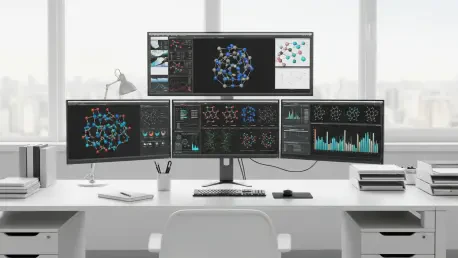

The traditional pharmaceutical laboratory is undergoing a radical metamorphosis as the era of biological trial-and-error is replaced by the calculated precision of high-performance computing. For decades, the quest for life-saving treatments has been defined by a grueling failure rate where nearly 90% of drug candidates vanish during clinical trials. This systemic inefficiency costs billions of dollars and, more importantly, years of lost time for patients awaiting cures. NVIDIA is now addressing this fundamental bottleneck by introducing Proteina-Complexa, an artificial intelligence model designed to treat the building blocks of life with the same architectural rigor as software code.
The End of Molecular Trial-and-Error
This shift represents more than a simple improvement in speed; it is a total departure from the “brute force” methods that have dominated medicine for a century. Traditionally, scientists screened millions of existing compounds in hopes of finding a match, a process that mirrors looking for a needle in an infinite haystack. Proteina-Complexa flips this script by moving drug design into a virtual environment where molecules are engineered from scratch to meet specific biological needs. By digitizing the earliest stages of research, the industry is moving toward a future where “discovery” is replaced by intentional “design.”
Furthermore, the model addresses the fragmented nature of conventional workflows that once required separate, disconnected cycles of modeling and laboratory testing. By unifying these stages, the AI allows researchers to bypass the manual labor that often stalls progress for years. This evolution is particularly critical as global healthcare demands for oncology and immunology treatments grow more complex, requiring solutions that natural compounds simply cannot provide. The focus has moved from what nature offers to what human ingenuity can build in a digital space.
From Silicon to Cells: Why Computational Biology Is the New Frontier
NVIDIA is leveraging its undisputed dominance in accelerated computing to redefine the boundaries of human health. As the limits of physical screening are reached, the necessity for a virtual sandbox where millions of simulations can run simultaneously has become clear. This strategic pivot ensures that the next generation of therapies will be born in silicon before they ever touch a petri dish. By treating biology as an information science, the model enables a level of predictability that was previously unimaginable in the volatile world of organic chemistry.
The demand for targeted therapies is no longer a niche requirement but a global necessity. To meet this, the industry must transition away from generalized medicine toward hyper-specific molecular engineering. NVIDIA recognizes that the real-world application of this technology depends on the ability to handle massive datasets with extreme speed. Consequently, the intersection of specialized hardware and biological software is becoming the new standard for how modern medicine is conceptualized and executed.
The Co-Design Architecture: Reimagining Protein Engineering
The technical brilliance of Proteina-Complexa lies in its unique “co-design” framework, which synchronizes the development of a protein’s 3D structure with its underlying amino acid sequence. Unlike older models that attempted to solve these problems in isolation, this integrated approach ensures that the resulting proteins are physically viable from the moment of their digital creation. This eliminates the need for tedious manual refinement, allowing for the generation of high-affinity binders with unprecedented efficiency.
- Targeting the Untargetable: The model has successfully designed binders for carbohydrates on red blood cells, a feat previously dismissed as impossible due to the complex polarity of sugar molecules.
- High-Affinity Precision: In rigorous testing across 133 distinct targets, the AI produced binders reaching nano- and picomolar affinities, satisfying the strict potency requirements for human therapeutics.
- Strategic Open-Sourcing: By making the code and datasets public, NVIDIA has fostered a research ecosystem that naturally gravitates toward its A100 and #00 GPU infrastructure.
Validating the Digital Blueprint: Industry and Academic Partnerships
The transition from a digital blueprint to a physical cure requires more than just high-speed math; it demands empirical proof. To provide this, NVIDIA has partnered with elite institutions and pharmaceutical giants to bridge the gap between algorithmic prediction and biological reality. For instance, the University of Cambridge has provided the experimental rigor necessary to confirm that these AI-designed proteins behave exactly as predicted when introduced to living cells. This validation transforms the model from a theoretical curiosity into a trusted clinical tool.
On the commercial front, companies like Novo Nordisk and Manifold Bio are already integrating this technology into their development pipelines. This adoption by industry leaders signals a broader consensus that AI-first drug discovery is the most viable path forward for modern biotech. Beyond the realm of human medicine, experts are observing that the ability to design custom enzymes will likely revolutionize industrial biocatalysis. This could lead to new methods for environmental remediation, such as creating enzymes that break down plastic pollutants or manufacture materials with a much smaller carbon footprint.
Implementing Proteina-Complexa in Modern Biotech Workflows
Adopting this technology requires a significant shift in both organizational infrastructure and research philosophy. Successful implementation depends on a tight synergy between massive computational power and traditional biological expertise. Organizations must invest in high-end GPU clusters capable of processing the 3D folding simulations that make the model so effective. Without the underlying hardware, the sophisticated algorithms cannot reach the scale necessary to disrupt existing development timelines.
Moreover, the most successful applications of Proteina-Complexa have occurred where cross-disciplinary teams work in tandem. When bioinformaticians and bench scientists collaborate, they can rapidly iterate on AI-generated leads, validating them in the lab and feeding that data back into the model for refinement. This iterative loop allows for the fine-tuning of research toward specific therapeutic areas, such as rare genetic disorders or complex neurology. As the model evolved, it became clear that the future of biotechnology resided in the hands of those who could effectively merge the digital and physical worlds. The focus shifted toward building specialized teams that viewed computational power as a primary instrument of discovery, ensuring that the next decade of medical breakthroughs was built on a foundation of data-driven certainty.