
The rapid transformation of industrial automation has reached a critical inflection point where the digital and physical realms are no longer distinct entities but a unified, programmable reality. As organizations scramble to deploy sophisticated physical artificial intelligence, the demand for simulation tools that fit into existing developer pipelines—rather than forcing a total architectural overhaul—has never been higher. NVIDIA’s latest strategic pivot addresses this friction by dismantling its flagship Omniverse platform into distinct, high-performance libraries. This shift signals the end of the era where developers had to adopt a monolithic container to access world-class rendering and physics, ushering in a more agile, modular methodology for the next generation of autonomous systems.
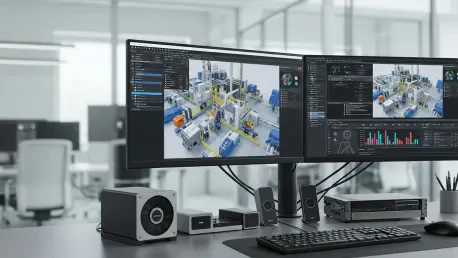
This move toward a “headless-first” strategy marks a significant departure from the traditional, platform-centric model. For years, the Omniverse ecosystem functioned as a comprehensive, UI-rich environment that required users to work within its specific framework. However, as industrial needs evolved, many developers found the weight of a full user interface stack to be a hindrance rather than a benefit, especially when running simulations on remote clusters or within automated testing loops. By decoupling the core simulation engine from the graphical interface, the company has enabled a more streamlined approach that prioritizes the needs of the software engineer over the traditional 3D artist.
The “Headless” Revolution: Decoupling Simulation from the Monolith
The transition from a monolithic platform to a modular library approach reflects a deep understanding of the modern developer workflow. Instead of being confined to a single environment, engineers can now pull specific functionalities into their own custom applications. This modularity allows for the integration of high-fidelity simulation directly into specialized tools without the overhead of unnecessary graphical components. The result is a more lightweight, efficient system that can be deployed across a wider range of hardware configurations, from local workstations to massive cloud infrastructures.
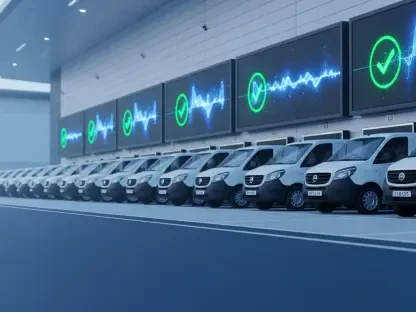
A “headless-first” strategy is particularly transformative for large-scale operations that require high-fidelity simulation without the burden of a display. In these scenarios, the primary goal is often the generation of synthetic data or the training of reinforcement learning models, where a visual output for human observation is secondary to computational speed. By stripping away the UI stack, the new modular libraries reduce memory consumption and increase processing throughput, making it possible to run hundreds of simultaneous simulation instances on a single server cluster.
Bridging the Gap Between Simulation and Reality
The pursuit of seamless simulation-to-reality transitions remains one of the most significant challenges in the field of robotics and physical AI. Friction often occurs when the simulated environment does not perfectly match the constraints and physics of the physical world, leading to a “reality gap” that can cause autonomous systems to fail upon deployment. Traditionally, overcoming this gap required wholesale platform migrations that were both costly and disruptive to established industrial scaling efforts. The new modular approach mitigates these issues by allowing for more granular adjustments and better alignment with real-world sensor data.
Industrial robotics is also seeing a massive shift toward microservices and Kubernetes-native architectures. The ability to treat simulation components as independent services allows for greater flexibility in how complex manufacturing pipelines are built and maintained. Companies can now deploy specific physics or rendering modules as part of a larger containerized ecosystem, ensuring that every part of the development stack is scalable and resilient. This move away from rigid, all-in-one solutions ensures that simulation can be woven into the fabric of the modern factory floor.
The Three Pillars of Modular Omniverse: Redefining the Stack
At the heart of this modular revolution are three core libraries designed to handle the most demanding tasks in physical AI. The first, ovrtx, redefines how rendering and sensor simulation are handled within the development loop. It enables high-fidelity RTX path-tracing with minimal code, allowing developers to generate photorealistic environments for camera and lidar sensors. By utilizing DLPack for zero-copy data exchange, the library integrates seamlessly with PyTorch and NumPy, ensuring that data flows between simulation and machine learning models without the bottleneck of traditional memory transfers.
The second pillar, ovphysx, provides a deterministic physics engine that is essential for the precision required in robotics. By decoupling the PhysX SDK from its UI dependencies, it allows for execution in purely headless environments. This version of the engine introduces asynchronous execution and explicit control over physics stepping, which is a vital requirement for reinforcement learning. Developers can now ensure that every simulated movement is consistent and reproducible, providing a stable foundation for training agents that must perform complex tasks in unpredictable physical settings.
Finally, ovstorage addresses the logistical nightmare of managing industrial data across various platforms. This library connects Product Lifecycle Management systems and cloud backends directly to the simulation workflow, eliminating the need for manual data migration. Whether the data resides in Amazon S3 or Azure, the storage module ensures that the latest CAD models and environmental data are always accessible to the simulation engine. This streamlined data pipeline is crucial for maintaining the “digital twin” of a manufacturing facility, where even minor changes in the physical layout must be reflected in the virtual model immediately.
Industry Validation and the Rise of Autonomous Agents
The effectiveness of this modular approach is already being validated by some of the most prominent names in industrial technology. Early adopters such as ABB Robotics and Siemens are embedding these specialized libraries directly into their existing software suites, enhancing their products without requiring users to switch platforms. ABB, for instance, is using these tools to sharpen the AI training capabilities within its software, while Siemens is integrating them into its digital twin solutions to provide more accurate physical simulations of factory processes.
Internal benchmarks further prove the power of this architecture, as evidenced by the transition of Isaac Lab 3.0 to a modular foundation. This shift has allowed for more rapid iterations and better performance in training autonomous agents. At the intersection of generative AI, the Model Context Protocol is being used to create LLM-driven simulations, where agents can interpret and act upon simulation data autonomously. The NemoClaw infrastructure supports this by providing sandboxed environments where these agents can be tested and refined before they are granted control over physical machinery.
Strategic Implementation: Choosing the Right Integration Path
NVIDIA’s transition toward modularized libraries provided a clear decision framework for developers navigating the complex world of physical AI. While the full Kit framework remained the preferred choice for those building comprehensive, UI-rich applications with extensive OpenUSD support, the modular libraries offered a more surgical way to add capabilities to existing software. This flexibility allowed organizations to choose the integration path that best suited their specific technical needs, whether they were developing a new CAD application or scaling a cloud-based CI/CD pipeline for robotics testing.
The early access phase of these tools prepared the industry for a new era of API stability and production-ready performance that characterized the 2026 releases. By focusing on frameworks for deployment on Linux clusters, the initiative successfully lowered the barrier to high-performance simulation. This strategic unbundling transformed the platform from a closed ecosystem into an open set of building blocks, enabling a more collaborative and innovative landscape for industrial automation. Ultimately, the move toward modularity empowered developers to build smarter, more capable autonomous systems that moved from the digital world to the physical floor with unprecedented speed and accuracy.