
The transition from discrete, local planning to a global portfolio optimization strategy has transformed Saudi Aramco’s downstream operations into a highly efficient, revenue-maximizing engine. As the global energy landscape faces unprecedented volatility in 2026, the necessity for such a paradigm shift has never been clearer. Downstream producers are currently navigating a world where geopolitical shifts and rapid demand fluctuations can render traditional, reactive models obsolete within days. To secure a dominant market position, Saudi Aramco collaborated with advanced technology partners to pioneer a high-fidelity optimization process. This transformation moves beyond the basic logistical management of the past, instead focusing on a comprehensive architectural overhaul. By implementing a sophisticated mathematical framework, the organization has managed to turn a sprawling, complex network of assets into a single, cohesive unit. This approach provides the transparency needed to navigate the complexities of modern energy distribution while ensuring that every operational decision aligns with the broader goal of systemic profitability.
Transitioning to Integrated Portfolio Management
Historically, the refining and distribution sectors were managed through discrete, local planning sessions that relied heavily on manual data aggregation and spreadsheet rebalancing. This fragmented methodology often failed to capture broad systemic synergies, as it focused primarily on meeting forecasted demand within specific geographic zones rather than looking at the big picture. Such silos created inefficiencies where one refinery might struggle with crude costs while another sat with surplus capacity simply because communication between nodes was delayed by manual processing. To overcome these limitations, the Global Optimizer Department established a dedicated Short-Range Operating Plan Team. This team manages a fully integrated model that treats wholly owned refineries, joint ventures, and the massive distribution network as a single, interconnected entity. This foundational change allows for a real-time understanding of how a shift in one asset affects the entire portfolio’s performance.
By viewing the supply chain through this integrated lens, the organization can optimize refining margins and purchase costs across the entire landscape simultaneously. This shift has fundamentally changed the corporate culture from one of asset-specific optimization to one of collective excellence. The ability to look at the total portfolio ensures that resources are allocated where they generate the highest returns, allowing the company to navigate global market movements and domestic requirements with equal precision. Instead of managers competing for local yields, the focus has shifted toward how an individual plant can contribute to the overall health of the downstream segment. This holistic perspective is particularly crucial in 2026, as carbon intensity metrics and varied crude slates require a level of coordination that localized models simply cannot provide. The integration acts as a buffer against market shocks, ensuring that the supply chain remains resilient even when individual components face unexpected downtime or regulatory shifts.
Technical Architecture: Computational Scale and Accuracy
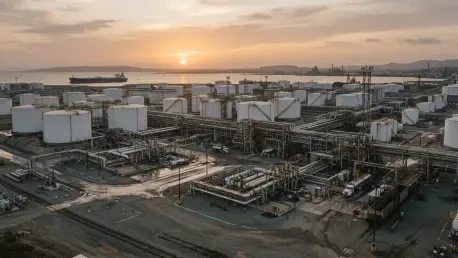
The technical scale of the optimization model reflects the massive complexity inherent in modern energy logistics. Built on a sophisticated production planning platform, the model manages over 85,200 variables and 70,800 equations to simulate various time periods and plant configurations with extreme granularity. This mathematical framework captures every critical component of the downstream infrastructure, including domestic and joint-venture refineries, dozens of bulk plants, air fueling units, and thousands of miles of main pipelines. The sheer volume of data processed allows the system to account for minute details that were previously ignored, such as specific pipeline pressures or the precise blending requirements for specialized aviation fuels. By digitizing the physical constraints of the network, the organization has created a high-fidelity representation of reality. This enables the planning teams to test thousands of scenarios in a virtual environment before a single barrel of oil is moved, drastically reducing the risk of operational errors.
Beyond simple linear calculations, the current methodology incorporates nonlinear equations and artificial intelligence hybrid models to reflect the physical and chemical realities of refining. These advanced models provide a more accurate representation of complex processes, such as reformer behavior and the specific properties of different crude slates, which do not always follow linear patterns. By integrating these high-fidelity simulations through platforms like Aspen Unified PIMS, the system can predict operational outcomes with remarkable accuracy, reducing the gap between theoretical planning and actual refinery yields. The inclusion of AI-driven insights allows the model to learn from historical data patterns, identifying non-obvious correlations that traditional engineering formulas might miss. This technological leap ensures that optimization is not just a mathematical exercise but a practical guide that refinery operators can trust. As the chemistry of available crudes becomes more diverse, having a model that understands the nuances of molecular interaction becomes a critical advantage.
Operational Agility: Navigating Real-World Disruptions
The optimization model functions as a living tool, executed approximately 30 times per month to keep the supply strategy aligned with rapidly changing market dynamics. This high-frequency updating process enables the team to perform vital sensitivity analyses, which are essential for robust risk management in the volatile 2026 landscape. By running these frequent iterations, the organization can identify the tipping points where a small change in crude pricing or a shift in regional demand would necessitate a different logistics strategy. This constant state of readiness allows for a more proactive stance, where the supply chain can pivot before a disruption even occurs. The speed of the computational engine is a key factor; what used to take days of spreadsheet work now happens in minutes, providing leadership with actionable intelligence when it matters most. This agility is the difference between capturing a fleeting market premium and being caught with stranded inventory in an era where market windows open and close with lightning speed.
Furthermore, the system plays a decisive role in scheduling maintenance and inspections across the network. By analyzing various scenarios within a specific planning horizon, operators can coordinate turnarounds in a way that minimizes business disruption and prevents supply gaps. For instance, the model allows the company to develop contingency plans for geopolitical disruptions, such as potential maritime chokepoints, by identifying alternative hauling routes and adjusting port logistics in real time. During periods of heightened regional tension, the model provides a bifurcated view of the world, showing how the supply chain should adapt if specific shipping lanes are restricted versus if they remain open. This capability ensures that the equilibrium between supply and demand is maintained even during planned or unplanned outages, protecting the organization’s commitment to energy security. Such advanced planning moves the company beyond basic survival and into a state of strategic resilience, where challenges are anticipated and mitigated through data.
Driving Innovation: The Role of Digitalization
Recent enhancements to the model underscore a broader commitment to the digitalization of downstream operations through the use of AI-generated submodels. These hybrid models combine traditional engineering principles with machine learning to predict outcomes more effectively than standard equations alone, particularly in high-complexity units like reformers. The implementation of these tools has significantly improved the speed and precision of process simulations, allowing the massive linear programming (LP) model to converge faster without sacrificing detail. This technological synergy is essential for managing the sheer scale of the Saudi Aramco network, where even a half-percent improvement in yield accuracy translates into significant economic gains. By automating the creation of these submodels, the organization ensures that its planning tools stay current with the actual performance of the physical assets. This creates a feedback loop where real-world operational data continuously informs and refines the digital planning environment, narrowing the gap between plan and execution.
Innovation also extends to the dynamism of logistics costs and customer diversion strategies within the digital framework. By continuously updating freight rates, fuel costs, and market trends, the model remains evergreen and reflects the true cost of doing business at any given moment. Additionally, new model structures allow for the local redistribution of demand across various supply nodes, such as bulk plants and air fueling units. This flexibility ensures that products reach their destination via the most economical path, further reducing overhead and increasing the overall efficiency of the value chain. If a particular pipeline reaches capacity, the model automatically identifies the next best hauling route by truck or rail, accounting for the cost differential instantly. This level of granular control over logistics prevents bottlenecks from becoming financial drains. It transforms the supply chain from a rigid set of pipes into a flexible network that can adapt to the market, ensuring that every molecule finds its most profitable home with minimal waste.
Strategic Impact: Delivering Economic Value
The integration of assets into a single optimization framework has delivered significant economic advantages, adding tens of millions of dollars in value to the downstream business annually. These financial gains are primarily derived from identifying synergies between refineries that were previously invisible under a fragmented planning system. For example, the model can determine that a surplus of intermediate product at one facility can be used as a more efficient feedstock at a neighboring joint venture, bypassing the need for expensive external purchases. This ability to balance crudes and products across the entire network maximizes the utilization of every asset. The economic impact is not just theoretical; it is reflected in the bottom line through reduced procurement costs and improved refining margins. By capturing these systemic efficiencies, the organization can maintain its competitive edge even when market margins are compressed. This approach demonstrates that in the modern energy sector, value is found not just in the volume of production but in the intelligence of the distribution.
Beyond immediate financial gains, the model serves as a strategic advisor for long-term capital allocation and bottleneck elimination. By stress-testing the supply chain under various future demand scenarios, the organization can identify which pieces of infrastructure are likely to become constraints. This data-driven approach justifies strategic investments in new pipelines, storage facilities, or refinery upgrades, ensuring that capital is spent where it will have the greatest impact on systemic throughput. The model provides a clear roadmap for future-proofing the downstream portfolio, allowing the company to prepare for the energy transition by modeling the integration of alternative fuels and petrochemical feedstocks. This foresight is a major competitive differentiator, as it allows the organization to move with confidence while others remain hesitant due to market uncertainty. The transition to this level of digital maturity has turned the supply chain into a strategic asset that provides a significant barrier to entry for competitors who lack similar computational capabilities.
Future Considerations: Toward Autonomous Supply Chains
To maintain this trajectory of excellence, the organization focused on the next evolution of supply chain management: the move toward fully autonomous optimization. This involved the creation of digital twins for every major asset, allowing for total visibility and real-time control over the entire value chain. The collaboration between energy giants and technology providers illustrated a necessary trend of combining deep domain expertise with immense computational power. By prioritizing data integrity and a unified portfolio view, the organization successfully created a resilient supply chain that turned potential market challenges into significant opportunities for value creation. Future strategies should prioritize the further integration of real-time sensor data from the field into the planning models to eliminate the last vestiges of latency. Operators recognized that the ultimate goal was a self-healing supply chain that could automatically reroute products and adjust refinery slates in response to live market signals. This proactive stance ensured that the organization remained a global leader in downstream efficiency and profitability.