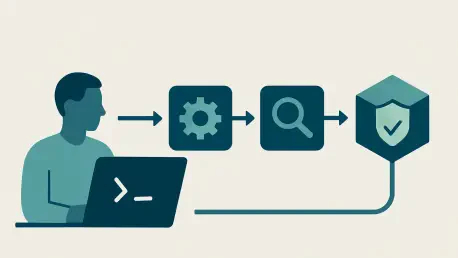

The arrival of a command-line tool designed to transform general AI assistants into specialized blockchain programmers marks a potentially transformative moment for decentralized application development. Algorand’s VibeKit, a new command-line interface (CLI), has entered the ecosystem with the ambitious goal of streamlining the entire smart contract lifecycle. This review evaluates the tool’s effectiveness, seeking to determine if its AI-driven approach truly simplifies the complexities of building on the Algorand blockchain and represents a worthwhile investment for today’s developers.
At its core, VibeKit addresses the persistent challenges of speed, complexity, and security inherent in smart contract creation. By empowering AI agents to handle building, debugging, and deployment through single commands, it promises a significant reduction in manual coding and repetitive tasks. The central question is whether this automation enhances developer productivity without compromising the integrity and safety required for on-chain applications, a balance that has historically been difficult to achieve.
Unpacking VibeKit A Three-Layer Architecture for AI-Powered Coding
VibeKit functions as a sophisticated interpreter, turning general-purpose AI models like Claude Code into expert Algorand developers. It achieves this transformation through a bundled, three-layer architecture that methodically equips the AI with the necessary knowledge and capabilities for blockchain interaction. This design is not merely a wrapper around an API but a structured framework intended to guide the AI’s logic and actions.
The first layer, Agent Skills, provides the AI with a foundational playbook, offering structured instructions for core development tasks such as contract creation, testing, and frontend integration. When these predefined skills prove insufficient, the AI can access the second layer, Documentation MCPs, which allows it to query official Algorand documentation to solve more complex problems. Finally, the Development MCPs layer grants the AI direct, permissioned access to the blockchain, enabling it to manage contracts, assets, and accounts as a human developer would.
Analyzing Core Functionality Security and Development Efficiency
In practice, VibeKit’s performance hinges on its ability to deliver on two critical promises: accelerating development and ensuring uncompromising security. The integration of AI directly into the build and debug cycles demonstrably shortens the time from concept to deployment. Repetitive tasks that once consumed valuable engineering hours can be delegated to the AI, freeing up developers to focus on higher-level architectural decisions and logic.
Crucially, this efficiency does not come at the expense of security, a primary design constraint for the tool. VibeKit introduces an innovative “wallet provider” system that isolates private keys from the AI agent entirely. When a transaction requires a signature, the AI can only request it; the actual cryptographic signing occurs within a sandboxed process managed by an external provider like HashiCorp Vault or the operating system’s native keyring. This strict separation ensures that sensitive credentials are never exposed to the large language model (LLM), mitigating a significant potential attack vector.
The Strengths and Weaknesses of Integrating AI with VibeKit
The primary advantage of VibeKit is its capacity to significantly streamline and accelerate the smart contract development lifecycle. By enabling AI agents to execute complex tasks with single commands and providing them direct access to both on-chain functions and official documentation, it lowers the barrier to entry and boosts productivity. Moreover, its innovative security model for key isolation and its open-source MIT license are commendable features that foster trust and encourage community contribution.
However, the tool is not without its drawbacks. VibeKit does not eliminate the need for meticulous human oversight, as unsupervised AI can introduce subtle architectural flaws or accumulate hidden technical debt. The tool’s overall effectiveness is also fundamentally tied to the capabilities of the underlying AI model, meaning its performance may vary. As an early release, it may contain undiscovered bugs or limitations, and developers must approach its output with a healthy dose of skepticism and a commitment to rigorous code review.
Summary of Findings and Overall Assessment
VibeKit stands as a pioneering tool that successfully integrates artificial intelligence into the Algorand development ecosystem. It offers a tangible boost in efficiency and makes the platform more accessible for rapid prototyping and automation. Its security-first approach to managing private keys is a critical and well-executed feature that sets a high standard for AI-driven development tools in the blockchain space.
Despite its innovations, VibeKit is best understood as a powerful assistant, not a replacement for human expertise. The review finds that while the tool excels at accelerating workflows, the code and architectural patterns it generates require rigorous validation by experienced engineers to prevent long-term risks. The recommendation is positive for developers who understand its role as an augmentation tool and are prepared to maintain strict quality control over its output.
Final Verdict Who Should Use Algorand VibeKit
This review concluded that Algorand VibeKit represented a significant and well-designed step forward for blockchain development tooling. It was highly recommended for experienced Algorand developers seeking to accelerate their workflows and for teams aiming to integrate AI responsibly into their coding practices. The tool proved particularly beneficial for rapid prototyping and automating routine development and deployment tasks, where it saved considerable time and effort.
Ultimately, it was crucial for users to recognize that VibeKit was an augmentation tool, not a substitute for skilled software engineers. Any smart contracts generated or managed with its assistance, especially those intended to handle financial value, demanded a complete and thorough human audit before being deployed to a production environment. For those who respect this critical boundary, VibeKit offered a powerful glimpse into a more efficient future for decentralized development.