
The traditional approach to home monitoring is shifting from static, wall-mounted lenses to a dynamic model of proactive protection through autonomous mobility. This significant transformation, spearheaded by the Amazon-owned security firm Ring, marks the official inception of Ring Robotics. By moving beyond the limitations of fixed-point surveillance, the company has introduced a paradigm where security devices are no longer passive observers but active participants in property management. This strategic shift is epitomized by the release of two flagship products that cater to distinct market segments: the Ring Drone Cam for internal residential oversight and the Ring Rover Cam for commercial environments. This development reflects a broader industrial trend toward integrating high-level artificial intelligence and autonomous robotics into the daily fabric of the smart home ecosystem. It addresses the growing demand for comprehensive coverage that traditional cameras simply cannot provide due to their inherent physical constraints.
The Drone Cam: Innovations in Domestic Aerial Surveillance
The Ring Drone Cam represents a first-of-its-kind solution designed to provide wall-to-wall coverage within a residential structure, including the ability to navigate between different floors seamlessly. At a price point of $250, this device leverages sophisticated artificial intelligence to map and traverse complex indoor environments without requiring any manual piloting from the user. Homeowners have the flexibility to program custom flight routes and schedules or allow the device to act automatically based on triggers from existing Ring sensors. For instance, if a window sensor or a motion detector is activated in a distant part of the house, the drone immediately launches from its charging base to investigate the specific patrol point. This capability offers property owners an immediate visual confirmation of events in real time, transforming a standard alarm notification into a high-definition video dispatch that can be viewed from any smartphone or connected tablet.
Beyond its impressive navigation systems, the drone is equipped with high-fidelity hardware capable of capturing 2K video with a wide 148-degree field of view. Its design allows for a full 360-degree rotation, ensuring that no corner of a room remains unmonitored during an active patrol. To address the challenges of low-light environments, the unit features two integrated LED spotlights that activate automatically when motion is detected or when the drone enters a darkened space. While the primary function is recording evidence, the psychological impact of a flying security device cannot be overlooked. The presence of a lit, mobile object visible through windows serves as a powerful physical deterrent to potential intruders. It signals that the premises are protected by an active, high-tech response system rather than just a silent recording loop. This proactive shift is intended to discourage unauthorized entry before a crime can even be fully committed or completed.
The Rover Cam: Commercial Robotics and Integrated Systems
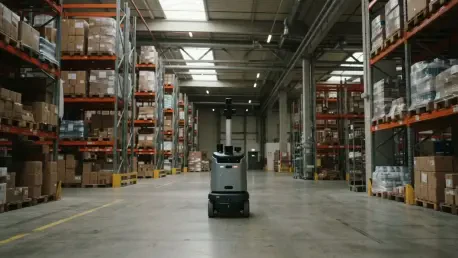
While the drone serves domestic needs, the Ring Rover Cam is a more robust, $1,000 autonomous robot tailored for larger commercial settings such as warehouses and corporate offices. This device functions as the spiritual successor to previous Amazon robotics projects but has been entirely redesigned as a purpose-built security tool. One of its most distinctive features is the height-adjustable periscope camera, which allows the robot to see over counters, desks, and high shelving that would normally block the view of a floor-level unit. The Rover provides 4K resolution streaming and recording, offering unparalleled clarity for business owners who need to monitor inventory or sensitive data areas. In addition to its visual sensors, the robot is equipped with an integrated siren, a light tower, and two-way audio. These features allow security personnel to not only see an intruder but also communicate with them in real time or deploy audible alerts to signal an immediate response.
A vital element of this technological rollout is the seamless integration into the existing Amazon and Ring software ecosystem, primarily through the Alexa Home Map interface. This allows users to manage their entire security grid, including mobile robots and static sensors, from a single centralized dashboard. The synergy between high-end hardware and intuitive software indicates a significant market shift from passive recording to active engagement with the environment. Business owners and homeowners alike can now execute 360-degree scans of any designated room with a single tap on their mobile application. The Ring Rover Cam is scheduled to begin shipping to commercial clients on December 16, while the Ring Drone Cam is prepared for a late January release in the United States. Both launches are contingent upon final regulatory approvals, ensuring that the autonomous flight and navigation systems meet all current safety and communication standards for domestic and commercial use.
Strategic Industry Impact: Moving Toward Active Protection
The introduction of Ring Robotics successfully established a new benchmark for the intersection of security and autonomous mobility. By moving away from fixed infrastructure, these devices effectively eliminated the blind spots that previously hindered traditional monitoring systems. The transition toward intelligent, moving presences capable of independent investigation provided a more responsive layer of protection for both families and businesses. Industry experts observed that this shift forced a reevaluation of how properties were designed to accommodate mobile security units, such as the implementation of wider corridors and specialized docking stations. As these systems became more prevalent, it became clear that the value of a security system was no longer measured solely by the number of cameras installed, but by the speed and autonomy of its response. This evolution represented a move toward a world where technology actively participated in the safety and preservation of a space.
To maximize the benefits of this autonomous shift, property owners were encouraged to upgrade their internal networking infrastructure to support the high bandwidth required for 4K mobile streaming. Ensuring that mesh Wi-Fi systems were optimized for every floor became a critical step in maintaining the operational integrity of flying and rolling units. Furthermore, the integration of these robots necessitated a new approach to privacy management, where users had to define clear “no-fly” zones within their digital maps to balance security with personal comfort. Looking forward, the success of these initial models suggested that future security strategies would likely prioritize multi-modal robotics that could communicate across different platforms. The focus shifted toward creating a unified, self-healing security mesh where drones and robots worked in tandem to provide a comprehensive shield. This proactive model ultimately transformed the perception of home defense from a reactive necessity into a managed service.