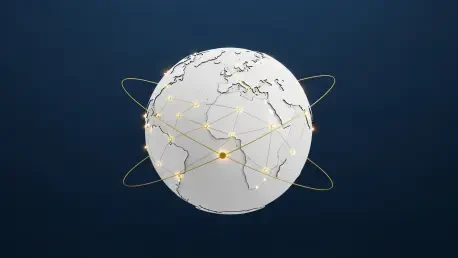

For many years, global industries have struggled with the persistent reality that approximately eighty-five percent of the earth’s surface lacks reliable terrestrial cellular coverage, leaving critical assets in the blind spots of the digital economy. The strategic alliance between Telenor IoT and Sateliot addresses this fundamental connectivity gap by integrating terrestrial cellular networks with advanced low-earth orbit satellite constellations. This hybrid approach allows for a unified connectivity solution that reaches the most remote corners of the planet without the complexity of traditional satellite hardware. By moving beyond high-cost, niche services, the partnership offers a scalable and standardized framework for industries that require constant data transmission regardless of their geographical location. This transformation is not merely about extending range; it is about creating a seamless digital fabric that connects everything from deep-sea sensors to mountain-top weather stations under a single operational umbrella.
Transforming Global Connectivity through Standardization
Streamlining Communication: 3GPP Release 17
The technical foundation of this partnership rests on the implementation of the 3GPP Release 17 standard, a major milestone that enables standard Narrowband IoT devices to communicate directly with satellites. This breakthrough is significant because it utilizes the same 5G non-terrestrial network specifications used by ground-based towers, allowing for a level of interoperability previously thought impossible. By aligning satellite communications with mainstream cellular standards, the industry has successfully removed the barrier of proprietary technology that once isolated satellite users from the broader mobile ecosystem.
Because the system utilizes these universal standards, a typical Telenor IoT SIM card can now transition between terrestrial towers and orbiting satellites without any manual intervention. This seamless handoff eliminates the need for expensive, proprietary hardware or specialized antennas, which significantly reduces the total cost of ownership for global enterprises. By leveraging existing device ecosystems, companies can deploy massive sensor networks that remain connected in the most isolated environments on earth. This standardization ensures that global connectivity is no longer a luxury but a fundamental component of industrial design.
Enabling Innovation: Diverse Industrial Sectors
The integration of space-based and ground-based networks creates massive opportunities for innovation in several industrial sectors, particularly those that operate in rugged or uninhabited terrains. In the agricultural sector, soil health sensors and autonomous machinery can now provide real-time updates from isolated fields that were previously outside of cellular range. This allows farmers to optimize water usage and monitor crop conditions with precision, regardless of how far their land extends from the nearest town or infrastructure hub.
Similarly, the maritime and logistics industries benefit from the ability to track high-value assets across open oceans and remote land corridors where traditional signals fail. Energy providers are also leveraging this connectivity to monitor critical infrastructure, such as pipelines and offshore wind farms, more effectively than ever before. Furthermore, environmental researchers can now gather continuous data from wilderness areas, enabling more accurate climate monitoring and disaster prevention efforts without the limitations of traditional network geography. These capabilities empower organizations to make data-driven decisions in real time across the entire globe.
Validating Performance and Scaling Global Operations
Confirming Reliability: Real-World Field Tests
To ensure the reliability of this unified network, the two companies conducted extensive field tests in Spain, which successfully validated the technical feasibility of the system under real-world conditions. These trials demonstrated that standard Telenor IoT SIM cards could maintain secure and stable connections with Sateliot’s satellite constellation for extended durations without requiring any hardware modifications. The results proved that the vision of a ubiquitous network was not just theoretically sound but operationally ready for large-scale commercial use in demanding environments.
The testing process confirmed that the existing security and management protocols used in terrestrial networks could be effectively extended to the satellite realm. This results in a dependable user experience where businesses can manage their satellite-connected devices using the same tools and interfaces they use for their ground-based assets. By proving that the transition between network types is both secure and seamless, the partners have provided a blueprint for global IoT deployments that prioritize uptime and data integrity. These tests marked the final step in moving the technology from the laboratory to the global marketplace.
Establishing Resilience: A Unified IoT Ecosystem
The collaboration integrated Telenor’s massive operational reach with the technical innovation of 5G satellite capacity, creating a more resilient ecosystem for the next generation of data-driven enterprises. This synergy allowed global enterprises to finally bridge the gap between terrestrial and celestial networks using the trust of a leading global operator. Project managers discovered that maintaining a single SIM card for both network types reduced overhead and simplified logistical planning for international deployments, ensuring that assets remained visible even during cross-border transit.
To capitalize on these advancements, businesses implemented several key strategies to modernize their operations. They began by mapping out their most isolated infrastructure to prioritize the rollout of satellite-compatible sensors in high-value zones. Companies also finalized the updates to their data management platforms to handle the influx of information from previously disconnected sites. These actions ensured that organizations remained resilient and responsive to changing environmental and operational conditions across the globe. Industry leaders identified that auditing existing hardware for 3GPP compatibility was the essential first step toward total global connectivity.