
The decentralization of global financial exchange has moved beyond the realm of conceptual experimentation to become a fundamental pillar of modern digital infrastructure. As of late March 2026, the Uniswap Protocol stands as a testament to this shift, having successfully transitioned from a simple token-swapping tool into a sophisticated suite of financial instruments that challenge the efficiency of traditional order-book exchanges. This analysis explores how the protocol maintains its dominant position through architectural innovation, even as the market navigates a period of cautious technical consolidation and evolving institutional interest.
Evolution and Core Principles of Uniswap
The journey of Uniswap is defined by the radical simplification of liquidity provision, moving away from the cumbersome reliance on centralized intermediaries. At its core, the protocol operates on the principle of permissionless access, allowing anyone to trade or provide liquidity without a central authority acting as a gatekeeper. This model emerged as a response to the fragmentation and high entry barriers found in legacy finance, offering a transparent alternative where the logic of the code dictates the execution of trades rather than human intervention.
In the current technological landscape, Uniswap serves as the primary liquidity layer for the decentralized finance (DeFi) ecosystem. It has evolved through multiple iterations, each refining the mathematical models that govern asset pricing and capital distribution. By prioritizing open-source development and community governance, the protocol has established a standard for how decentralized applications can scale while remaining resistant to censorship. This resilience has made it a benchmark for reliability in an industry often characterized by rapid shifts in sentiment and technological volatility.
Technical Infrastructure and Protocol Dynamics
Automated Market Maker (AMM) Mechanics
The Automated Market Maker (AMM) remains the foundational engine that drives the Uniswap ecosystem, replacing the traditional bid-ask spread with a constant product formula. This mathematical framework ensures that there is always a counterparty for a trade, regardless of the size of the order or the time of day. In practice, this means that liquidity providers deposit pairs of assets into smart contracts, which then use the formula to adjust prices dynamically based on trade volume. This system eliminates the need for professional market makers, democratizing the process of earning fees from global trade.
However, the performance of this mechanism is deeply tied to the efficiency of the underlying blockchain. As the protocol manages significant daily volumes, the AMM design must balance execution speed with the cost of network interaction. While the system provides unparalleled accessibility, it also exposes participants to certain risks, such as arbitrage opportunities that can lead to value leakage. Despite these challenges, the AMM model has proven to be an incredibly robust way to facilitate continuous price discovery for a vast array of digital assets that would otherwise lack sufficient market depth.
Concentrated Liquidity and Efficiency Models
One of the most significant leaps in the protocol’s technical evolution is the introduction of concentrated liquidity, which allows providers to allocate their capital within specific price ranges. Unlike earlier models where liquidity was spread thinly across an infinite price curve, this targeted approach enables a far more efficient use of assets. By focusing liquidity where the majority of trading occurs, the protocol achieves deeper markets with less total capital, effectively lowering slippage for traders and increasing the potential return on investment for liquidity providers.
This efficiency model has transformed how sophisticated participants interact with the protocol, moving the experience closer to the precision of a traditional limit order book. While this technical complexity requires a higher degree of active management, it also allows for the creation of customized strategies that can hedge against specific market conditions. The significance of this feature cannot be overstated; it has enabled Uniswap to compete directly with centralized exchanges on pricing, particularly for high-volume pairs where capital efficiency is the deciding factor for institutional adoption.
Current Market Trends and Protocol Trajectory
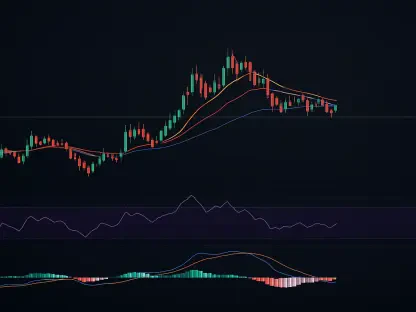
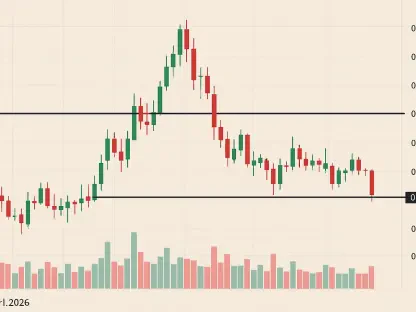
Recent data indicates that the protocol is entering a phase of refined utility, characterized by a transition from speculative trading toward more structured financial activity. Throughout the 2026 fiscal year, market observers have noted that while the UNI token experiences periods of consolidation near the $3.50 level, the underlying network usage remains remarkably stable. This divergence suggests that the protocol’s value is increasingly tied to its role as a vital utility rather than just a vehicle for price speculation. Current trends show a growing demand for cross-chain integrations, as users seek to move assets seamlessly between different network layers.
Moreover, the shift in industry behavior reflects a broader move toward “real yield,” where protocol revenue is derived from actual trading fees rather than inflationary rewards. This trend is influencing the technology’s trajectory by pushing developers to focus on features that enhance user experience and reduce friction. The emergence of professional-grade interfaces and sophisticated analytics tools has also contributed to a more mature ecosystem, attracting a new wave of participants who require the same level of transparency and data integrity found in traditional stock markets.
Real-World Applications and Ecosystem Integration
Beyond the simple exchange of assets, Uniswap has become a foundational component for a myriad of decentralized applications, ranging from automated savings accounts to complex insurance protocols. For instance, in the fintech sector, developers are integrating Uniswap’s liquidity pools to power real-time currency conversions for cross-border payments. This use case demonstrates the protocol’s ability to act as a backend infrastructure for global finance, providing a level of speed and cost-effectiveness that legacy banking systems struggle to match.
Another notable implementation is found in the gaming and digital collectibles space, where Uniswap facilitates the immediate liquidation of in-game assets. By providing a reliable marketplace for non-traditional assets, the protocol enables a new form of digital economy where value can be moved fluidly between different virtual environments. These real-world applications highlight the protocol’s versatility; it is no longer just a platform for traders, but a programmable layer of money that can be embedded into any software that requires value transfer.
Technical Obstacles and Regulatory Landscape
The path to widespread adoption is not without its hurdles, as the protocol faces ongoing challenges related to scalability and regulatory clarity. Technical obstacles such as high transaction costs on the main network have necessitated a move toward secondary scaling solutions, which, while effective, can sometimes lead to a fragmented user experience. Additionally, the inherent complexity of managing concentrated liquidity positions can be a barrier for retail participants who may find the interface daunting compared to centralized alternatives.
From a regulatory perspective, Uniswap operates in a rapidly shifting environment where the definition of decentralized software is under constant scrutiny. Authorities are increasingly looking at how protocols interact with existing financial laws, particularly concerning anti-money laundering and consumer protection. While the decentralized nature of the code provides a level of legal insulation, the interface providers and institutional users must navigate a complex web of compliance requirements. Ongoing development efforts are focused on creating privacy-preserving compliance tools that could bridge the gap between decentralized ideals and regulatory expectations.
Future Outlook and Strategic Development
Looking ahead toward 2027 and beyond, the protocol’s development is expected to focus on further reducing the barriers to entry for both developers and casual users. Potential breakthroughs in zero-knowledge proofs could revolutionize how privacy is handled on-chain, allowing for confidential trades that still benefit from the protocol’s deep liquidity. The long-term impact of this technology will likely be seen in the gradual absorption of traditional financial markets into a decentralized framework, as the cost-saving benefits of automated market making become too significant for major firms to ignore.
Strategic development will also likely emphasize the expansion of the protocol’s governance model, empowering the community to make more granular decisions about the future of the codebase. As the ecosystem matures, the distinction between “decentralized” and “centralized” finance may begin to blur, with Uniswap serving as the primary bridge between the two. The ultimate goal is a truly global, 24/7 financial market that is accessible to anyone with an internet connection, removing the geographic and socio-economic barriers that have historically limited financial participation.
Assessment and Final Summary
The Uniswap Protocol proved its durability by maintaining a dominant market share despite the arrival of numerous competitors. The transition to concentrated liquidity models successfully solved the capital inefficiency problems that plagued early decentralized exchanges, making the protocol a viable alternative for high-volume institutional trading. While the technical barrier to entry remained high for liquidity providers, the resulting depth of the market benefitted all users by significantly reducing the costs of asset conversion.
The analysis indicated that the protocol’s future success would depend on its ability to integrate with emerging scaling solutions and navigate the tightening global regulatory framework. The strategic shift toward cross-chain functionality and professionalized tooling suggested a move toward long-term sustainability rather than short-term growth. Ultimately, the protocol evolved into more than a simple trading venue; it became a core piece of internet infrastructure that demonstrated how software could effectively replace the middleman in the most fundamental aspects of global commerce.