
The manual cycle of identifying, printing, and physically replacing price tags represents a hidden operational burden that drains dealership resources and time. While modern car dealerships have invested heavily in sophisticated cloud-based Customer Relationship Management (CRM) systems and advanced digital marketing strategies, the physical lot remains a stubborn holdout of outdated practices. This discrepancy creates a disjointed experience where a customer might find a precisely targeted offer on their smartphone, only to encounter a generic or outdated sticker once they arrive on the lot. The labor required to synchronize these two worlds is often invisible to management but highly impactful on the bottom line. It is a peculiar bottleneck in an industry that otherwise prides itself on rapid innovation and high-tech engineering. As the final touchpoint in the sales funnel, the vehicle lot should be the most dynamic environment, yet it remains tethered to paper and tape, creating a friction point that modern retail can no longer afford to ignore or justify in a competitive market.
The Paradox: Manual Processes in a Digital Age
Modern automotive retail is defined by a deep reliance on real-time data, with pricing algorithms adjusting daily based on market demand, seasonal trends, and inventory levels. However, the moment this digital data needs to manifest on a physical car lot, the system grinds to a halt. This “analog island” effect is increasingly visible as consumers arrive at dealerships with more information than ever before, often knowing the exact identification number and price of a vehicle before they even park. When the information displayed on the windshield contradicts what they saw on the website ten minutes prior, the resulting friction erodes trust and complicates the sales process. The disconnect stems from a legacy mindset that views the physical lot as a separate entity from the digital storefront rather than a continuation of it. Bridging this gap requires a fundamental rethink of how data flows from the server to the vehicle, ensuring that every touchpoint remains consistent and accurate across all available channels.
Operational Gaps: Inventory Velocity and Static Signage
The speed of inventory turnover in the current market further exacerbates the limitations of static window stickers and paper-based signage. High-velocity dealerships often move dozens of units per week, meaning that the work required to keep labels current is never truly finished. This creates a perpetual state of catch-up where the physical presentation of the lot lags behind the actual status of the inventory management system. Moreover, as vehicles are moved for test drives, the risk of mislabeling increases. This lack of agility prevents dealerships from implementing time-sensitive promotions that could drive traffic. Estimates suggest that from 2026 to 2028, dealerships that fail to adopt digital interfaces will see a decline in floor traffic. By failing to digitize the physical lot, retailers are operating with one hand tied behind their back, unable to capitalize on the dynamic pricing strategies that have become standard in almost every other sector of modern commerce today.
The Financial Burden: Calculating the Real Cost of Paper
When evaluating the efficiency of a dealership, the focus is often on closing ratios and service department margins, while the mundane task of tag management is dismissed as a necessary evil. However, an objective analysis of labor distribution reveals that dealership personnel spend an inordinate amount of time performing manual clerical work on the lot. A mid-sized operation with three hundred vehicles may require a full-time employee’s attention for several hours each week just to ensure stickers are present and accurate. This involves checking lists, printing materials, locating specific cars in sprawling lots, and scraping off old adhesive. These hours represent a direct diversion of talent from revenue-generating activities like lead followups or customer consultations. When aggregated over a year, the cumulative cost of this manual labor is staggering, representing a significant leak in the operational budget that could be plugged through the implementation of automated, connected display technologies that update instantly.
Consumer Trust: Risk Mitigation and Regulatory Compliance
Beyond the immediate labor expenses, the hidden cost of inaccuracy poses a serious threat to a dealership’s reputation and legal standing. In a landscape where consumer protection regulations are increasingly stringent, a physical price tag that fails to match the advertised online price can lead to significant fines or damaging audits. Even if legal consequences are avoided, the “lost opportunity cost” of a skeptical customer is impossible to ignore. A shopper who notices a price discrepancy may assume the dealership is engaging in deceptive practices, leading them to abandon the purchase entirely. This breakdown in trust occurs at the most sensitive stage of the buyer’s journey—the moment of physical interaction with the product. In the modern retail environment, transparency is not just a preference but a requirement for success. Maintaining manual systems that are prone to human error is a liability that undermines the millions of dollars spent on branding and digital customer acquisition every year.
Technological Solutions: Leveraging IoT and Connected Displays
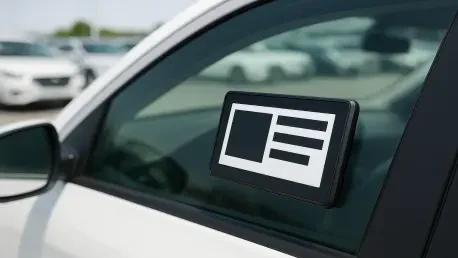
The transition toward a fully digital car lot involves integrating electronic shelf labels and connected displays directly into the dealership’s existing software ecosystem. By utilizing Application Programming Interfaces (APIs) to link these displays with the Dealer Management System (DMS), price changes can be pushed to the entire fleet with a single click. This technology, which has already revolutionized high-volume grocery and electronics retail, allows for a level of operational agility previously thought impossible in the automotive world. These electronic displays are designed to withstand extreme weather conditions and provide high-contrast visibility, ensuring that the information remains legible under direct sunlight. This integration does more than just update prices; it can also display real-time financing options, QR codes for instant vehicle history reports, and current fuel efficiency data. This creates a “smart lot” that functions as an extension of the internet, providing a seamless flow of data from the cloud to the consumer.
The Path Forward: Strategic Integration of Smart Technology
To move forward, dealerships shifted their focus toward total digital integration, treating the physical lot as a high-tech showroom rather than a storage area. Managers began by auditing the time spent on manual inventory updates and identifying the specific friction points that slowed down the sales cycle. The adoption of automated display systems allowed staff to refocus their energy on building relationships and perfecting the customer experience rather than managing paper stickers. Successful organizations implemented pilot programs to test the durability and connectivity of electronic labels before rolling them out across entire regional groups. This transition not only reduced operational overhead but also significantly enhanced the professional appearance of the forecourt. By aligning the physical environment with the digital standards of the current market, these dealerships secured a competitive advantage that prioritized accuracy and transparency. The move toward a connected lot became the final step in a broader strategy to eliminate the last vestiges of analog inefficiency.