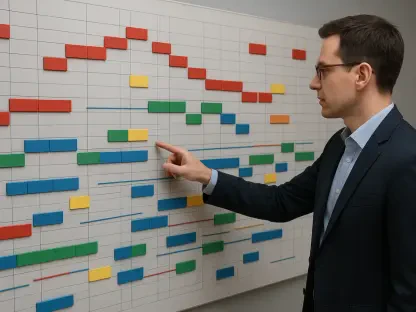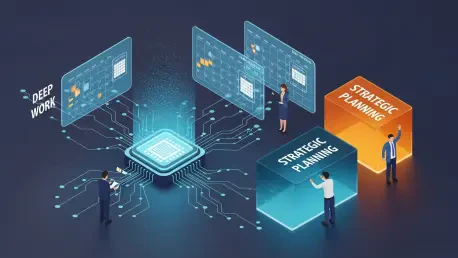

The friction of fragmented scheduling costs the average modern enterprise thousands of hours in lost productivity every quarter, yet the solution lies not in more meetings but in smarter, autonomous coordination. As organizations navigate the complexities of decentralized work, the traditional digital calendar has finally transitioned from a passive ledger of unavailability into a dynamic engine of strategic execution. The reliance on manual entry and the constant “ping-pong” of scheduling emails have given way to a sophisticated ecosystem where time is treated as a shared, finite resource that must be optimized with precision. This shift represents a fundamental move away from the static grids of the past decade toward an era where the calendar serves as the primary navigation system for high-output professional environments.
The Evolution from Passive Time-Tracking to Intelligent Resource Management
The historical reliance on traditional calendar software created a persistent “coordination problem” that stifled organizational momentum for years. For most of the digital age, calendars acted as mere databases—places where time was claimed rather than managed. A user would mark themselves as “busy,” and the system would dutifully record that block, yet the software possessed no understanding of whether that time was being used effectively or if the meeting in question was even necessary. This lack of inherent intelligence meant that the burden of prioritization fell entirely on the individual, leading to cluttered schedules and a perpetual state of “calendar debt,” where professionals were overcommitted and under-delivered.
As the industry moves through the current year, the definition of resource management has expanded to include cognitive capacity and mental bandwidth. Industry leaders now recognize that an employee’s schedule is not just a personal record but a critical component of a company’s operational infrastructure. The move toward AI-driven systems has allowed for the creation of a “coordination layer” that sits atop traditional task managers and communication tools. This layer does more than track hours; it analyzes the relationship between different projects and the specific skill sets required to complete them, ensuring that the right people are working on the right tasks at the optimal time.
The transition from passive to active management also reflects a broader economic shift where time is the primary currency of the knowledge worker. In this landscape, the “busy” status on a legacy calendar is viewed as insufficient data. Modern systems now categorize time based on the intensity of the work required, distinguishing between light administrative duties and high-stakes strategic thinking. By automating the logistical aspects of time management, these tools have liberated teams from the “work about work,” allowing them to focus on substantive delivery. This evolution ensures that scheduling is no longer a peripheral administrative task but a core strategic function that drives competitive advantage.
Furthermore, the rise of intelligent systems has begun to dissolve the silos that previously isolated personal time management from corporate project timelines. In the past, a project manager might see a deadline on a Gantt chart but have no visibility into the individual calendars of the team members responsible for that deadline. Today, the integration of these two data streams allows for a more holistic view of organizational health. When a calendar can predict a project delay based on the volume of meetings currently scheduled for the engineering team, the organization can pivot proactively rather than reacting after a deadline has been missed.
Reinventing the Calendar as an Autonomous Operational Assistant
Closing the Context Gap: Why Availability No Longer Equals Capacity
The most significant hurdle in traditional scheduling was the “context gap,” a phenomenon where a tool would suggest a meeting time simply because a slot appeared empty on a grid. This mechanical approach ignored the reality of the professional workday, where “empty” space is often the most valuable time for focused production. Modern AI solutions have addressed this by utilizing machine learning to interpret the “why” behind every time block. These systems analyze historical work patterns, the urgency of pending tasks, and even the complexity of recent email threads to determine if a user truly has the capacity to take on more commitments.
For instance, tools that specialize in “priority-aware scheduling,” such as Reclaim.ai, demonstrate how availability and capacity are distinct concepts. An individual might be technically free at 2:00 PM, but if they have a major presentation at 3:00 PM, an intelligent system will recognize that the hour prior is better used for preparation than for a low-priority sync. This level of nuance prevents the fragmentation of the workday, ensuring that cognitive resources are not squandered on context-switching between unrelated tasks. However, this shift toward algorithmic control also raises questions about the human element of scheduling, as users must learn to trust a system that might decline an invitation on their behalf.
Moreover, the psychological toll of the “overbooked” culture has led to a demand for systems that account for cognitive limits. Some advanced tools now incorporate “fuzzy” logic to manage the inherent unpredictability of the creative process. Instead of forcing a task into a rigid sixty-minute window, these platforms allow for a flexible approach that respects the user’s mental energy cycles. This perspective suggests that the future of productivity is not about filling every minute but about protecting the quality of the minutes we use. When the calendar understands the difference between a creative brainstorm and a routine status update, it can allocate time in a way that maximizes meaningful output.
The Great Integration: Syncing Actionable Tasks with Digital Timelines
The erasure of the boundary between the “to-do list” and the schedule marks a pivotal moment in the history of productivity software. For decades, professionals operated in two different worlds: one where they listed what they needed to do, and another where they tracked when they were meeting with others. This disconnect was the primary cause of “aspirational scheduling,” where tasks were added to a list but never found a home on the calendar. By treating every task as a tangible time block, modern platforms ensure that commitments are rooted in the reality of the twenty-four-hour day.
Platforms like monday.com have pioneered this unified approach by embedding AI coordination directly into the work platform. When a task is assigned on a project board, the system automatically evaluates the owner’s schedule and suggests a realistic window for completion. This eliminates the need for manual time-blocking and provides a real-time visualization of team bandwidth. When priority shifts occur—as they frequently do in high-velocity environments—the system can automatically reshuffle the entire day’s tasks, ensuring that the most critical objectives remain at the forefront without requiring the user to spend an hour reorganizing their grid.
This trend toward total integration also benefits from the rise of “universal inboxes” seen in tools like Akiflow, which aggregate commitments from across Slack, email, and various project management suites. By centralizing these disparate inputs into a single chronological timeline, the AI can prevent the “hidden work” that often derails a productive day. The competitive advantage in this environment belongs to the organization that can move from a fragmented workflow to a unified source of truth. As these tools become more sophisticated, the very concept of a “to-do list” may become obsolete, replaced by a self-healing schedule that manages the flow of work autonomously.
The Shield of Deep Work: How AI Guardrails Combat Meeting Fatigue
In an era defined by constant digital reachability, the ability to protect “deep work” has become a vital survival skill for knowledge workers. Traditional “do not disturb” settings were often too blunt to be effective, as they could block critical communications along with the noise. In contrast, “Protective AI” serves as an intelligent gatekeeper, actively defending large blocks of time for focused, high-concentration tasks. These systems analyze upcoming deadlines and mental energy patterns to automatically decline or reschedule non-essential invitations, ensuring that the user’s most productive hours are not carved into unproductive fragments.
The philosophy behind this trend, often championed by tools like Sunsama, emphasizes intentionality and the avoidance of over-scheduling. Rather than viewing the calendar as a tool for maximum density, these systems encourage a “slow productivity” mindset where fewer, high-impact tasks are prioritized. This approach directly challenges the common assumption that more connectivity always leads to better collaboration. Instead, the focus has shifted toward creating “islands of concentration” amidst the sea of digital interruptions. By using AI to enforce these boundaries, organizations can mitigate the risk of employee burnout and improve the overall quality of technical and creative work.
Furthermore, the implementation of “meeting intelligence” features has drastically reduced the time required for follow-up activities. AI assistants now routinely record sessions, generate concise summaries, and extract actionable tasks directly into project boards. This means that even when a meeting is necessary, the administrative “drag” associated with it is minimized. When the calendar system itself is responsible for ensuring that a discussion leads to a result, the perceived cost of a meeting shifts. The goal is no longer just to find a time to talk, but to ensure that the time spent talking is converted into measurable progress with as little manual intervention as possible.
Cross-Departmental Synchronization and the Governance of Shared Time
Strategic coordination reaches its full potential when AI is leveraged to align the differing cadences of diverse departments such as marketing, engineering, and sales. These groups often operate on entirely different timelines—sprints for developers, campaigns for marketers, and pipeline cycles for sales teams. The “coordination layer” provided by modern AI tools allows for automated dependency tracking across these silos. If a critical development milestone is pushed back by the system due to an unforeseen technical hurdle, the AI can immediately alert the marketing team and suggest a new date for the campaign launch review, ensuring that no one is left working toward an outdated goal.
This level of transparency and automation raises critical questions regarding data governance and the ethics of workplace surveillance. While total visibility into employee schedules offers undeniable efficiency gains, it must be balanced against the necessity of privacy and the maintenance of employee trust. Organizations are now developing robust permission-based systems that allow for high-level coordination without compromising the individual’s need for autonomy. The challenge lies in creating a culture where the calendar is seen as a tool for empowerment rather than a mechanism for micromanagement. Effective governance in this new era requires clear norms about what data is shared and how the AI is allowed to intervene in an individual’s workday.
Additionally, the rise of “enterprise-grade” scheduling tools ensures that large organizations can maintain security while benefiting from AI optimization. These systems must comply with stringent data privacy regulations and offer audit logs that track how the AI is making scheduling decisions. As these tools become more deeply embedded in the corporate infrastructure, they will serve as the backbone for hybrid and remote work models. The ability to harmonize thousands of individual schedules into a coherent organizational plan is the ultimate expression of the “coordination layer,” transforming a collection of individuals into a synchronized, high-performance unit.
Strategic Frameworks for Deploying AI-Driven Scheduling Solutions
Transitioning to an AI-coordinated workflow is not merely a matter of purchasing new software; it requires a fundamental shift in how an organization perceives time and collaboration. To effectively deploy these solutions, companies should prioritize tools that offer deep integration into their existing ecosystem rather than opting for standalone functionality. The most successful implementations are those that acknowledge the “human-in-the-loop” necessity, where the AI provides the data and the suggestions for optimization, but the individual retains the ultimate authority over their schedule. This balance ensures that the technology augments human judgment rather than replacing it, fostering a sense of agency among the workforce.
Best practices for the current landscape include performing a comprehensive audit of existing “coordination gaps” to identify where time is most frequently lost. This might involve analyzing the ratio of meetings to focus time or identifying departments that are frequently misaligned. Once these gaps are identified, organizations can establish clear norms for focus-time defense and meeting etiquette that are enforced by the AI. For example, a company might program its system to automatically decline any meeting that does not have a linked agenda or a specific list of expected outcomes. By setting these “digital guardrails,” leadership can ensure that the AI is working toward the organization’s broader strategic goals.
Moreover, the deployment of these tools offers a unique opportunity to redefine the “meeting culture” within a company. Instead of viewing meetings as a default response to a problem, teams can use AI-driven data to determine if a synchronous discussion is truly the most efficient path forward. If the system shows that the required participants are already at their cognitive limit for the day, it might suggest an asynchronous update via a shared document or a recorded video brief. This data-driven approach to collaboration ensures that when meetings do occur, they are high-impact events with fully present and prepared participants.
Furthermore, the scalability of AI scheduling means that even small teams can achieve the level of coordination previously reserved for large corporations with dedicated administrative staff. Tools that offer mobile-first, conversational interfaces allow for on-the-go professionals to manage complex commitments with simple voice commands or texts. This democratization of high-level coordination is leveling the playing field, allowing agile startups to compete with industry giants by maximizing the output of every team member. As these frameworks become standardized, the organizations that fail to adopt them will find themselves bogged down by the same logistical friction that their competitors have already solved.
The New Era of High-Velocity Execution and Collaborative Success
The movement toward intelligent time management represents the final realization that time is the most valuable and least renewable asset in the modern economy. By the midpoint of this decade, the ability to harmonize complex individual schedules with real-time project data has become the defining characteristic of high-performing teams. These AI calendars are no longer experimental additions to the productivity stack; they are the fundamental infrastructure that allows for a seamless transition between remote and office-based work. They provide the visibility and the automation necessary to ensure that the entire organization is moving in the same direction, regardless of where individual employees are physically located.
The transition has already shown that the most effective organizations are those that treat their collective time as a strategic resource rather than a series of disconnected slots. Professionals who have embraced these systems found that their “administrative drag” significantly decreased, allowing for a return to the work they were actually hired to perform. By automating the “puzzle” of the busy day, these tools have reduced the mental fatigue associated with constant planning and reorganization. The shift has transformed the calendar from a record of what happened into a proactive blueprint for what is possible, enabling a level of execution speed that was previously unattainable.
Looking back at the shift, it is clear that the integration of artificial intelligence into the calendar was not just a productivity hack but a cultural revolution. It forced a global conversation about the value of focus, the necessity of boundaries, and the ethics of transparency. The tools that emerged from this period have fundamentally changed the relationship between the worker and the workday, prioritizing output over hours and quality over quantity. Those who led the way in adopting these systems have established a new standard for collaborative success, proving that when the logistical burden of coordination is removed, the potential for human innovation is limitless.
Ultimately, the successful adoption of these coordination layers has paved the way for a more sustainable and equitable professional landscape. By protecting deep work and ensuring that meetings are focused and meaningful, these systems have helped mitigate the burnout crisis that threatened the knowledge economy for years. The organizations that invested early in these technologies have not only seen improved financial outcomes but have also fostered more engaged and satisfied workforces. The era of the passive calendar has ended, and in its place is a dynamic, intelligent system that ensures the most important work always finds the time it deserves. Those who wish to maintain their competitive edge must continue to refine their approach to time management, treating their calendars as the powerful strategic assets they have become. For the modern professional, the goal is no longer just to manage time, but to master it. Organizations that have successfully navigated this transition are now looking toward the next frontier of coordination, where predictive analytics will anticipate the needs of a project before a single task is assigned. This ongoing evolution continues to redefine the boundaries of what a coordinated team can achieve, setting the stage for a future where time management is completely frictionless. For further exploration of these concepts, one might investigate the growing field of “algorithmic ergonomics” and how it impacts the long-term health of digital workflows. The journey from a static grid to an autonomous assistant was just the beginning of a larger transformation in how we define and execute work in a hyper-connected world.