
The lack of departmental competition for talent at Brown University fosters a culture where seasoned tradespeople prioritize passing knowledge to the next generation. This ethos transforms the campus into a dynamic laboratory for professional development, far beyond its reputation for academic excellence. As an anchor employer in Providence, the university operates as a critical engine for the local economy, offering more than just stable jobs. It provides a structured path for frontline workers to move from entry-level service roles into highly technical, specialized trades. By viewing every employee as a lifelong learner, the administration successfully addresses labor shortages while simultaneously boosting staff morale. This strategic investment in human capital ensures that the physical infrastructure of the campus remains in expert hands. The commitment to internal mobility creates a resilient workforce that feels valued and empowered, turning standard employment into a meaningful career journey that benefits both the institution and the surrounding community.
Bridging Seasonal Gaps: Building Foundations
Part 1. The Evolution of Internal Training Initiatives
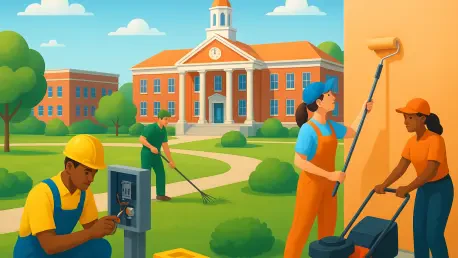
The summer trades program stands as the cornerstone of this development strategy, boasting a history that spans more than four decades of continuous operation. Originally conceived as a practical solution to a seasonal challenge, the program began by utilizing Dining Services staff who were often on 10-month contracts. During the summer months, these employees were given the opportunity to assist with painting residence halls rather than facing temporary unemployment. This arrangement allowed workers to maintain a steady income while learning professional techniques alongside master painters. Over time, what started as a simple temporary labor fix has evolved into a sophisticated career-launching pad. Today, it covers diverse technical fields such as plumbing, electrical work, and high-efficiency HVAC systems. This evolution reflects a broader institutional shift toward sustainable workforce planning, where internal talent is identified and nurtured early in their tenure to fill specialized roles.
Part 2. Practical Application and Skill Rotation
The current iteration of the summer program offers a rigorous 10-week experience designed to provide maximum exposure to various technical disciplines across the campus. Selection for this initiative is highly competitive, often involving detailed interviews and competency tests for applicants typically transitioning from custodial services. During their 10-week tenure, participants are officially classified as utility workers and receive hands-on mentorship through a rotation-based system. This structure is intentional; it prevents task fatigue and ensures a holistic understanding of comprehensive campus maintenance requirements. Trainees engage in everything from roof safety protocols to complex carpentry and structural repairs. While the program does not guarantee an immediate department transfer, it provides the foundational toolkit and institutional knowledge necessary for employees to compete for future full-time trade openings. This practical exposure builds a versatile skill set that remains applicable throughout the university’s varied infrastructure projects.
From Entry-Level Roles to Master Craftsmanship
Part 1. Success Stories of Professional Progression
The long-term impact of these initiatives is most evident in the career trajectories of staff members who have successfully climbed the institutional ladder. One notable example involves a former cook’s helper who joined the university in 1983; through the summer paint shop program, he discovered a latent talent for structural work. This discovery led to a 40-year career, where he eventually rose to the position of manager for major structural projects. Similarly, a Providence native who started as a custodian in 1988 utilized the summer program to transition into mechanics and carpentry, eventually becoming a master locksmith. These individual success stories highlight a central theme of the university’s workforce philosophy: with the will to learn and a proactive mindset, the institution provides the necessary platform for significant professional growth. These veterans now serve as mentors themselves, proving that the university is a place where entry-level roles can transform into lifelong, high-impact careers.
Part 2. Academic Support and Certification Pathways
For employees seeking state-certified licensure, the university offers a formal apprenticeship program registered with the Rhode Island Department of Labor and Training. This pathway is significantly more intensive than the summer program, requiring approximately three years of supervised fieldwork and dedicated formal classroom education. The university actively supports this journey by reimbursing tuition costs for the necessary technical courses at local trade schools. This dual-track approach, which combines practical on-campus labor with rigorous theoretical study, meticulously prepares employees for state exams. By removing the financial burden of education, the university enables staff to transition into licensed roles that offer significantly higher earning potential and career stability. This investment ensures that the institution retains experts who are not only technically proficient but also deeply familiar with the unique architectural requirements of the campus, creating a seamless blend of external standards and internal expertise.
Breaking Barriers: Cultivating Opportunity
Part 1. Overcoming Obstacles through Structured Support
The structured apprenticeship model is particularly effective at removing systemic barriers for individuals who might otherwise struggle to navigate traditional trade pathways. For instance, one employee spent eight years in custodial services before utilizing this framework to transition into the specialized field of HVAC. By balancing her full-time responsibilities on campus with night classes at a local training academy, she successfully earned her state license and joined the mechanical shop. Such structured programs provide a clear and accessible roadmap that builds both self-confidence and technical mastery over time. This approach makes specialized careers attainable for local residents who may have previously viewed technical trades as being out of their reach due to financial or educational constraints. By providing a secure environment to learn and fail, the university empowers its workforce to take calculated risks in their professional development, resulting in a more diverse and skilled team capable of maintaining complex modern building systems.
Part 2. The Springboard Mentality and Future Growth
The institution prioritized a collaborative springboard mentality that permeated every level of the facility management hierarchy. Managers within the custodial and dining departments acted as mentors who actively identified high-potential candidates and guided them toward the technical trades, even if it meant losing their most reliable workers. This selfless approach to talent management ensured that the university functioned as a true engine of social mobility for the Providence community. Actionable steps for other large-scale employers included the implementation of cross-departmental shadow programs and the subsidization of certification costs to lower the entry barrier for specialized labor. These strategies successfully transformed a transient workforce into a stable, highly skilled technical team that felt a deep sense of ownership over the campus. By looking ahead, the administration identified the integration of sustainable energy systems training as the next critical frontier for internal development. This historical commitment to human potential solidified the university’s role as a leader in industrial education.