
Geographic concentration of raw material sourcing creates a single point of failure that can paralyze an entire food production enterprise during localized crises. The global food and beverage sector functions within an intricate web of dependencies characterized by extreme sensitivity to time and environmental conditions. Unlike many other manufacturing fields, this industry must grapple with the inherent perishability of goods and stringent regulatory mandates that leave little room for error. Navigating this landscape requires a deep understanding of critical dependencies—those essential links where a single failure can jeopardize the entire enterprise’s survival. To manage risk effectively, companies must first identify the primary catalysts of supply chain volatility. Modern disruptions rarely occur in isolation; instead, they often manifest as a polycrisis where geopolitical instability, macroeconomic shifts, and trade restrictions collide. These factors do more than increase costs; they fundamentally alter the availability of raw ingredients and the reliability of global transit routes, forcing businesses to find alternative sources under high-pressure conditions. The fragility of this system is exacerbated by the fact that even minor delays can render high-value inventory unsellable, turning a logistical hiccup into a total financial loss for the producer.
Environmental and Logistics Constraints
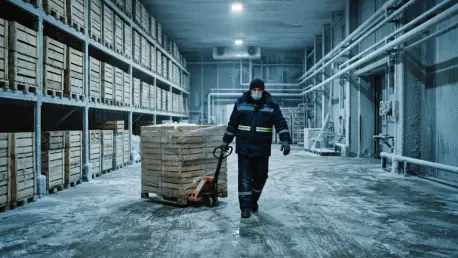
The movement of food products is heavily reliant on stable infrastructure and predictable weather patterns. Extreme climatic events such as droughts or floods can devastate agricultural yields and destroy the transport networks necessary for distribution. Furthermore, the industry’s dependence on specialized logistics, particularly the cold chain, means that any technical failure in refrigeration can lead to catastrophic spoilage and total inventory loss within hours. Operational vulnerabilities are often magnified by a reliance on just-in-time delivery models and geographic concentration. When a significant portion of a specific ingredient is sourced from a single region, that area becomes a single point of failure for the entire production line. This fragility is further compounded by labor shortages in warehousing and transport, which slow the movement of goods and increase the likelihood of bottlenecks at major ports. These constraints are not merely theoretical; they represent daily operational hurdles that require constant monitoring. A sudden heatwave in a primary growing region or a strike at a critical shipping hub can trigger a cascade of failures that disrupt the supply of essentials across continents.
Managing these logistics requires more than just reactive measures; it demands a sophisticated integration of technology and predictive analytics. Modern enterprises are increasingly adopting real-time tracking systems that monitor temperature, humidity, and location throughout the entire transit process. This level of visibility allows managers to reroute shipments or expedite deliveries before spoilage occurs. However, technology itself introduces new risks, as reliance on automated systems makes the supply chain vulnerable to digital outages or synchronization errors. The transition to more sustainable packaging also adds a layer of complexity, as new materials often have different storage requirements and durability profiles compared to traditional plastics. For a food company to remain resilient, it must balance the drive for efficiency with the necessity of redundancy. Maintaining backup logistics providers and diversifying transport routes are essential strategies, though they often come with higher overhead costs. The current climate of unpredictable weather patterns and aging infrastructure makes these investments necessary for any organization seeking to maintain a consistent presence on retail shelves.
Financial and Operational Impacts
When a disruption occurs, the financial consequences are immediate and multifaceted. Rising input and logistics costs quickly erode operating margins, especially in a price-sensitive market where passing expenses to the consumer is not always feasible. Beyond direct costs, an inability to fulfill orders can lead to the permanent loss of long-term contracts with major retailers, causing a significant dip in future revenue. Operationally, the absence of a single ingredient can render an entire inventory of secondary components useless, leading to wasted working capital and mass spoilage. These incidents often carry a heavy reputational price, particularly if the disruption involves a food safety recall. The damage to a brand’s integrity following a safety incident or a prolonged period of empty shelves can take years of marketing and quality assurance efforts to repair. The financial strain is often felt most acutely by mid-sized producers who lack the massive capital reserves of global conglomerates, making them more susceptible to insolvency following a prolonged supply chain blockage or a sudden spike in raw material prices.
The operational impact extends deep into the manufacturing floor, where production schedules are frequently upended by the late arrival of critical components. This lack of predictability forces companies to pay premium rates for emergency labor or last-minute freight services, further straining the bottom line. Inventory management becomes a high-stakes balancing act between holding enough safety stock to weather a crisis and avoiding the waste associated with overstocking perishable items. When a specific additive or packaging material is delayed, the entire production line may sit idle, yet fixed costs such as factory rent and utility bills continue to accumulate. This inefficiency is amplified during periods of high inflation, where the cost of replacing lost inventory far exceeds the original purchase price. Companies that fail to account for these indirect costs often find themselves in a liquidity crunch, unable to reinvest in the necessary upgrades to their risk management frameworks. Building a buffer against these shocks requires a fundamental shift in how financial performance is measured, prioritizing long-term stability over short-term optimization.
Limitations of Standard Insurance
A significant challenge for many food and beverage organizations is the gap between perceived protection and the reality of insurance policy terms. Standard business interruption insurance usually requires physical damage to the company’s own property to trigger a payout. In many supply chain crises, the damage occurs at a third-party site, such as a supplier’s factory or a shipping terminal, leaving the business without the financial recovery it expected. Contingent business interruption insurance is designed to address these third-party risks, yet it remains complex and often misunderstood. Policies frequently require businesses to name specific suppliers, meaning disruptions at an unlisted sub-tier supplier may not be covered. Additionally, waiting periods or time-based deductibles can be detrimental; for a company dealing in fresh produce, a three-day delay before coverage begins may result in a total loss of goods before the policy even responds. This disconnect highlights the need for a more nuanced approach to risk transfer that accounts for the specific timelines and dependencies of the food production cycle.
Insurance gaps are particularly dangerous when dealing with global sourcing networks where the legal definitions of “disruption” vary by jurisdiction. Many standard policies exclude losses caused by political unrest or trade embargoes unless specifically endorsed, leaving producers exposed to the very events most likely to cause large-scale supply chain failures. Furthermore, the burden of proof for a claim often falls on the insured, requiring meticulous documentation of the event and its direct financial impact, which can be difficult to compile during an ongoing crisis. The rise of parametric insurance, which pays out based on predefined triggers such as weather events or port closure durations, offers a potential solution, but these products are often more expensive and less widely understood than traditional indemnity-based coverage. Without a thorough review of policy language, a business may discover too late that its coverage for “spoilage” does not include losses resulting from a power outage at a third-party warehouse. Bridging this gap requires close collaboration between risk managers, legal experts, and brokers to ensure that the insurance portfolio actually mirrors the company’s operational reality.
Building Operational Resilience
Strengthening a company’s posture requires a transition from simple procurement to comprehensive supply chain mapping. This process involves identifying the “n-th” tier of the supply chain to uncover hidden risks and concentrations among sub-suppliers. By diversifying the supplier base and investing in strategic safety stock, businesses can create a buffer that protects against sudden stockouts and allows for smoother transitions during a crisis. Scenario modeling is another vital component of operational hardening. By simulating various “what-if” scenarios involving port closures, ingredient shortages, or utility failures, companies can develop actionable alternative strategies. This proactive planning ensures that when a crisis hits, the organization is not reacting blindly but is instead executing a predetermined framework designed to maintain continuity. Resilience is not a static achievement but a continuous process of refinement and adaptation to an ever-changing global environment.
To truly embed resilience, organizations have begun fostering deeper, more collaborative relationships with their primary vendors. Moving away from purely transactional interactions allows for better information sharing, providing early warning signs of potential trouble at the source. This collaborative approach often involves joint investments in infrastructure or shared inventory systems that benefit both parties during times of stress. Additionally, the adoption of regionalized or “near-shored” sourcing models has gained traction as a way to reduce transit times and minimize exposure to international shipping volatility. While these regional hubs may have higher initial production costs, the savings in logistics and the reduction in risk often justify the expenditure. By integrating resilience into the core corporate strategy, companies can turn their supply chain from a point of vulnerability into a competitive advantage. The ability to maintain supply when competitors cannot is a powerful tool for capturing market share and building long-term customer loyalty in an increasingly unpredictable market.
Strategic Insurance Alignment: Forward Steps
A sophisticated risk management strategy must align operational realities with a multi-layered insurance portfolio. This includes specialized coverage such as stock throughput, which protects goods from the raw material stage through processing and final transit. Marine cargo and transit insurance are equally essential for protecting the value of products as they navigate increasingly volatile international shipping routes. To address modern threats, businesses should also incorporate cyber insurance and product contamination coverage. As food production becomes more digitized, the risk of a tech outage or a targeted attack on logistics software increases. Similarly, trade credit insurance can safeguard the company against the insolvency of major customers, ensuring that even if a partner fails during economic instability, the organization’s financial health remains intact. The complexity of these risks necessitates a unified approach where insurance is treated as a strategic tool rather than a mere administrative expense.
The successful organizations of the past few years demonstrated that the key to survival was a proactive transition toward data-driven risk assessment. These companies moved beyond traditional methods by integrating their insurance procurement directly with their supply chain visibility tools. They worked to eliminate the silos between their logistics departments and their finance teams, ensuring that every identified vulnerability was either mitigated through operational changes or transferred through precisely worded insurance contracts. By prioritizing transparency across the entire value chain, these businesses identified critical bottlenecks before they became catastrophic failures. Moving forward, the industry adopted a mindset of constant vigilance, where the mapping of sub-tier suppliers and the regular stress-testing of logistics networks became standard practice. This comprehensive approach allowed them to protect their margins, secure their brand reputations, and maintain the trust of retailers and consumers alike during an era of significant global disruption. The focus ultimately shifted from mere survival to the creation of a flexible, robust enterprise capable of thriving amidst any challenge.