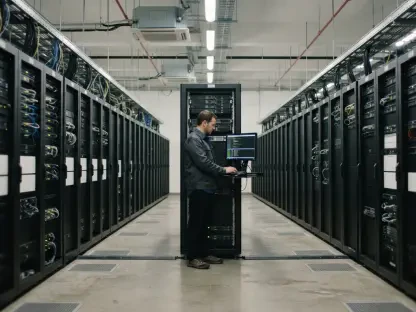

By achieving a record US$1 billion in operating profit within its Infrastructure Solutions Group, Lenovo has successfully turned its server division into a major high-growth engine. This milestone is the cornerstone of a historic second-quarter performance for the 2026/27 fiscal year, in which the Group reported unprecedented revenue of US$30.2 billion. This figure represents a remarkable 48% year-on-year increase, signaling a definitive shift from a hardware-focused business to a diversified, full-stack technology powerhouse. The underlying financial metrics are equally impressive, with adjusted net income surging 166% to reach US$1.4 billion, a “leap forward” in profitability that highlights the effectiveness of the current strategic pivot. By diversifying its revenue streams, the Group has successfully insulated itself from the inherent volatility of the global PC market and the pressures of rising component costs. This structural enhancement is further evidenced by a strong cash flow position, with US$1.6 billion in operating cash flow and US$1.2 billion in free cash flow generated during the quarter. This liquidity provides the necessary capital to sustain aggressive investments in high-growth areas such as edge computing and large-scale AI infrastructure, ensuring that the Group remains a dominant force in a rapidly evolving digital economy that prizes intelligence and adaptability above all else.
Strategic Evolution: Innovation in Artificial Intelligence
Leading the Hybrid AI Transition
Artificial Intelligence has moved from a theoretical future opportunity to a primary driver of the organization’s current financial health. During this quarter, AI-related revenue grew by 79% year-on-year, surpassing US$10 billion for the first time and accounting for 36% of total quarterly revenue. This growth is built upon the concept of “Hybrid AI,” a framework that bridges the gap between Personal AI on individual devices and Enterprise AI within massive infrastructure environments. By offering a comprehensive portfolio that spans these two domains, the Group is effectively capturing the increasing demand for localized intelligence. This dual-pronged strategy ensures that consumers benefit from enhanced privacy and speed on their personal devices, while corporations gain the massive computational power required to process proprietary data securely within their own firewalls. The transition is not merely about selling hardware; it is about providing an integrated ecosystem where AI serves as the connective tissue between every touchpoint in the user’s digital life.
Building on this technological foundation, the Group’s ability to offer a “full-stack” portfolio positions it uniquely against global competitors who often specialize in only one segment of the market. This comprehensive approach means providing everything from handheld mobile devices and high-performance workstations to liquid-cooled servers and sophisticated software that manages modern data centers. The democratization of AI is a key theme here, as the company works to make advanced cognitive tools accessible to a broader range of users regardless of their technical expertise. By embedding Neural Processing Units directly into the silicon of its core products, the Group is enabling a new era of proactive computing where devices anticipate user needs rather than simply reacting to commands. This holistic vision for intelligence is what separates a traditional computer manufacturer from a modern AI leader, allowing for a more resilient and sustainable business model that thrives on the constant evolution of data science and machine learning applications.
The Shift Toward Real-World Inferencing
A critical paradigm shift is currently unfolding as the global technology industry moves from the initial training phase of massive AI models to the inferencing phase. In this new stage, the focus is on applying these trained models to real-world data to generate actionable insights and solve specific business problems. As companies transition from experimentation to execution, they require a different kind of infrastructure—one that is optimized for speed, efficiency, and proximity to the data source. The Group has capitalized on this trend by providing high-performance computing solutions that excel in inferencing tasks across cloud, edge, and enterprise environments. This ability to capture demand at the point of data generation is a significant competitive advantage, particularly as more organizations look to deploy AI at the “edge” where latency must be kept to a minimum. Consequently, the revenue generated from these specialized workloads has become a stable and growing portion of the overall financial results, reflecting a deep alignment with the practical needs of the modern enterprise.
The complexity of modern AI deployments necessitates a move toward “tech-led, labor-light” service models that can scale rapidly without a linear increase in headcount. To address this, the Group has introduced innovative initiatives such as the AI Library, which provides customers with a repository of proven use cases and pre-configured templates. This resource allows organizations to deploy AI solutions up to 24 times faster than traditional methods, effectively bridging the gap between a theoretical pilot project and a fully functional business outcome. By focusing on these high-value consulting and implementation services, the Group is transforming into a strategic partner rather than a mere vendor. This evolution is particularly evident in the triple-digit growth seen in AI-specific services, where the emphasis is on helping clients navigate the complexities of data sovereignty and model optimization. The success of this approach highlights a broader industry trend where the true value of technology is found in its successful application to complex, real-world challenges.
Diversified Business Pillar Performance
Accelerating Infrastructure and Services
The performance of the Infrastructure Solutions Group has emerged as the most striking catalyst for growth during this fiscal period. With revenue skyrocketing 178% to reach US$11.3 billion, this segment has proven that its long-term investments in high-performance computing are paying off. For the first time in corporate history, the division’s operating profit exceeded US$1 billion, with operating margins expanding to a record 9.6%. This dominance is particularly evident in the server market, where the Group secured the number one position in global x86 server shipments, excluding original design manufacturer direct sales. Furthermore, the expansion into GPU-based servers, which are essential for processing heavy AI workloads, saw revenue grow by over 300% year-on-year. This rapid scaling suggests that the Group is successfully navigating the supply chain complexities associated with high-demand components while maintaining its lead in traditional enterprise and small-to-medium business sectors, which also saw substantial revenue increases.
Complementing this infrastructure growth is the Solutions and Services Group, which continues to act as a high-margin anchor for the entire organization. This division reported record revenue of US$3.1 billion, representing a 20% increase, while maintaining a sector-leading operating margin of 26%. The strategic focus has shifted significantly toward Managed Services and Projects and Solutions, which now account for 63% of the division’s total revenue. This shift away from traditional hardware maintenance toward long-term service contracts provides a more predictable and profitable revenue stream. By integrating specialized software with its physical hardware, the Group is creating a “sticky” ecosystem where customers rely on ongoing support for their cloud and hybrid environments. The integration of high-end storage solutions from recent strategic acquisitions has further bolstered the portfolio, allowing the Group to offer sophisticated data management tools that are essential for the high-volume data processing required by modern artificial intelligence applications.
Sustaining Hardware and Market Leadership
While the organization aggressively diversifies into services and infrastructure, its core hardware business remains a formidable leader in the global market. The Intelligent Devices Group achieved record second-quarter revenue of US$17.4 billion, a 15% increase that defies the broader stagnation seen in some segments of the consumer electronics industry. By maintaining an industry-leading operating margin of 7.1%, the Group has demonstrated exceptional operational discipline even in the face of rising component costs. Its global market share in the personal computer sector reached 23.8%, widening the lead over its nearest competitor to more than seven percentage points—an all-time high. This dominance is not simply a matter of volume; it is the result of a deliberate strategy to lead the “AI democratization” of devices. By being among the first to integrate high-performance Neural Processing Units into its flagship laptop and desktop lines, the company has created a compelling reason for customers to upgrade their existing hardware.
The smartphone segment has also experienced a period of record-breaking revenue, with double-digit growth that underscores the Group’s successful expansion into the mobile ecosystem. This success is driven by a focus on premium and specialized devices that leverage localized AI tasks to improve user experience, such as advanced camera processing and real-time language translation. By ensuring that its mobile products are fully integrated into its broader Hybrid AI framework, the Group provides a seamless transition for users moving between their phones, tablets, and PCs. This cross-device synergy is becoming increasingly important as consumers seek a unified digital experience that is both secure and intelligent. The ability to maintain leadership in traditional hardware while simultaneously pioneering new categories of AI-enabled devices ensures that the Group remains the primary point of contact for billions of users worldwide, providing a solid foundation for the growth of its higher-margin service offerings in the future.
Global Outlook and Corporate Responsibility
Achieving Global Scale and Recognition
The trajectory of the Group now points toward an ambitious target of reaching US$100 billion in annual revenue as early as the current fiscal year. This confidence is supported by a geographically balanced growth strategy that has seen revenue increases across all major sales regions. Such a diversified global presence shields the company from regional economic downturns and allows it to leverage different market cycles effectively. This massive scale is reflected in the Group’s rise to the 153rd position on the Fortune Global 500 list, its highest ranking to date. This milestone is a testament to the successful transformation of the business from a regional player into one of the world’s largest technology leaders. The board’s decision to declare an interim dividend of 9.0 HK cents per share further reflects this financial strength and a commitment to returning value to shareholders during a period of intense capital investment and organizational change.
Beyond the balance sheet, the organization’s performance has been validated by several prestigious third-party recognitions that highlight its commitment to environmental, social, and governance standards. The Group received a AAA rating from Hang Seng Indexes, the highest possible score, reflecting a leadership position in sustainability and corporate ethics. Additionally, the company was named to the world’s best companies list for 2026, ranking 51st globally based on employee satisfaction and sustainable growth. Recognition as a top workplace for innovators and a leader in disability inclusion reinforces the idea that a high-performing corporate culture is essential for driving technological progress. These accolades are not merely cosmetic; they play a crucial role in attracting and retaining the top-tier talent required to maintain a competitive edge in the global AI race. By prioritizing social responsibility alongside financial performance, the Group is building a resilient brand that resonates with modern consumers and enterprise partners alike.
Strategic Pathways for a Cognitive Economy
Looking ahead, the Group remains focused on its long-term vision of “Smarter Technology for All” by leveraging its extensive research and development network and a sophisticated global supply chain. The announcement that the annual Tech World event will return to the Las Vegas Sphere for CES 2027 serves as a clear signal of the company’s intent to remain at the forefront of the technological conversation. This immersive event will showcase the next generation of hybrid intelligence, moving beyond hardware specifications to focus on the human impact of AI-driven solutions. The goal is to demonstrate how integrated ecosystems can solve fundamental challenges in healthcare, education, and environmental sustainability. By maintaining a full-stack portfolio that serves everyone from individual consumers to the largest cloud service providers, the organization is uniquely positioned to lead the next era of computing, where the distinction between physical hardware and digital intelligence becomes increasingly blurred.
During the previous quarter, the successful integration of advanced inferencing capabilities and high-margin services proved that a diversified business model is the only viable path forward in an AI-driven global economy. The team achieved historic profitability by prioritizing high-growth infrastructure and managed services, which effectively balanced the cyclical nature of the device market. Based on these results, the next logical steps for enterprise leaders involve moving beyond AI experimentation toward the deployment of scalable, hybrid solutions that prioritize data sovereignty and operational efficiency. The Group established a new standard for corporate transformation, demonstrating that legacy organizations can reinvent themselves as agile, intelligence-led leaders. For the remainder of the fiscal year, the focus must remain on optimizing the supply chain for next-generation components and expanding the library of AI use cases to ensure that the promise of smarter technology translates into measurable value for every customer in the global marketplace.