
To ensure safety and precision in high-stakes manufacturing, Hitachi Energy has prioritized the ‘democratization of development’ for its direct labor force through mobile-accessible tools. This initiative reflects a broader commitment to navigating the complex shift toward a sustainable global energy landscape. As a leader in electrification, the organization recognized that staying ahead of technological trends requires a human capital strategy as advanced as its engineering. The partnership with Cornerstone was not merely a software procurement but a fundamental organizational metamorphosis aimed at bridging the gap between rapid industrial growth and the urgent need for a highly skilled, agile workforce. By moving away from fragmented, manual training protocols and adopting a centralized, AI-enhanced digital ecosystem, the company established a robust platform for continuous learning. This strategic pivot ensures that every employee, regardless of location or role, has the necessary resources to excel in an increasingly competitive market.
Legacy Challenges: Overcoming Fragmentation and Operational Inefficiency
Before the implementation of the Cornerstone platform, the organization faced significant operational hurdles rooted in a fragmented technological infrastructure. Managing a diverse workforce of approximately 10,000 individuals across eight primary manufacturing sites in North America proved difficult without a unified system. Legacy protocols relied heavily on manual data entry and disconnected reporting tools, which created significant blind spots for leadership regarding real-time workforce readiness. The absence of a single source of truth meant that critical information regarding employee certifications and skill levels was often buried in localized spreadsheets or physical files. This lack of transparency hindered the ability of managers to allocate resources effectively or respond quickly to fluctuating production demands. Such inefficiencies were particularly problematic given the high-stakes nature of energy manufacturing, where accuracy and compliance are mandatory for both safety and operational success.
Competency Gaps: The Bottleneck of Manual Tracking Systems
A primary bottleneck during this period was the inability to accurately measure ‘time to competency’ for new hires and existing staff transitioning into new roles. In a manufacturing environment that values precision, the duration required for a worker to become a proficient contributor is a vital business metric. The existing Learning Management System was fundamentally unequipped to track this evolution, leaving the company with a reactive rather than proactive approach to skill development. Inflexible curricula and manual tracking vulnerabilities further complicated the situation, as the reliance on Excel to monitor proficiency was both cumbersome and prone to frequent human error. These deficiencies posed a direct threat to ambitious expansion goals, as the lack of a structured and scalable onboarding process made it nearly impossible to maintain quality standards while rapidly increasing headcount. Resolving these issues required a complete overhaul of how the organization viewed and managed human capital development.
Digital Transformation: Centralizing Skills and Knowledge Paths
The adoption of Cornerstone Learning introduced a unified platform that centered on the core principles of centralization and digital accessibility. By consolidating all instructional materials and training data into a single, cohesive environment, the organization successfully eliminated the information silos that had previously obstructed knowledge sharing across different departments and regions. The platform integrates sophisticated AI-driven capabilities designed to assist both employees and managers in identifying relevant skill sets and learning paths tailored to specific industrial roles. This transition moved the company toward a model of continuous professional development, where learning is treated as an ongoing journey rather than a one-time compliance task. Such a proactive strategy allows the workforce to stay aligned with the company’s strategic objectives while fostering a culture of internal growth and curiosity. Consequently, the digital backbone provided by the new system serves as the primary engine for maintaining a competitive edge.
Practical Validation: Digitizing the Observation Checklist
One of the most transformative elements of this digital shift was the implementation of the Observation Checklist, a feature that validates practical skills directly on the production floor. In a manufacturing context, theoretical knowledge remains insufficient without the ability to demonstrate hands-on competence in specialized tasks such as welding or painting. Previously, these critical assessments were documented on paper or within disconnected spreadsheets, leading to significant delays in data processing and reporting. By digitizing these checklists, managers gained the ability to evaluate worker proficiency in real time using mobile devices. This data is instantly synchronized with a live database, providing leadership with an immediate and accurate view of the direct labor force’s capabilities. This transparency ensures that safety protocols are strictly followed and that every technician possesses the verified physical competence required to execute high-stakes manufacturing projects with absolute precision.
Innovative Instruction: Leveraging Augmented and Virtual Reality
To address the time constraints of shop-floor employees, the organization embraced a blended learning model that integrates cutting-edge immersive technologies like Augmented Reality and Virtual Reality. These tools have fundamentally changed how high-skill training is delivered, allowing workers to practice complex and potentially hazardous tasks within a safe, controlled digital environment. For instance, the use of VR simulations in welding education has yielded remarkable results in terms of instructional efficiency. What once required a traditional six-month curriculum can now be accomplished in just six weeks, marking a seventy-five percent reduction in training duration without compromising the quality of the output. This modernization not only accelerates the learning curve but also reduces the material waste associated with traditional trial-and-error training methods. By prioritizing immersive experiences, the company has created a scalable way to produce highly skilled technicians who are ready to meet the rigorous demands of modern electrical infrastructure.
Universal Accessibility: Integrating Training into Daily Operations
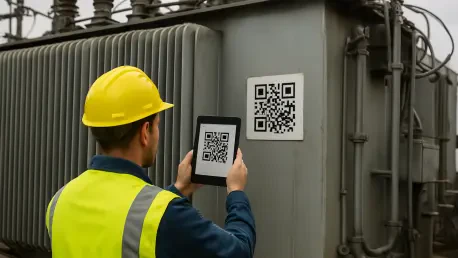
Accessibility was a critical factor in the successful deployment of the new system, particularly for the sixty percent of the workforce stationed on the manufacturing floor. Traditional desk-based training was often impractical for these individuals, necessitating a more flexible approach that fits seamlessly into a busy production schedule. The introduction of mobile-accessible learning modules and QR code-based check-ins for training events addressed this challenge directly. Workers can now engage with instructional content or verify their attendance at safety briefings with a simple scan, minimizing downtime and administrative friction. This shift ensures that professional growth and mandatory compliance training do not come at the expense of operational productivity. By meeting employees where they are, the organization has fostered a more inclusive learning environment. This strategy effectively removes the barriers to entry for professional development, ensuring that the direct labor force remains as digitally integrated as the executive leadership.
Strategic Visibility: Real-Time Data and Employee Empowerment
The transition from static, manual record-keeping to a live, AI-supported database has fundamentally altered how leadership analyzes and forecasts workforce capabilities. With a clear and real-time view of current skill levels across the entire organization, leaders can now predict production capacity with much higher precision. This data-driven approach allows for more informed decision-making regarding resource allocation and project timelines, which is essential for maintaining reliability in the energy market. Furthermore, this transparency provides significant benefits to the employees themselves, who can now access their own development profiles at any time. Workers can track their career progression, view upcoming certification requirements, and identify specific areas for improvement. This empowerment encourages a sense of ownership over one’s professional trajectory, as the path to advancement is no longer obscured by administrative layers. The result is a more motivated and self-sufficient workforce that is better prepared for future challenges.
Sustainable Growth: Strategic Foundations for Workforce Expansion
To capitalize on these advancements, the organization moved toward a future-proof recruitment and retention strategy that prioritized long-term sustainability. The implementation of the digital training backbone allowed for the seamless integration of thousands of new employees during a period of massive hiring. Leadership focused on using AI to identify potential skill gaps before they impacted production, ensuring that the workforce remained one step ahead of technological evolution. This proactive stance suggested that success in the modern industrial sector required a deep investment in the human element of manufacturing. It was established that leveraging digital pathways and immersive simulations provided a reliable blueprint for maintaining quality during rapid growth. Looking ahead, companies were encouraged to adopt similar centralized platforms to foster a culture of ownership and continuous improvement. The total transformation proved that when technology and human development were aligned, the resulting operational agility allowed the organization to lead the global market.