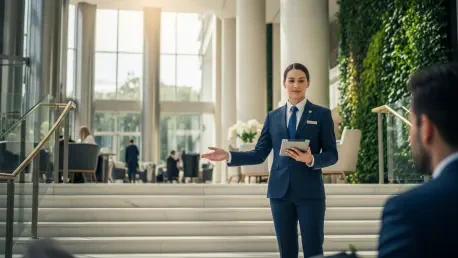

A guest walking into a high-end lobby often notices the scent of expensive candles or the architectural precision of the staircase before they ever engage with the front desk staff standing at the ready. However, the true caliber of a luxury stay is actually determined by the intangible quality of human interaction that occurs long after the initial aesthetic impression has begun to fade into the background. While physical amenities and state-of-the-art technology provide a necessary framework for modern hospitality, they remain hollow without a workforce that feels empowered to deliver genuine emotional labor and intuitive service. Strategic investments in human capital transform a standard transaction into a memorable narrative that fosters deep-seated brand loyalty among travelers who are increasingly weary of automated, impersonal experiences. By treating employee growth as a primary business objective rather than a secondary human resources function, organizations ensure that every guest touchpoint reflects excellence and professional pride.
The Foundation: Distinguishing Training From Strategic Development
Hospitality leaders often use the terms training and development interchangeably, yet they serve fundamentally different purposes within a high-performing organization. Training is a tactical, short-term necessity that focuses on the basic mechanics of a role, such as operating specific property management software or following a precise room inspection protocol. It establishes the minimum performance floor, ensuring that every employee can function within their specific job description from their very first day on the floor. This foundational knowledge is essential for consistency, but it does not account for the unpredictable nature of human interaction. When a company relies solely on training, it produces a workforce that is competent at following rules but often lacks the depth required to handle exceptions. Therefore, while training provides the essential tools for service, it is only the first step in a much longer journey toward professional mastery. Standardized protocols are the skeleton of hospitality, but they lack the soul and flexibility that define truly exceptional service delivery.
Strategic development represents a long-term investment in an employee’s ability to think critically and grow professionally across multiple dimensions of their career. It prepares staff members to navigate ambiguity, manage high-stress interpersonal situations, and communicate with the subtle nuance that sophisticated guests expect. When an organization prioritizes development over mere training, employees stop relying on a rigid script and begin to understand the underlying logic behind their service standards. This depth of comprehension allows them to adapt seamlessly when a guest’s needs fall outside the typical operating procedure, creating a sense of personalized care that feels effortless. Rather than viewing the staff as replaceable cogs in a service machine, development programs treat them as dynamic assets capable of increasing in value over time. This approach not only improves the immediate quality of the guest stay but also builds a culture where innovation and problem-solving are encouraged at every level of the property hierarchy, leading to a more resilient business model.
Career Growth: Enhancing Retention Through Opportunity
The modern hospitality workforce in 2026 is increasingly driven by a desire for professional advancement and continuous learning opportunities that go beyond a paycheck. Data from current global workplace reports indicate that clear growth trajectories are now a top priority for job seekers, particularly in an industry that has historically struggled with high turnover rates. By offering a transparent path for career progression, hotels can transform a volatile employment environment into a stable ecosystem of dedicated professionals who feel genuinely valued by their leadership teams. When employees see a future for themselves within the brand, they are more likely to invest their emotional energy into their daily interactions with guests. This sense of belonging and purpose creates a virtuous cycle where satisfied employees lead to satisfied guests, which in turn leads to a more profitable and sustainable business. Organizations that fail to offer these pathways often find themselves stuck in a cycle of recruitment and training.
Retaining experienced staff members is far more than just a human resources goal; it has become a critical economic imperative for the competitive travel sector. When seasoned employees depart a property, they take with them irreplaceable institutional knowledge and property-specific expertise that simply cannot be documented in a digital manual or training video. Using development as a retention tool preserves this collective intelligence, ensuring that the guest experience remains consistent even as the broader labor market faces significant challenges. These veteran staff members act as the keepers of the brand’s culture, mentoring new hires and ensuring that subtle guest preferences are remembered across multiple stays. The financial cost of replacing a skilled employee often exceeds their annual salary when accounting for recruitment, onboarding, and the loss of productivity during the transition period. By investing in the long-term growth of current staff, leadership protects the bottom line while elevating the quality of every guest engagement.
Crisis Management: Cultivating Confidence and Problem Solving
Guests rarely remember standard interactions where every detail went exactly according to plan; they remember how a staff member handled a crisis or an unexpected disappointment. Effective development programs empower employees to use situational judgment rather than hiding behind a restrictive policy manual when something goes wrong. By coaching staff through complex scenarios, such as managing a family’s expectations during a room delay or resolving a technical issue with an in-room amenity, organizations create proactive problem solvers. These individuals can turn a potential grievance into a positive memory by taking immediate, authoritative action that prioritizes the guest’s well-being over rigid bureaucracy. This level of service is only possible when an employee feels that they have the full support of management to make executive decisions on the fly. This culture of empowerment signals to the guest that the property is staffed by capable professionals who are personally invested in their comfort, which significantly increases the likelihood of repeat bookings.
Confidence in a hospitality setting is rarely an innate trait; it is the direct result of rigorous preparation and the development of mental muscle memory. Through consistent role-playing of difficult conversations and troubleshooting potential property issues before they occur, staff members gain the authority needed to project a sense of calm. This outward composure builds immediate guest trust, especially during high-stress travel periods where passengers may be tired or frustrated. A well-developed employee does not panic when faced with an unusual request because they have been trained to think like a leader and look for creative solutions. This psychological readiness allows the staff to remain present and engaged, rather than being distracted by their own uncertainty or fear of making a mistake. As employees become more confident in their abilities, the quality of the guest experience naturally ascends to a higher level of sophistication and grace. Trust is the currency of luxury service, and it is earned through the visible competence and poise that only come from deep development.
Organizational ROI: Ground-Up Leadership and Human Capital
The hospitality sector is unique because many of its most successful executives began their professional journeys in entry-level, guest-facing roles like concierge or housekeeping. Comprehensive development programs serve as a vital diagnostic tool to identify these high-potential individuals early in their tenure at a property. Those who take active ownership of their professional growth and demonstrate an ability to think critically about operations are often the most qualified candidates for future management positions. By cultivating this ground-up leadership, a brand ensures that its future decision-makers have a profound understanding of the daily challenges faced by front-line staff. This internal pipeline creates a culture of aspiration, where entry-level employees are motivated to perform at their best because they see tangible evidence that hard work and skill development lead to significant advancement. Furthermore, promoting from within maintains the continuity of the brand’s core values, as the new leaders have already been immersed in the organizational culture for years.
Investing in the human element of a hotel often yields a significantly higher return on investment than spending millions on physical renovations or high-end technological upgrades. While luxury amenities and modern decor have diminishing returns as guests come to expect them as standard, an engaged and well-developed workforce creates a ripple effect of satisfaction. This human-centric approach transforms a beautiful building into a living, breathing experience that resonates with guests on an emotional level. In 2026, the differentiation between competitors is no longer found in the thread count of the linens but in the warmth and efficiency of the service provided by the staff. Ultimately, the guest experience is a direct reflection of the employee experience, and the most successful brands are those that prioritize people over property in their capital allocation strategies. When employees feel that their professional journey is a priority for the company, they naturally extend that same level of care and attention to every guest they encounter.
Strategic Next Steps: Evolving the Modern Service Model
To translate these concepts into measurable results, hospitality leaders adopted specific strategies that moved beyond traditional classroom learning. They implemented mentorship circles where junior staff members shadowed senior leaders to observe high-level decision-making in real time. Organizations also integrated AI-assisted micro-learning platforms that delivered bite-sized, role-specific content to employees during quiet periods of their shifts. These platforms tracked individual progress and identified specific skill gaps, allowing managers to tailor their coaching efforts to the unique needs of each team member. By shifting toward a decentralized model of learning, properties ensured that development became a continuous process rather than a sporadic event. They adjusted performance review systems to reward not just service speed, but also proactive problem-solving and peer-to-peer knowledge sharing. These actionable steps successfully transformed the workforce into a proactive engine of guest delight, proving that the most effective way to improve the customer journey was to first enhance the career journey.