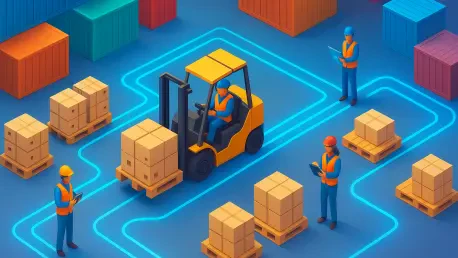

Advanced AI tools like Lucas Systems’ Jennifer provide multilingual support for Spanish, Arabic, and French to eliminate the functional challenges of a diverse labor force. The contemporary logistics landscape is undergoing a radical demographic shift, moving away from a uniform labor pool toward a highly diverse workforce that reflects the globalized nature of modern society. Today’s distribution centers rely on a wide array of employees, including a significant percentage of Hispanic, Latino, and African American workers, many of whom bring various linguistic backgrounds and communication styles to the floor. To stay competitive, warehouse operators must move beyond rigid, legacy systems and adopt a human-centric approach to technology that prioritizes the worker’s native language and experience level. Traditional warehouse operations have long been hindered by a reliance on English-only interfaces and outdated Radio Frequency equipment, which create an immediate barrier for non-native speakers.
Operational Efficiency: Improving Accuracy and Training Speed
Integrating multilingual voice-directed technology directly tackles the inefficiencies caused by language barriers by providing clear, real-time instructions. When a worker is forced to perform mental translations of complex instructions in English, the result is often a significant cognitive burden that slows down operations and leads to avoidable mistakes. By delivering instructions in a worker’s preferred language, these tools allow employees to focus entirely on the physical task of picking or packing. This clarity results in a dramatic reduction in accuracy errors, as the risk of misunderstanding technical terminology or specific location coordinates is virtually eliminated. Furthermore, when the system interacts with the user in a natural, conversational manner, the likelihood of fatigue-related errors decreases. This precision is essential in high-volume environments where even a minor drop in accuracy can lead to financial losses and customer dissatisfaction.
Workforce Development: Accelerating the Onboarding Process
Beyond day-to-day accuracy, multilingual tools significantly accelerate the onboarding process for new hires, which is a critical metric for operational success. In an industry where time-to-productivity determines profitability, providing intuitive, native-language guidance can reduce training time by as much as 30 percent. This rapid enrollment process ensures that workers reach peak performance levels faster, allowing management to scale their operations efficiently during seasonal peaks without being restricted by a candidate’s primary language. By removing the language barrier, organizations can tap into a much broader talent pool, filling vacant roles more quickly than competitors who remain tethered to English-only workflows. This speed is not just about the first week on the job; it extends to ongoing flexibility, as employees can be cross-trained with minimal friction. Effective training through inclusive technology transforms a potential bottleneck into a distinct and sustainable competitive advantage.
Psychological Impact: Enhancing Employee Retention and Confidence
The psychological impact of inclusive technology is a major driver of long-term workforce stability and overall morale within the distribution center. When employees are provided with tools that set them up for success from day one, their confidence increases and their dependency on constant supervisor intervention decreases significantly. This sense of independence fosters a stronger connection to the work and a higher level of trust in the employer, which is essential for reducing the high turnover rates that plague the logistics industry. Workers who feel capable and empowered are less likely to experience the frustration that leads to burnout. By lowering the stress associated with complex technical interfaces, companies create an environment where staff can take pride in their productivity and accuracy. This shift from a managed to a self-sufficient workforce allows supervisors to focus on higher-level strategic planning rather than constant troubleshooting, creating a more professional atmosphere.
Cultural Inclusivity: Creating a Powerful Recruitment Advantage
Cultivating an inclusive culture through technology also serves as a powerful recruitment advantage in an increasingly tight labor market. By advertising a workspace that speaks the language of the local community, companies can tap into broader labor markets that were previously inaccessible due to communication gaps. When a worker feels respected and supported by the technology they use, they are far more likely to remain committed to the organization over the long term. This commitment turns a diverse workforce into a stable operational asset, reducing the hidden costs associated with constant rehiring and retraining. Moreover, word-of-mouth within local communities can become a self-sustaining recruitment engine when employees share their positive experiences with accessible technology. Organizations that prioritize the human element demonstrate a commitment to social responsibility. Ultimately, the goal is to build a culture where every worker has the opportunity to excel and advance.
Logistics Harmony: Bridging the Generational Technology Gap
Modern warehouses must navigate the divide between digital native younger workers and tenured employees who possess decades of institutional knowledge. Multimodal tools act as a bridge, offering the intuitive, app-like interfaces that younger generations expect while providing the stability that experienced workers need to maintain their efficiency. For younger staff, who have grown up with smartphones and voice-activated assistants, adopting a voice-directed warehouse system feels natural and requires almost no adjustment period. For veteran employees, these systems can be configured to respect their existing workflows while adding layers of safety and efficiency through hands-free interaction. This adaptability ensures that technology serves as a facilitator for all age groups rather than a hurdle that alienates veteran staff. By blending the strengths of both demographics, facilities can maintain a high level of performance while ensuring that the deep expertise of senior workers is captured and supported.
Operational Continuity: Fostering Synergy Between Demographics
This generational harmony is crucial for maintaining operational continuity as the workforce continues to evolve between 2026 and 2028. Innovative systems that offer visual aids alongside voice prompts cater to various learning styles, ensuring that neither the visual-oriented youth nor the detail-oriented veterans are left behind. The integration of high-definition screens and wearable tech provides a layer of redundancy that improves safety for everyone on the floor. When older workers see that new tools actually make their physical tasks easier and less taxing, their historical resistance to change often evaporates. Simultaneously, younger workers gain a sense of purpose when they see their tech-savvy skills being utilized in a vital industrial context. This collaborative environment encourages knowledge sharing between generations, where a seasoned picker might offer logistical tips while a younger colleague helps navigate a new software update, which ultimately strengthens the social fabric of the team.
Strategic Growth: Achieving Scalability Through AI Innovation
The path forward for warehouse management lies in the ability of Artificial Intelligence to adapt to the individual nuances of each human worker. Modern systems now feature rapid voice enrollment and the ability to recognize unique accents, dialects, and speech patterns instantly, ensuring high accuracy across a globalized workforce. By treating linguistic diversity as a strategic lever rather than an obstacle, logistics providers can create a more agile and scalable operation that thrives in an increasingly complex environment. AI algorithms are now capable of filtering out the background noise of heavy machinery, focusing solely on the user’s voice to maintain a seamless flow of communication. This level of technical sophistication means that the system grows smarter with every interaction, tailoring its responses to the specific pace and style of the individual picker. As these tools become more pervasive, technology serves as a natural extension of human senses and physical capabilities.
Future Readiness: Building Resilient and Inclusive Supply Chains
In conclusion, the transition toward multilingual and multigenerational tools proved to be a decisive factor for warehouses seeking to maintain a competitive edge. Forward-thinking leaders recognized that investing in human-centric technology was not merely a social initiative but a core operational requirement. They prioritized the implementation of systems that supported diverse languages and provided intuitive interfaces for all age groups, which resulted in a more resilient and flexible labor force. By removing the barriers of language and technical complexity, these organizations successfully expanded their recruitment reach and significantly improved employee retention rates. The data consistently showed that warehouses utilizing these advanced AI solutions operated with higher accuracy and lower overhead costs compared to those stuck with legacy equipment. Moving forward, the focus must remain on refining these digital assistants to offer even more personalized support and real-time feedback, ensuring supply chains stay ready.