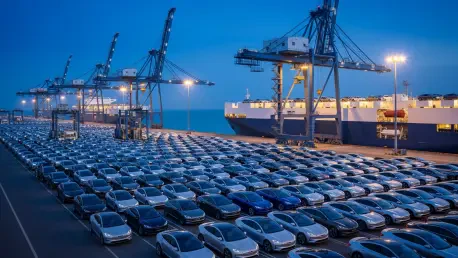

The global automotive industry witnessed a transformative milestone in May as Chinese manufacturers successfully pivoted from a period of domestic market saturation to a dominant era of international ecosystem optimization. As the latest performance metrics are disseminated, it has become evident that the industry is no longer characterized simply by its rapid electrification, but rather by its sophisticated mastery of smart mobility and global distribution networks. This recent period of expansion highlighted a widening chasm between manufacturers that have proactively refreshed their technological offerings and those currently grappling with the logistical friction inherent in massive product line transitions. The narrative of the month was defined by high-volume exports and the integration of advanced software, indicating that the baseline for success has moved far beyond mechanical reliability. Consumers are increasingly prioritizing integrated digital experiences, forcing every major player to reconsider how they balance traditional manufacturing with software-driven innovation.
Disrupting the Status Quo With Smart Mobility
Achieving Rapid Growth Through Leapmotor and AITO
Leapmotor emerged as a standout performer during the recent reporting period, setting a new industry standard with 81,600 vehicle deliveries across its diverse portfolio. This massive 81% year-on-year surge was driven by a combination of strong domestic demand for existing models and an aggressive push into nearly 30 international markets, demonstrating a clear path toward global relevance. While the brand faces an ambitious climb to reach its annual million-unit target, its momentum is bolstered by a rapid product launch cycle that keeps consumer interest peaked. Similarly, the HarmonyOS Smart Mobility alliance, led by Huawei’s deep technological integration, proved that high-tech features can successfully mitigate consumer hesitation in a crowded field. Brands like AITO saw a significant rebound in orders for their newest intelligent models, as the market began to reward companies that offer a seamless bridge between consumer electronics and automotive functionality. This synergy between software and hardware is now the primary metric for gauging market leadership.
Implementing Multi-Brand Strategies via NIO and Xiaomi
The NIO Group demonstrated the power of a diversified brand portfolio by outperforming many of its immediate rivals, delivering over 37,000 vehicles in a single month. The success of its tiered branding strategy—incorporating the premium NIO brand alongside the mid-range LeDao and entry-level Firefly lines—has effectively insulated the company from the volatility of individual price segments. By catering to various economic demographics simultaneously, the organization has created a robust buffer against localized market fluctuations. Meanwhile, Xiaomi Auto maintained a consistent pace of over 30,000 deliveries, proving that its entry into the automotive space remains one of the most successful brand launches in recent history. Even as growth plateaus for some established names, the high level of brand engagement surrounding these tech-first entrants indicates a stable foothold in the competitive sector where software and brand loyalty are becoming the primary drivers of sales. The consumer’s perception of these brands is now deeply tied to their digital identity.
Navigating Complex Product Renewals for Li Auto and XPeng
Not all startups experienced seamless growth, as several key players navigated the complexities of product renewal and inventory management. Li Auto and XPeng both saw slight year-on-year declines, though industry analysts view these as temporary dips caused by aggressive inventory clearance and the introduction of next-generation models. As these companies transition their product lines to stay ahead of rapid technological shifts, their internal stability remains a focal point for global investors. These fluctuations underscore the high-stakes nature of the current market environment, where the timing of a model refresh can immediately impact monthly delivery rankings and consumer perception. The ability to manage these transitions without losing market share has become a critical skill for executives. Companies that failed to synchronize their production schedules with consumer demand found themselves at a disadvantage, highlighting the need for more agile manufacturing processes that can adapt to the rapid pace of current technological advancements.
Scaling Globally Through Manufacturing Prowess
Dominating the Export Landscape With BYD’s Volume
While startups dominated the headlines for smart features, traditional independent automakers utilized their massive industrial scale to shatter export records. BYD maintained its position as the overall volume leader, but the most striking figure was its export performance, which saw a staggering 80% year-on-year increase. This push toward international markets is part of a broader strategy to offset the intense price competition within the domestic Chinese market, where profit margins have been squeezed by relentless discounting. BYD’s ability to sprint toward global export parity with traditional leaders marks a new chapter in its expansion, signaling that the company is prepared to compete on every continent. The scale of its operations allows for a level of vertical integration that few other manufacturers can match, providing a significant cost advantage. This manufacturing prowess is being leveraged to establish a foothold in regions previously dominated by legacy European firms, making BYD a truly global contender.
Strengthening International Presence Through Chery and Geely
Chery Group has established itself as the premier benchmark for international sales among independent manufacturers, recording a transformation that few anticipated. In May, nearly 75% of Chery’s total sales originated from outside of China, highlighting its transition into a truly global entity with a presence that spans across multiple hemispheres. Geely also followed a trajectory of stability and international success, recording over 85,000 vehicle exports while maintaining a dominant domestic presence through its various sub-brands. These figures reflect a concerted effort by legacy giants to diversify their revenue streams and establish a permanent footprint in European and emerging markets alike. By building localized supply chains and adapting their products to regional preferences, these companies have avoided the pitfalls of being overly dependent on a single market. The success of this strategy is evident in the record-breaking export numbers that continue to climb each month, showing no signs of a slowdown.
Cultivating Next-Generation Brands From Legacy Foundations
The performance of Great Wall Motor stood in contrast to some of its peers, showing a slight decline as it manages a more challenging transition toward a lineup centered on New Energy Vehicles. However, the rise of second-generation startups—subsidiaries created by traditional firms like Zeekr, Voyah, and ARCFOX—shows that legacy manufacturers are successfully incubating new brands to compete with tech-first companies. These subsidiaries are now delivering consistent month-on-month growth, proving that the established industry can adapt to the smart era by leveraging existing supply chains and manufacturing expertise. This hybrid approach, combining the agility of a startup with the resources of a legacy giant, has created a formidable new class of competitors. As these brands mature, they are increasingly capable of capturing the premium segment of the market, which was once the exclusive domain of international luxury brands. This shift indicates a maturing of the industrial landscape where old and new forces merge.
Strategic Integration in a Saturated Market
Maintaining Sustainability in a Competitive Environment
As the industry moves into the latter half of the year, the focus is shifting toward the sustainability of this rapid growth and the viability of aggressive annual sales targets. The domestic Chinese market is approaching a saturation point where future gains will likely be driven by technological superiority and replacement cycles rather than simple market expansion. Success will increasingly depend on a manufacturer’s ability to manage complex global supply chains and meet evolving consumer expectations for a unified, software-driven driving experience. The blurring lines between new force startups and traditional giants suggest that only those who can blend manufacturing scale with rapid digital innovation will lead the next era of global automotive history. Furthermore, the integration of artificial intelligence and autonomous driving features is becoming a non-negotiable requirement for any brand seeking to maintain a premium status in an increasingly crowded and sophisticated marketplace, where the barrier to entry continues to rise.
Forging a Path Toward Integrated Innovation
The records set in May demonstrated that the future of mobility was won through a combination of aggressive international expansion and deep technological integration. Manufacturers that succeeded were those that prioritized the development of proprietary software ecosystems and established localized production hubs to bypass trade barriers. Moving forward, companies should focus on refining their battery recycling programs and enhancing their cybersecurity protocols to meet more stringent global regulations. It was also evident that the transition to a software-defined vehicle required a fundamental restructuring of traditional internal hierarchies to foster cross-departmental agility. Leaders addressed these challenges by investing in talent acquisition and forming strategic alliances with global tech firms to stay ahead of the innovation curve. By focusing on long-term ecosystem value rather than short-term sales volume, these organizations secured their positions in the global hierarchy, setting a clear precedent for the years to come.