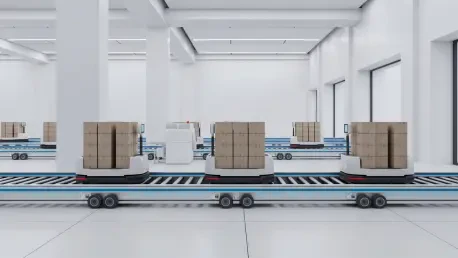

The sophisticated digital architecture of a modern smart factory often crumbles the moment goods reach the loading dock, where manual labor and traditional forklifts create a staggering bottleneck that undermines the efficiency of “zero-touch” production lines. In an age where high-speed robotics can assemble complex electronics or package perishable goods in seconds, the persistence of human-operated loading processes represents a significant strategic failure. This critical interface between the manufacturing floor and the logistics network is frequently the weakest link in the value chain, causing delays that ripple through the entire distribution schedule. By failing to modernize this specific segment of the operation, enterprises are essentially throttling their own growth potential and limiting the return on investment for their upstream automation. Transitioning to fully automated loading solutions is no longer a luxury but a fundamental requirement for maintaining competitiveness in a landscape defined by rapid turnover.
Bridging the Gap Between Production and Logistics
Resolving the Modern Industrial Paradox
Recent advancements in industrial engineering have allowed manufacturing floors to pivot with unprecedented speed, enabling factories to switch between product variations to meet shifting consumer demands. However, this flexibility is frequently neutralized when finished products pile up in staging areas, waiting for a team of forklift drivers to manually navigate the complex dance of trailer loading. The paradox of the modern industrial setting is that while the “inside” of the facility operates with surgical precision and speed, the “edge” remains tethered to twentieth-century methods that cannot keep pace. This disconnect creates a costly friction point where the time savings generated by automated assembly are forfeited during the final transition to outbound transport. As facilities move through 2026 toward 2027, the pressure to synchronize these internal and external workflows will only intensify, forcing a re-evaluation of how goods are transferred into the waiting fleet for shipping.
Overcoming Manual Constraints
Relying on manual labor to manage the heavy lifting at the loading dock introduces a layer of operational fragility that becomes glaringly apparent during periods of peak demand. Hiring and training specialized staff to handle specialized forklift equipment is a time-consuming process that cannot be adjusted overnight, leaving businesses vulnerable to labor shortages or sudden market spikes. When a viral trend or a seasonal promotion triggers a massive increase in order volume, companies often find themselves trapped by the physical limits of their human workforce, unable to move products fast enough to satisfy the customer. This rigidity prevents brands from being truly responsive to the market, as the logistical bottleneck becomes the ultimate ceiling on their revenue growth. Automation removes these human-centric constraints, allowing for a scalable operation that can run twenty-four hours a day without the need for constant supervision or the administrative burden of large crews.
Responding to Market Demands and Global Pressures
Adapting to Event-Led Marketing and Regulation
Modern commerce is increasingly defined by event-led cycles, where product launches and global marketing campaigns create massive, short-lived spikes in logistics activity that require extreme precision. Managing these surges through traditional dock operations is often impossible, as the volume of diverse stock-keeping units can overwhelm manual teams. Furthermore, new environmental regulations regarding packaging waste and carbon footprints are requiring companies to handle a wider variety of specialized containers. Automated loading systems are uniquely equipped to manage this complexity, providing the data-driven framework needed to maintain compliance while meeting aggressive deadlines. This level of transparency allows logistics managers to identify potential delays before they occur and make informed decisions about rerouting shipments when global disruptions arise. By decoupling the loading process from manual labor, organizations gain the freedom to optimize their transport networks based on real-time market conditions.
Building Resilience: Sustainable Strategic Outcomes
Implementing advanced technologies such as slipchains and moving floor systems fundamentally redefined the role of the loading dock, reducing turnaround times for standard trailers from sixty minutes to under ten minutes. This improvement allowed companies to handle a much higher volume of traffic with fewer trailers, leading to a significant reduction in capital expenditure. Beyond the immediate gains in speed, the move toward automated loading played a pivotal role in advancing the corporate sustainability agenda. These systems streamlined the complex logistics involved in returning and recycling materials, making it viable to manage closed-loop supply chains. Organizations that embraced these technologies successfully transitioned their loading docks into data-driven hubs that powered an environmentally conscious business model. Forward-thinking leaders prioritized the integration of these systems with their existing enterprise resource planning software to ensure every movement on the dock was optimized.