
The investment round led by Nimble Ventures brings together Lockheed Martin and Calculus Venture Capital to help automate the complex programming required for precision machining. This strategic infusion of capital arrives at a time when the global manufacturing landscape is grappling with a severe shortage of specialized labor, creating a bottleneck that threatens the production of everything from aerospace turbines to medical implants. The funding is designed to scale a technological solution that addresses the labor-intensive nature of Computer-Aided Manufacturing, often referred to as CAM. Historically, translating a digital 3D model into specific instructions for a machine was a manual process taking hours or even days. By leveraging advanced physics-based algorithms and artificial intelligence, this support facilitates the deployment of software that can generate these pathways in a fraction of the time. This shift is about ensuring high-specification manufacturing remains viable in an era where the human expertise required to manage these machines is becoming increasingly scarce across the manufacturing sector.
Modernizing the Factory Floor
Algorithmic Path Generation
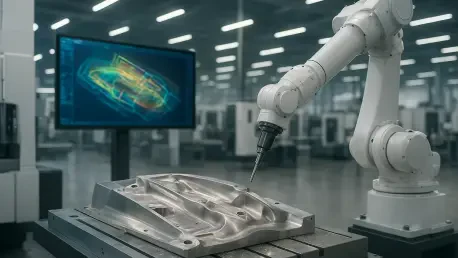
CloudNC’s primary offering, known as CAM Assist, functions as an intelligent plug-in for existing industry-standard software suites like Autodesk Fusion. The software analyzes the geometry of a digital part and automatically selects the appropriate cutting tools, spindle speeds, and feed rates to produce the component efficiently. This level of automation represents a departure from traditional programming, which still requires significant manual input for each unique part feature.
The algorithmic approach ensures that the most efficient material removal strategies are employed, which reduces wear on expensive cutting tools and minimizes physical energy consumption during the process. By standardizing the logic used to create these toolpaths, the technology eliminates the variability often introduced by different human programmers. This consistency is vital for maintaining tight tolerances in precision engineering where even a micron of deviation leads to failure.
Optimizing Production Workflows
The practical implications of automating the programming phase extend far beyond the digital desktop and directly influence the throughput of physical machine shops. In many facilities, multi-million dollar CNC machines sit idle for extended periods while operators wait for the necessary code to be finalized and tested. By reducing the programming time from several hours to just a few minutes, companies can significantly increase their spindle utilization rates and project capacity.
Furthermore, this technology allows less experienced technicians to handle complex tasks that were previously reserved for senior engineers, effectively bridging the talent gap that has plagued the industry for years. As the software continues to learn from a vast database of machining strategies, it provides users with optimized sequences that are often superior to those created manually. This democratization of expertise ensures that smaller workshops can compete with larger global entities.
Strategic Impact on Global Defense
Strengthening the Supply Chain
The participation of Lockheed Martin in this funding round underscores the strategic importance of automated machining for the defense and aerospace sectors. These industries require components with extreme precision and reliability, often involving exotic materials like titanium that are notoriously difficult to machine. Automated toolpath generation allows defense contractors to respond more rapidly to shifting logistical requirements, enabling the production of critical spare parts.
This agility is essential for maintaining operational readiness, especially when supply chains are disrupted by geopolitical instability. By integrating AI-driven programming directly into the production cycle, organizations can verify the manufacturability of a part during the design phase, preventing costly redesigns. The ability to move from a conceptual blueprint to a finished metal part in hours provides a significant competitive advantage in a world where speed is as critical as quality.
Long-Term Industry Transformation
The successful acquisition of this capital signaled a pivotal shift in how the manufacturing industry approached the integration of software and hardware. Industry leaders recognized that the path toward fully autonomous factories required a departure from manual programming toward a system where machines essentially programmed themselves based on digital intent. Stakeholders determined that the implementation of CAM Assist offered a scalable model for reducing technical debt in production.
Moving forward, manufacturing firms focused on refining their internal digital threads to ensure that every stage of production was interconnected through shared data. The investment facilitated the expansion of technical support teams and the development of new features that pushed the boundaries of what automated systems could achieve. Professionals in the field prioritized the adoption of these tools to remain relevant in a market that favored digital-first strategies as the standard.