
Introduction
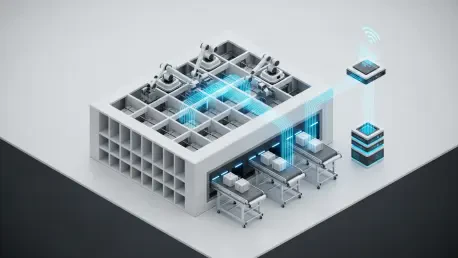
Achieving maximum efficiency in a modern warehouse requires more than just high-speed robotics; it demands a seamless digital brain capable of orchestrating complex physical movements in real time. As e-commerce continues to drive consumer expectations toward instant gratification, the pressure on fulfillment centers has reached levels that manual labor alone can no longer sustain. While hardware solutions like the AutoStore cube storage system provide the physical density required for high-volume storage, their true potential remains dormant without a sophisticated Warehouse Management System to guide them.
This article examines how the integration of the Ehrhardt Partner Group LFS software suite transforms automated storage from a static inventory solution into a dynamic fulfillment engine. By bridging the gap between digital inventory management and physical robotic execution, this partnership allows businesses to scale their operations without the traditional headaches of technical complexity. Readers can expect to learn how a standardized approach to software integration reduces risks, increases throughput, and prepares logistics operations for the demands of the upcoming decade.
Modern logistics strategies now prioritize stability and speed over bespoke, experimental setups. As companies look ahead from 2026 toward 2030, the focus has shifted to proven architectures that offer a plug-and-play experience. The objective here is to break down the mechanics of the LFS-AutoStore link, providing clarity on why this specific software orchestration is becoming the industry standard for cube storage environments.
Key Questions: Exploring the Synergy Between LFS and AutoStore
Why Does Direct Integration Without Middleware Improve Reliability?
The traditional approach to warehouse automation often involved multiple layers of software, with third-party middleware acting as a translator between the warehouse management system and the robotic controller. However, every additional layer of software introduces potential failure points, latency issues, and complex maintenance requirements that can halt production. By eliminating these intermediaries, the LFS communicates directly with the AutoStore controller, ensuring that inventory data and task assignments are synchronized in real time without the risk of data translation errors.
Direct communication allows the LFS to maintain a single source of truth for every bin and item within the grid. When a robot moves a bin, the software records the change instantly, providing a level of transparency that is impossible to achieve when data must pass through multiple systems. This streamlined architecture also simplifies the troubleshooting process; because there is only one interface to monitor, IT teams can identify and resolve issues much faster than in fragmented environments.
Furthermore, this standardized interface reduces the time required for initial system deployment. Instead of spending months developing custom code to connect hardware and software, companies can rely on a pre-validated connection. This stability is particularly valuable for growing enterprises that need to expand their automation footprint across multiple sites, as the same integration model can be replicated with predictable results and minimal technical overhead.
How Does the System Enhance Responsiveness for E-Commerce Demands?
In the current landscape of high-velocity retail, the ability to pivot picking priorities within seconds is a definitive competitive advantage. The integration between the WMS and the cube storage system allows for dynamic task management where the software constantly recalculates the most efficient sequence for order fulfillment. If a high-priority shipment enters the queue, the LFS can immediately signal the AutoStore robots to prioritize the retrieval of specific bins, ensuring that urgent orders reach the workstations without delay.
This responsiveness extends to the physical layout of the inventory within the cube. The software analyzes picking frequencies to ensure that fast-moving items are naturally moved toward the top layers of the grid over time, reducing the time robots spend digging for bins. By coordinating these movements behind the scenes, the system minimizes wait times for human operators at the ports, creating a continuous flow of goods that maximizes the overall throughput of the facility.
Moreover, the integration supports complex order consolidation strategies that are essential for multi-item shipments. As robots deliver bins to the ports, the software guides the operator through the picking process, often managing simultaneous tasks to keep the workstation active. This synchronization ensures that the mechanical speed of the robots is matched by the logical speed of the software, preventing bottlenecks that often occur when robotic systems operate in isolation from the broader warehouse workflow.
What Role Does Industry-Specific Versatility Play in This Partnership?
The versatility of the LFS-AutoStore integration is best demonstrated through its successful application in drastically different sectors, such as wholesale distribution and manufacturing. For a company like AXRO, which manages a massive inventory of technical components for B2B clients, the primary goal is rapid fulfillment of diverse orders. The software allows them to manage thousands of stock-keeping units with high accuracy, ensuring that the density of the cube storage is matched by the precision of the inventory tracking.
In contrast, manufacturers like YKK use the same system to feed production lines rather than just shipping finished goods. In this context, the integration functions as a bridge between storage and manufacturing, where the AutoStore acts as a buffer for raw materials and components. The LFS tracks the consumption of materials in real time, triggering replenishment tasks automatically to ensure that production never pauses due to a lack of parts.
These examples highlight that the standardized interface is not a rigid one-size-fits-all solution but a flexible framework that adapts to specific business logic. Whether a company is dealing with the seasonal peaks of fashion retail or the consistent demands of a factory floor, the software provides the necessary tools to customize workflows. This adaptability ensures that as a business evolves, the automation system can grow and change alongside it without requiring a total system overhaul.
How Does the Demonstration Center Mitigate Implementation Risks?
One of the most significant barriers to adopting warehouse automation is the fear of operational disruption during the transition phase. To address this, EPG established a fully functional demonstration and research center in Germany where the LFS-AutoStore integration is continuously tested under real-world conditions. This facility allows potential users to see the system in action, featuring active robots and workstations that simulate a live warehouse environment.
The center serves as a critical training ground for project teams, allowing them to familiarize themselves with the software interface and robotic hardware long before the actual installation begins. By providing a risk-free environment for hands-on learning, the facility helps to identify potential process improvements and operator training needs early in the project lifecycle. This proactive approach significantly reduces the learning curve and ensures a much smoother go-live experience for the client.
Additionally, the center functions as a laboratory for ongoing research and development. New software features, such as updated picking algorithms or interface enhancements, are vetted in the demonstration grid before being released to the broader market. This rigorous testing protocol ensures that every update to the LFS-AutoStore link is stable and performance-optimized, reinforcing the long-term reliability of the investment for businesses worldwide.
Summary: A Unified Approach to Warehouse Automation
The standardized integration between EPG’s LFS and AutoStore represents a significant shift toward more manageable and scalable logistics technology. By focusing on a direct, middleware-free connection, the system provides a level of reliability and data transparency that fragmented architectures cannot match. The software acts as a sophisticated conductor, ensuring that the physical speed of the robots is always aligned with the strategic priorities of the business, whether in retail, wholesale, or manufacturing.
This unified ecosystem allows companies to maximize their storage density while maintaining the agility needed to handle the volatility of modern supply chains. The ability to test and refine processes at a dedicated demonstration facility further reduces the risks associated with large-scale automation projects. As a result, organizations gain a future-ready foundation that supports growth, improves accuracy, and ensures that the warehouse remains a source of efficiency rather than a bottleneck.
Final Thoughts: Navigating the Future of Automated Storage
The integration of LFS and AutoStore demonstrated that a unified architecture was the most effective path forward for navigating the complexities of modern fulfillment. Companies that transitioned to this model moved away from fragmented IT landscapes and toward a future where hardware and software functioned as a single, cohesive unit. This shift allowed organizations to focus on strategic growth rather than technical troubleshooting, ultimately setting a new standard for operational excellence in the automated warehouse sector.
Looking back at the evolution of these systems, the success of standardized interfaces suggested that the best way to handle uncertainty was through technological stability. Businesses that prioritized these proven connections found themselves better equipped to handle the rapid shifts in consumer behavior and global trade. By investing in a system that prioritized real-time responsiveness and direct communication, leaders secured a competitive edge that lasted well beyond the initial implementation phase.