
The silence of a frozen warehouse is often broken by the rhythmic hum of machinery that maintains a delicate balance between industrial efficiency and thermal preservation. At Bidfood’s newest distribution hub in Worcester, this balance is no longer a logistical gamble but a strictly controlled reality. The transition of perishable goods from a truck’s refrigerated trailer to the warehouse floor represents the most vulnerable moment in the food supply chain. By moving away from standard, one-size-fits-all loading solutions, this facility demonstrates how high-speed automation and customized engineering have become the new baseline for large-scale foodservice distribution.
Delivering Precision at the Intersection of Logistics and Freshness
Achieving peak performance in food logistics requires an infrastructure that can withstand the rigors of constant movement while keeping temperatures locked within a specific range. FBS Hörmann has outfitted the Worcester hub with systems designed to eliminate the common gaps found in traditional loading docks. This project reinforces a long-term partnership aimed at creating a seamless environment where freshness is protected at every touchpoint. By moving goods through an airtight process, the facility reduces the risk of spoilage and maintains the high standards expected in modern food delivery.
The integration of these systems ensures that the facility operates with surgical precision, minimizing the time a product spends in ambient conditions. In a landscape where margins are slim and regulatory standards are high, the ability to maintain a tight seal during the loading process is a significant competitive advantage. This installation serves as a blueprint for how technical synchronization between door systems and docking equipment can redefine operational reliability.
The Critical Role: Thermal Stability in Modern Distribution
Thermal loss at the loading dock is a primary driver of rising energy costs and potential food safety risks in the logistics sector. As temperature-controlled facilities face the pressure of increasing throughput and decreasing carbon footprints, the need for airtight transitions is vital. A single failure in the thermal barrier can lead to frost buildup, equipment strain, and the degradation of sensitive cargo. Modern distribution hubs must account for these variables by implementing infrastructure that acts as a continuous thermal shield.
The Worcester site addresses this by focusing on integrated systems that prevent heat transfer even during peak loading hours. By prioritizing thermal stability, the facility not only safeguards the inventory but also reduces the mechanical workload on cooling systems, leading to a more sustainable operation. This strategic focus on temperature control ensures that the cold chain remains unbroken from the moment a vehicle docks until the product is dispatched.
High-Performance Infrastructure: Custom-Engineered Loading Bays
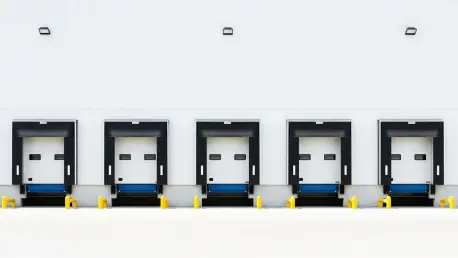
The backbone of the facility consists of nine specialized loading bays equipped with HTL2 dock levellers and SPU67 automated industrial sectional doors. These bays feature bespoke dock pads and bumpers engineered specifically to accommodate the unique dimensions of Bidfood’s varied transport fleet. This customization ensures a tighter seal during the loading process and prevents structural damage to the building facade caused by repeated vehicle impacts.
Operational flexibility is further enhanced by the inclusion of dedicated level access bays, allowing the hub to manage diverse vehicle types without disrupting the primary workflow. This tailored approach to docking hardware ensures that every truck, regardless of size, can be serviced safely. By investing in custom-fitted components, the facility eliminates the inefficiencies that often plague large-scale logistics operations.
Specialized Rapid-Action Doors: The Industrial Workhorses
Thermal integrity in freezer and chiller zones is maintained by Maviflex high-speed doors, specifically the Mavicold and Mavipass models. These systems are the true workhorses of the facility, utilizing rapid stacking technology to close the thermal barrier in seconds. This speed is essential for preventing the ingress of warm air and the subsequent formation of ice, which can compromise safety and efficiency.
Field data confirms the reliability of these systems, with over 100 units operating across the estate and many surpassing one million cycles. This level of durability is critical for high-traffic environments where mechanical failure can lead to expensive delays. The high-speed functionality not only preserves energy but also allows for a faster pace of forklift traffic, ensuring that the movement of goods remains fluid and uninterrupted.
Strategies for Longevity: Maintaining Flow in Cold Storage
The success of the Worcester project was rooted in a forward-looking strategy that prioritized mechanical longevity and minimized operational downtime. By establishing a proactive maintenance schedule and keeping a localized stock of critical replacement parts, the facility ensured its infrastructure remained resilient against the demands of high-volume logistics. This comprehensive approach to support allowed for a smooth transition from installation to full-scale daily operation.
The project team utilized high-speed automation and customized docking interfaces to build a system that supported the logistical demands of the foodservice industry. In the end, the collaboration between FBS Hörmann and Bidfood established a new standard for cold chain efficiency by integrating safety and thermal performance into a single, cohesive framework. This initiative paved the way for future developments where technical precision and operational flow were treated as inseparable priorities.