
The fragrance of freshly baked bread usually signals comfort, but for the logistics team at Grupo Bimbo, it acts as a relentless countdown toward a non-negotiable expiration deadline. For a global titan managing nearly 250 bakeries across 39 countries, every hour a loaf spends in a warehouse is an hour lost on the grocery shelf. In an industry where “high-velocity” is not just a buzzword but a survival requirement, the transition from manual sorting to a data-driven automated model has become the linchpin of the global strategy. This shift represents a fundamental reimagining of how food moves from the oven to the consumer in a world that demands both variety and immediacy.
As the largest baking company on the planet, the organization operates under a unique set of constraints that require more than just traditional logistics. The sheer scale of the operation means that even minor inefficiencies in the supply chain can lead to massive amounts of waste and significant financial loss. By prioritizing speed and precision through digital modernization, the company has set a new benchmark for the perishable goods sector. The focus is no longer just on moving products from point A to point B, but on doing so with an optimized flow that preserves the value of every single SKU in the catalog.
The Race Against the Expiration Date: Why Freshness Demands Speed
Bread is a ticking clock that dictates every decision made within the distribution network. Unlike durable goods that can sit in a distribution center for months, baked goods lose their value with every passing minute of inactivity. This reality forces a relentless pace on the logistics infrastructure, requiring a system that can handle rapid turnover without sacrificing the delicate nature of the product. The move toward automation was born from the necessity to outrun the natural degradation of the inventory, ensuring that the final consumer receives a product that feels as though it just left the oven.
The complexity of managing this velocity is amplified by the sheer volume of production across four continents. When thousands of units arrive at a distribution hub simultaneously, manual labor often becomes a bottleneck that slows down the entire dispatch process. High-throughput automation removes these human limitations, allowing for a seamless transition from the production line to the delivery truck. This acceleration is critical for maintaining market share in an environment where competitors are also fighting for the limited shelf life of the modern grocery aisle.
The High Stakes of Perishable Supply Chains in a Global Market
The baking industry faces unique pressures that durable goods manufacturers never encounter. As consumer preferences shift toward a wider variety of specialized products, the number of Stock Keeping Units (SKUs) has exploded, making traditional manual picking processes increasingly prone to error. Managing gluten-free options, artisanal loaves, and regional favorites alongside standard white bread requires a level of organizational sophistication that manual systems simply cannot provide. This SKU proliferation has turned the warehouse into a complex puzzle where every piece must be handled with mathematical accuracy.
Rising economic pressures and the need for razor-thin margins mean that inefficient delivery cycles and high waste levels are no longer sustainable for companies looking to maintain market leadership. In a globalized market, the cost of fuel, labor, and raw materials fluctuates constantly, putting immense pressure on the fulfillment side of the business. Reducing the cost per case while increasing the reliability of the delivery schedule has become a mandatory objective. Without a robust and automated logistics framework, the risk of obsolescence becomes a daily threat to the bottom line.
Overcoming Operational Bottlenecks Through High-Throughput Automation
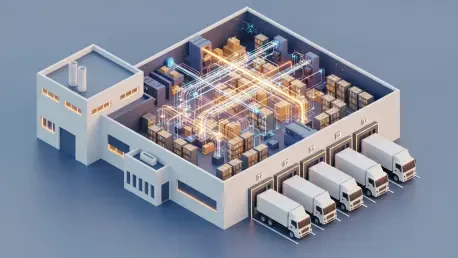
To modernize its logistics infrastructure, Grupo Bimbo replaced legacy systems with a fully automated, high-velocity warehouse architecture. This transformation focused on solving five critical pain points: managing SKU proliferation, reducing the cost per case, ensuring strict First-In, First-Out (FIFO) inventory rotation, and removing growth constraints. By implementing Automated Storage and Retrieval Systems (AS/RS), the company moved away from siloed technological upgrades toward a unified ecosystem. This infrastructure treats every tray of bread as a data point, allowing for precise tracking and movement throughout the facility.
The implementation of these systems allowed the organization to handle delicate baked goods with a level of care that paradoxically increased with speed. High-speed conveyors and robotic picking arms were calibrated to move soft packaging without causing damage, ensuring that product quality remained high even during peak demand periods. This mechanical precision ensured that inventory rotation followed strict FIFO protocols automatically, virtually eliminating the human error that often leads to product spoilage. The result was a facility that could scale its operations to meet holiday surges or promotional peaks without requiring a massive influx of temporary labor.
Findings from the Stoecklin Logistics Partnership
A strategic collaboration with Stoecklin Logistics revealed that automation is most effective when it is holistic rather than piecemeal. The partnership’s data-driven planning shifted the focus to real-time visibility, allowing the facility to process orders at rates previously deemed unattainable. By analyzing the flow of goods through a digital lens, the team identified hidden inefficiencies in the layout of the distribution center that were causing unnecessary delays. This comprehensive approach ensured that the hardware and software worked in a synchronized rhythm, maximizing the return on the technological investment.
Expert analysis of the project showed that by removing manual bottlenecks, the company achieved a significant decrease in picking errors and a measurable rise in customer service levels. The data proved that speed and quality can indeed scale together when backed by a robust technical framework. The partnership also highlighted the importance of predictive maintenance and remote monitoring, which allowed the facility to maintain high uptime. These findings suggested that the future of logistics lies in the ability to anticipate problems before they disrupt the flow of goods, turning a reactive supply chain into a proactive one.
Strategies for Building a Scalable and Integrated Logistics Framework
The successful overhaul of the distribution network established a clear blueprint for how global manufacturers should approach digital maturity in the coming years. Organizations that prioritized a “data-first” mindset found themselves better equipped to handle the volatility of the modern market. This framework relied on three core pillars: end-to-end integration to synchronize production with dispatch, the use of modular platforms to ensure built-in scalability, and the cultivation of collaborative ecosystems. These pillars ensured that the logistics arm of the business functioned as a strategic asset rather than a cost center.
The implementation of these strategies resulted in a significant reduction in the environmental footprint by optimizing delivery routes and reducing product waste. The company moved toward a model where every truck left the facility with a maximized load, lowering the carbon emissions associated with each case of bread. The adoption of modular automation platforms meant that the physical footprint of the warehouses did not need to expand to accommodate higher volumes, preserving land and resources. Ultimately, the transition to an integrated logistics framework secured a competitive advantage that balanced profitability with corporate responsibility, proving that the future of the industry rested on the intelligent application of technology.