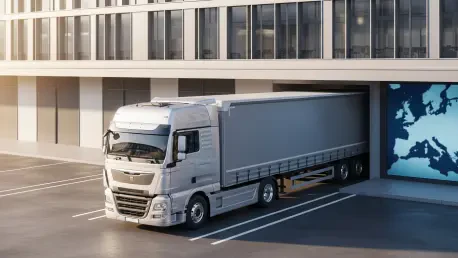

Moving Beyond the Dashboard Clutter of Multi-Country Transit
For decades, long-haul truckers crossing the European continent faced a dizzying array of on-board units and billing statements that slowed down transit times and inflated administrative costs. This physical clutter mirrored the digital fragmentation of a continent that was supposed to be unified by trade but remained divided by infrastructure. Logistics companies found themselves managing a patchwork of payment systems, diverting precious time away from actual transport to handle manual administrative burdens.
As the transport sector pivots toward integrated services, this friction is finally becoming an obsolete burden for modern fleet operators. The shift is not merely about removing physical hardware from a dashboard; it is about reclaiming the efficiency that was lost to bureaucratic complexity. Modern logistics demand that goods move as seamlessly as the data tracking them, requiring a significant overhaul of how companies view and manage transit costs across international lines.
The Growing Necessity of Interoperable Toll Solutions in Europe
The European road transport sector is currently experiencing a fundamental shift toward digital integration, driven largely by the European Electronic Toll Service (EETS) standard. This framework emerged as a direct response to a persistent industry pain point: the lack of coordination between various national tolling authorities. For transport firms operating today, the move toward EETS represents a strategic necessity to maintain competitiveness in a market where fuel costs and administrative overhead are under constant scrutiny.
Adopting a single on-board unit (OBU) that works across multiple borders allows companies to finally synchronize their international operations with their financial reporting. This interoperability eliminates the need for redundant hardware and ensures that drivers can focus on the road rather than worrying about which device needs to be activated at which border. By streamlining these digital checkpoints, the industry is creating a more resilient supply chain that can withstand the logistical pressures of a fast-paced global economy.
A Strategic Acquisition: Expanding the European EETS Footprint
The recent acquisition of a majority stake in tolltickets GmbH by DKV Mobility marked a decisive expansion of the company’s integrated mobility platform. By absorbing Tolltickets’ specialized technology and its management of over 100,000 vehicles, DKV Mobility positioned itself as a dominant force in the European EETS market. This move allowed the company to offer immediate access to toll systems in 15 different countries through a unified infrastructure, significantly reducing the complexity for its vast customer base.
While DKV took the operational lead, the minority stake retained by Kapsch TrafficCom AG ensured that Tolltickets maintained its technical agility. This partnership provided the massive scale required to dominate the cross-border payment landscape while keeping the innovation cycle moving quickly. The result was a robust B2B platform that bridged the gap between national tolling requirements and the needs of private or commercial transport firms seeking a simplified solution for their fleets.
Consolidating Technical Agility with Industry-Leading Scale
There is a growing consensus among industry experts that the future of logistics lies in the consolidation of fragmented services into unified digital platforms. The synergy between DKV’s extensive market reach and Tolltickets’ decade of technical expertise illustrated a broader trend where technological innovation meets expanded market access. This alignment improved the reliability of fleet-related services, ensuring that both business and private customers navigated complex tolling landscapes without the historical administrative lag.
By centralizing payments, tolling, and fleet management, the industry moved toward a model where digital interoperability became the standard rather than the exception. This consolidation also allowed for better data security and more consistent service updates across different jurisdictions. As these platforms continue to evolve, they provide a blueprint for how other sectors of the transport economy might integrate to provide a more holistic experience for the end-user.
Practical Benefits: Transitioning to a Unified Mobility Platform
Fleet managers who implemented a streamlined tolling strategy found that they significantly reduced operational downtime and administrative errors. By migrating entire fleets to a single OBU provider, companies ensured a consistent data flow that simplified the auditing process. This approach consolidated transactions across 15 countries into a single billing stream, which allowed accounting departments to process payments with unprecedented speed and accuracy.
Furthermore, utilizing these unified digital tools empowered transport firms to predict transit costs and optimize routes based on real-time data. This shift improved the bottom line and ensured a flexible response to shifting European regulations. The transition toward integrated mobility platforms provided a scalable solution that addressed the needs of a connected continent, laying the groundwork for more efficient logistics practices in the years that followed.