



Precision in the modern warehouse is no longer just about horsepower and lifting capacity; it is defined by the seamless dialogue between a driver and the machine. As logistics hubs face unprecedented pressure to move more goods in less time, the interface between man and machine has become the ultimate bottleneck. Hubtex is addressing this friction point directly with a comprehensive overhaul of its operating system, moving away from fragmented displays toward a unified, data-rich environment. This evolution transforms how operators perceive and interact with their equipment in high-density storage environments, ensuring that every movement is calculated and every second is optimized for performance.
The Digital Leap: Material Handling Efficiency
The era of guessing at forklift metrics or wrestling with clunky, unintuitive controls has finally come to an end. In a landscape where every square inch of storage must be utilized, the ability to maneuver with surgical precision is the difference between a fluid supply chain and a stagnant one. Hubtex recognizes that as machinery becomes more sophisticated, the way information is presented must simplify. By consolidating various streams of data into a single, cohesive interface, the company has eliminated the noise that often distracts operators during high-intensity shifts.
This shift toward digital integration represents a fundamental change in forklift architecture. Rather than treating the display as a secondary accessory, it is now the nerve center of the vehicle. This allows for a more holistic view of the machine’s health and surroundings, which is essential for maintaining high throughput. As fleets grow more complex, the demand for a centralized command structure has never been more pressing. This new concept ensures that the driver is always ahead of the curve, anticipating needs before they become urgent problems.
Ergonomics and Data Integration: The Pillars of Modern Logistics
In the demanding world of narrow-aisle warehousing, a split-second delay or a misread dial can lead to costly downtime or safety incidents. Modern supply chains no longer rely solely on physical power; they thrive on the precision of data and the sustained focus of the operator. As fleets become more complex and assistance systems more prevalent, the industry is seeing a shift where the user experience is just as critical as the lifting capacity. Reducing cognitive load—the mental effort required to process machine information—is the most effective way to boost productivity and retain skilled labor in a competitive market.
Focusing on the human element allows companies to bridge the gap between mechanical capability and human execution. When an operator feels confident and comfortable, their performance naturally improves, leading to fewer errors and a safer work environment. The integration of high-level data into an ergonomic framework means that the machine acts as an extension of the worker. This synergy is what defines the modern logistics standard, where technology serves to empower the individual rather than overwhelm them with technical complexity.
Engineering the Human-Machine Interface: The New Hubtex Components
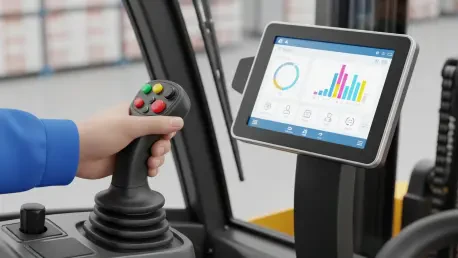
The fourth-generation Information Terminal, or HIT4, serves as the brain of this new concept. By consolidating wheel orientation, battery status, and travel speed into a high-contrast touchscreen, the system eliminates the need for multiple disparate gauges that previously cluttered the cabin. Its adaptive brightness and standardized visual icons ensure that whether an operator is in a dimly lit warehouse or a bright outdoor loading dock, the most critical alerts remain front and center. This centralized hub provides a clear, real-time snapshot of the vehicle’s operational status.
The physical connection to the machine has been refined through a redesigned joystick that prioritizes long-term comfort. Featuring a specialized thumb rest and illuminated buttons, the new hardware reduces the repetitive strain that leads to fatigue during long shifts. A centrally located rocker switch allows for fluid changes in direction, ensuring that the forklift’s multidirectional capabilities are harnessed with minimal physical effort. Every button and contour has been tested to ensure that the tactile feedback is clear, even when the operator is wearing heavy industrial gloves.
For the high-performance PHOENIX series, Hubtex introduced a ruggedized display controller designed specifically for intense industrial use. This component acts as a bridge, allowing operators to manage complex assistance systems—such as racking position guides—without taking their eyes off the load. By separating primary travel functions from secondary work functions, the workflow remains streamlined and intuitive. This separation of concerns prevents accidental activations and allows the operator to focus entirely on the task at hand, whether it is navigating a tight corner or placing a heavy pallet at height.
Operational Reliability: Future-Proofing the Fleet
According to the strategic vision at Hubtex, this update is not just about the driver; it is a calculated move to improve the entire lifecycle of the vehicle. By utilizing a modular architecture, the new system provides maintenance teams with structured diagnostic paths and a transparent event history. This data-driven approach allows for rapid troubleshooting and even remote software updates, significantly cutting down on vehicle downtime. Technical teams can now identify potential issues through the digital log before they lead to a mechanical failure, preserving the longevity of the equipment.
Furthermore, the consistent operating logic across different models ensures that as new safety technologies emerge, they can be integrated without requiring operators to undergo extensive retraining. This continuity keeps the fleet relevant and operational for years, protecting the initial capital investment. When a fleet uses a standardized interface, the internal mobility of staff increases, as drivers can switch between different vehicle types with minimal adjustment time. This creates a more resilient workforce and a more flexible operational strategy for the business.
Implementing the New Standard: Warehouse Operations
Implementing these ergonomic advancements helped businesses combat operator fatigue, which remained a primary driver of workplace accidents and staff burnout. By providing a workspace that adjusted to the needs of the individual, companies observed an increase in morale and a decrease in turnover rates. The HIT4 terminal’s color-coded messaging system provided immediate feedback, allowing supervisors to ensure that safety protocols were followed during complex maneuvers in narrow aisles. This transparency transformed how safety was managed on the floor, moving from a reactive to a proactive stance.
Standardizing the interface allowed for a plug-and-play approach to staff management, where operators transitioned between different forklift configurations with a minimal learning curve. Facilities that modernized their fleets began auditing current performance to identify where the transition to data-heavy, assisted operating concepts provided the highest return on investment. The successful integration of these systems proved that investing in the human-machine interface was not just an aesthetic choice, but a core financial strategy. Ultimately, the adoption of this advanced operating concept established a new baseline for what is expected in high-efficiency material handling environments.







