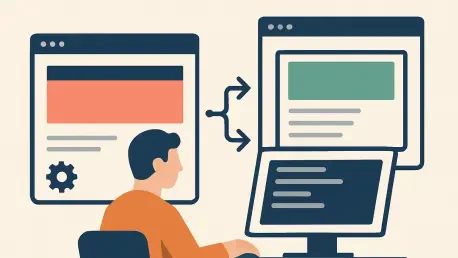

In a digital ecosystem where a single line of rogue code can dismantle hours of painstaking progress, the necessity for a fail-safe sandbox environment has shifted from a luxury to a professional requirement. The Manus “Make a Copy” feature, launched on the WebDev platform, serves as a pivotal response to the volatility of live updates by introducing a robust project duplication framework. This tool is not merely a file replication service; it is a strategic implementation designed to provide creators with independent sessions that allow for isolated experimentation. By decoupling the creative process from the live environment, the system addresses the growing demand for modular and secure development workflows.
The relevance of this technology lies in its ability to facilitate a shift toward agile development cycles. Traditionally, making significant changes to a web project involved high risks or complex manual staging setups. This update streamlines that transition, allowing for a project to be cloned into a fresh session where new ideas can be tested without impacting the user experience of the existing build. It represents a broader trend in the industry where the focus has moved away from monolithic stability toward flexible, iterative design.
Technical Execution and Functional Core
Structural Cloning: Architectural Integrity
The system manages project replication by performing a deep clone of the underlying architecture, which includes the core project code, database schemas, and vital API secrets. This level of depth ensures that the logic governing the original build remains intact within the new session, preventing the functional degradation often seen in simpler export-import processes. The performance of this mechanism is particularly noteworthy for its speed, as it transitions complex logic structures to a fresh environment with minimal latency.
Moreover, the transition maintains the relationship between various project components, ensuring that internal references do not break during the migration. This architectural continuity is essential for developers who rely on intricate back-end configurations. By preserving these elements, the platform allows for a seamless jump from a finished project to a new experimental branch, maintaining the integrity of the original vision while providing a stable foundation for further development.
Data Isolation: Security Protocols
A defining characteristic of the duplication process is the “clean slate” approach, which serves as a critical security barrier between production and testing. While the architecture is replicated, the system purposefully excludes sensitive production data and live configurations. Database rows are emptied, and specific environmental settings, such as custom domains and active GitHub integrations, are stripped away. This ensures that the duplicate project operates in total isolation, preventing accidental data leaks or unintended interactions with live external services.
This protocol is essential for maintaining compliance and security standards within professional organizations. By forcing a disconnect from third-party publishing statuses and repository links, the technology creates a safe perimeter for developers. This isolation allows for the testing of high-risk features, such as database migrations or script overhauls, without the possibility of contaminating the primary project’s data integrity or its public-facing presence.
Emerging Trends: Modular Web Development
The web development landscape is increasingly moving toward template-driven design and the heavy utilization of staging environments for routine maintenance. The Manus update aligns with this industry behavior, reflecting a shift away from direct production edits. Developers now prefer safer, duplicated testing grounds where they can refine UI components or back-end logic before merging them into the final product. This modularity allows for more diverse experimentation, as the cost of failure is reduced to nearly zero within a duplicated session.
Furthermore, the reliance on these isolated environments has become a standard practice for ensuring site longevity and stability. As web applications become more complex, the ability to duplicate a stable build for the purpose of minor adjustments or major overhauls is no longer optional. This trend highlights a maturation of the development lifecycle, where security and flexibility are prioritized alongside speed and creative freedom.
Real-World Applications: Deployment Scenarios
Project duplication finds its most significant utility in scenarios involving high-stakes integrations or major visual redesigns. For instance, implementing a new payment gateway or an encrypted checkout flow requires a level of testing that is dangerous to perform on a live site. By creating a replica, developers can simulate transaction environments and troubleshoot errors in a vacuum. This reduces the risk of breaking active digital infrastructure and ensures that the final deployment is polished and error-free.
Agencies also leverage this functionality to scale their production by using successful projects as blueprints for new client work. Instead of building every project from the ground up, a proven architectural framework can be duplicated and customized, significantly reducing development time. This approach allows for the mass production of high-quality digital assets while maintaining a consistent standard of code and design across multiple independent projects.
Technical Constraints: Operational Hurdles
Despite the operational advantages, the current iteration of the technology faces specific limitations regarding collaboration and external connectivity. Duplication is presently restricted to individual project ownership, which prevents teams from seamlessly sharing clones across different accounts. This lack of native team integration creates a bottleneck for larger organizations that rely on collaborative workflows to move projects through various stages of review and approval.
Additionally, the manual overhead required to reconnect external tools like GitHub or third-party publishing platforms remains a point of friction. Developers must manually reconfigure these settings for every new duplicate, which can interrupt the flow of a fast-paced development cycle. While these constraints reinforce the security of the isolation protocols, they also highlight areas where the user experience could be further streamlined to reduce repetitive administrative tasks.
Future Trajectory: Ecosystem Evolution
The long-term outlook for this technology points toward an expansion into community-driven templates and enhanced team-sharing capabilities. As the platform evolves, the creation of public templates will likely democratize sophisticated web design, allowing users to clone and adapt expert-level architectures. This evolution will further dissolve the barriers between complex engineering and accessible design, fostering a more collaborative and open ecosystem for developers of all skill levels.
Potential breakthroughs in automated repository reconnection and advanced syncing logic will also play a role in the evolution of the development lifecycle. By reducing the manual steps required to link duplicates to external pipelines, the platform will move closer to a truly friction-less workflow. These advancements are expected to influence the overall speed and security of the industry, making rapid prototyping and safe scaling the standard for all web-based projects.
Final Assessment: Manus Duplication Feature
The Manus duplication feature established a significant baseline for safety and efficiency within the modern web development sector. It successfully addressed the inherent risks of live editing by providing a reliable, architecturally sound replication framework. The system balanced the need for complex logic retention with a rigorous approach to data isolation, ensuring that experimental flexibility did not come at the expense of production security.
Throughout its rollout, the tool proved effective in mitigating the technical risks associated with major site overhauls and sensitive integrations. While certain constraints regarding team collaboration and manual configurations persisted, the foundational technology remained a powerful asset for developers seeking scalability. Ultimately, the framework transformed the approach to project maintenance and design iteration, solidifying its role as a standard instrument for professional digital construction.