
The modern consumer expects a single click to bridge oceans and cross borders without a moment of hesitation or physical friction. While a retailer can set up a digital storefront and reach a customer on another continent with ease, the physical journey of a product is more fraught with complication than ever before. For many businesses, the simplicity of capturing a sale is often overshadowed by the compliance gap—a growing divide between streamlined front-end marketing and the increasingly heavy regulatory burden of back-end logistics. A single miscalculated duty or a missing data point can turn a profitable transaction into a logistical nightmare, proving that in the current market, the real border is not geographic, but regulatory.
The High Price of the “Seamless” Global Sale
The digital economy has created an illusion of borderless commerce that often masks the reality of international shipping. When a company expands its reach to new territories, the technical ability to process a transaction frequently outpaces the operational ability to clear customs. Organizations that ignore this disconnect face significant financial risks, including mounting storage fees, customs fines, and the high cost of returned shipments. These hidden expenses erode the margins that made international expansion attractive in the first place, turning global growth into a liability for the unprepared.
Moreover, the complexity of managing disparate tax codes and import regulations requires a level of precision that manual processes simply cannot achieve. In the race to capture international market share, many retailers have neglected the structural foundation of their supply chains. This oversight leads to a state of reactive crisis management where teams are constantly putting out fires at customs checkpoints rather than focusing on strategic growth. The true cost of a seamless sale is therefore measured not just in shipping fees, but in the organizational resources required to maintain compliance across a fragmented global landscape.
The End of the “De Minimis” Era and the Rise of Data-Driven Borders
Global trade is undergoing a fundamental transformation, particularly within the European Union, which serves as a bellwether for international standards. The long-standing exemption for low-value imports under €150 has officially vanished, replaced by a streamlined flat-duty system and mandatory electronic data submissions that prioritize speed and accuracy. This shift replaces manual oversight with high-speed digital enforcement, where every item must have a digital twin. This twin is a precise set of data including classification codes and declared values that must be transmitted before the physical package reaches the border.
For businesses, this means that trade compliance is no longer a periodic administrative task but a continuous, data-intensive requirement for remaining operational. The shift toward digital-first customs environments necessitates a mastery of Harmonized System codes and real-time valuation. Companies that fail to adapt to these data requirements find their goods stuck in perpetual processing, while those who embrace digital transparency gain faster clearance times. In this new era, data integrity has become as important as the quality of the product itself in ensuring a successful international delivery.
Transforming Landed Cost: From an Internal Metric to a Customer Promise
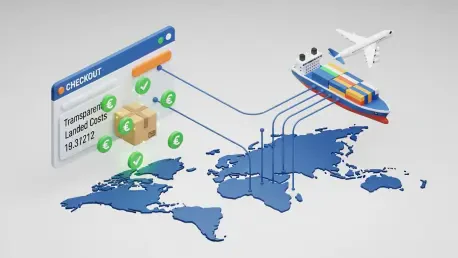
In the current retail environment, the landed cost—the final total including shipping, duties, and taxes—has migrated from the back-office spreadsheet to the customer checkout screen. Transparency regarding these costs is no longer an optional courtesy; it is a primary driver of brand loyalty and financial stability. When customers are hit with unexpected fees at the doorstep, the retailer suffers a double loss. They face the immediate financial hit of the return shipment and the permanent loss of the customer’s lifetime value.
By providing accurate, upfront calculations, businesses move beyond mere compliance and begin using financial transparency as a tool for market differentiation. Customers are far more likely to complete a purchase when they have a guarantee that no further payments will be required upon delivery. This shift transforms the checkout process into a trust-building exercise. Rather than viewing duties and taxes as a barrier to sale, savvy organizations treat the clear presentation of these costs as a competitive advantage that reduces cart abandonment and improves long-term profitability.
The Psychological Toll of Delivery-Day Surprises
Recent industry research underscores a shift in consumer psychology that retailers cannot afford to ignore. Approximately 75% of shoppers admit they would likely abandon a merchant if they encountered unexpected fees during the delivery process, and nearly half would refuse to accept the package entirely. These statistics reveal that consumer trust is inextricably linked to the accuracy of a company’s trade compliance engine. When a delivery experience is tainted by unforeseen costs, the brand’s reputation is damaged in a way that marketing campaigns can rarely fix.
Expert consensus suggests that as trade policies become more volatile, the ability to guarantee a final price at the point of sale is the most effective way to safeguard profit margins. The emotional frustration of a “delivery-day surprise” creates a lasting negative association with the brand. Consequently, the trade compliance engine is now a front-line customer service tool. Maintaining accuracy in duty calculations is not just about satisfying customs agents; it is about protecting the psychological contract between the brand and the buyer, ensuring that the excitement of a new purchase is not replaced by the resentment of an unexpected bill.
Practical Steps: Automating Compliance and Mitigating Supply Chain Risk
To navigate this complex landscape, organizations must transition from manual processes to integrated technological frameworks that can handle global scale. This starts with implementing automated tariff classification systems that assign correct codes in real-time, ensuring that every shipment is compliant before it ever reaches a customs agent. Automated systems reduce the risk of human error, which has historically been the primary cause of customs delays and financial penalties. By digitizing these classifications, companies can respond instantly to changes in trade agreements or tax rates without interrupting their sales flow.
Businesses should also adopt “Delivered Duty Paid” (DDP) models, allowing them to collect all necessary taxes at the checkout and provide a no-surprises delivery experience. As 80% of organizations are currently reassessing their supply chain configurations, companies should prioritize partnerships with logistics providers who offer technical advisory services and robust data integrity. This turns the shipping process into a seamless extension of the digital storefront. Successful firms integrated compliance tools directly into their global strategy, ensuring that tax and duty obligations were settled long before the product arrived at the border. Moving forward, the most effective path involves automating the entire documentation lifecycle to minimize human intervention. This proactive approach transformed a regulatory burden into a persistent strategic advantage that drove long-term international growth.