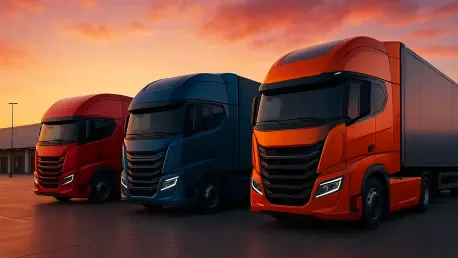

A steady compound annual growth rate of 9.0 percent is projected to push the market for high-output commercial vehicles well past the hundred-billion-dollar mark by 2030. This expansion signifies a fundamental shift in how heavy-duty transportation is perceived within the global economy, moving away from standard fleet solutions toward highly specialized, performance-driven machinery. These vehicles represent a pinnacle of automotive engineering, incorporating massive power outputs with sophisticated electronic control systems that were once reserved for high-end passenger sports cars. As global supply chains face increasing pressure to deliver goods faster and more efficiently, the reliance on these rugged, high-capacity trucks has become a strategic necessity for major industrial players. The market currently reflects this urgency, with a valuation that has already crossed the $72 billion threshold as of last year. This momentum is sustained by a combination of technological breakthroughs in powertrain efficiency and a surge in large-scale infrastructure projects requiring unmatched hauling capabilities across the globe.
Economic Forecasts and Technical Standards
Strategic Projections: Meeting Modern Industrial Demands
The rapid expansion of the high-performance truck sector is anchored in a sustained demand for vehicles that exceed the capabilities of standard commercial fleets. As the global logistics and mining sectors scale up, the need for specialized machinery that can handle extreme stress while maintaining operational efficiency has become paramount. This growth reflects a broader trend where industrial sectors prioritize high-output machinery to meet increasingly ambitious production and delivery timelines. During 2026, the market valuation is reaching approximately $79.48 billion, illustrating the significant capital being funneled into this segment as part of a trajectory toward the end of the decade. Businesses are no longer satisfied with general-purpose trucks; they require platforms that offer specific torque curves and thermal management systems capable of operating in high-altitude or extreme-temperature environments without sacrificing longevity or safety.
Engineering Excellence: Performance Metrics and Design
From a technical perspective, the distinction of a high-performance truck lies in its foundational architecture, specifically its ability to perform under duress. These vehicles utilize advanced powertrains for rapid acceleration under heavy loads and sophisticated torque management systems for navigating challenging terrain. Furthermore, structural reinforcements in the suspension and chassis ensure that these trucks offer superior payload capacity and long-distance reliability compared to traditional models. Modern engineering now integrates lightweight high-strength alloys that reduce curb weight while increasing structural rigidity, allowing for better fuel economy even as power outputs climb. Advanced sensors monitor engine health in real-time, preventing catastrophic failures during critical operations. This synergy of mechanical brawn and digital intelligence ensures that high-performance trucks remain operational longer, providing a lower total cost of ownership over their lifecycle.
Technical Standards: Durability and Safety Requirements
High-performance standards are increasingly defined by a vehicle’s ability to maintain peak power delivery without compromising the safety of the operator or the integrity of the cargo. Manufacturers are now implementing redundant braking systems and advanced stability controls that are specifically tuned for the high center of gravity found in heavy-duty trucks. These systems are essential when navigating the tight turns of mountainous mining roads or the unpredictable conditions of long-haul logistics routes. Beyond mechanical safety, the industry is seeing a push for standardized performance metrics that allow fleet managers to compare vehicles across different manufacturers more accurately. These metrics include sustained torque output at low revolutions and the efficiency of regenerative braking systems in hybrid models. By adhering to these rigorous technical standards, the market ensures that the next generation of trucks can meet the physical demands of a global economy that never stops moving.
Industry Catalysts and Operational Demand
Logistics Expansion: Fueling the E-Commerce Boom
A primary driver for market acceleration is the transformation of the global logistics and freight sector, largely influenced by the explosive growth of e-commerce. High-performance trucks address the need for faster and more reliable transport, offering improved transit times that lower overall operational costs for logistics providers. Statistical data from major trade hubs highlights the massive volume of goods moved by heavy-capacity vehicles, proving their essential role in maintaining modern just-in-time supply chains. For instance, international freight operations have reached record levels of tonne-kilometers, emphasizing the pressure on existing infrastructure. To stay competitive, logistics firms are investing in trucks with higher horsepower-to-weight ratios, which allow for better performance on steep inclines and during highway merging. This capability reduces the risk of traffic bottlenecks and ensures that delivery schedules are met regardless of the topography or road conditions.
Resource Extraction: Powering Global Infrastructure
The mining and resource extraction industries are providing a vital boost to market demand, as these sectors require the movement of massive quantities of raw materials across inhospitable environments. This necessitates trucks with extreme durability and high torque that can operate in off-highway conditions where traditional vehicles would fail. With the value of mineral production rising globally to meet urban development goals, the investment in high-performance machinery has become a prerequisite for meeting production targets in grueling physical conditions. In the United States and other major mining hubs, production values have surged, reflecting a wider global trend of increased resource consumption. High-performance trucks in this field feature massive tires, reinforced frames, and specialized cooling systems to prevent overheating during long duty cycles. These machines are the workhorses of the extraction world, and their continued development is essential for the transition toward efficient resource management.
Operational Efficiency: Optimizing Fleet Productivity
Operational demand is also shifting toward vehicles that offer higher degrees of customization for specific industrial tasks, ranging from heavy haulage to specialized construction roles. By utilizing trucks that are precision-engineered for their specific environment, companies can significantly reduce the wear and tear associated with mismatched equipment. This focus on specialization allows for more accurate fuel consumption modeling and better scheduling of maintenance intervals, which directly impacts the bottom line of large-scale enterprises. Furthermore, the adoption of telematics in high-performance trucks provides fleet managers with unprecedented visibility into driver behavior and vehicle performance. This data-driven approach allows for the optimization of routes and the reduction of idling time, ensuring that every unit of power generated by the engine is used effectively. As the industry moves toward 2030, the ability to squeeze every ounce of productivity out of these high-output machines will define the market leaders.
Strategic Outlook: Future Innovation and Growth
Technological Evolution: Transitioning to Sustainable Systems
Looking toward 2030, the industry is pivoting toward sustainability and digital integration, with electrification and hybrid systems leading the charge. Manufacturers are adapting electric motors to provide the instant torque required for heavy-duty tasks while meeting stricter environmental standards. This shift is not just about compliance but also about performance; electric drivetrains offer a linear power delivery that internal combustion engines struggle to match. Additionally, the integration of autonomous driving and connected technologies is set to revolutionize fleet management by optimizing fuel consumption and enhancing safety through advanced route planning. Connected vehicle ecosystems allow fleet operators to track every metric, from tire pressure to battery health, ensuring that maintenance is predictive rather than reactive. This transition toward smarter trucks is expected to be a primary revenue driver as software-as-a-service models become more prevalent in the commercial vehicle market.
Regional Market Dynamics: Identifying Growth Corridors
Geographically, North America currently holds the largest share of the market due to its extensive logistics networks and established mining operations. However, the Asia-Pacific region is emerging as the fastest-growing market, driven by rapid urbanization and massive infrastructure projects in nations like China and India. As these economies modernize their industrial bases, the adoption of high-performance vehicles is expected to outpace the rest of the world, solidifying the truck market’s status as a global economic powerhouse. The expansion of interstate highways and the construction of new mega-cities in Southeast Asia require a fleet of trucks that can handle long-haul assignments with minimal downtime. This regional growth is further supported by local manufacturing initiatives that aim to produce high-performance components domestically, reducing import costs and accelerating the deployment of advanced vehicle technologies across the continent, thereby reshaping the competitive landscape.
Industrial Implementation: Successful Deployment Strategies
The journey toward a $112 billion market valuation demonstrated that high-performance trucks were no longer luxury additions but vital industrial assets. Stakeholders who prioritized the adoption of hybrid drivetrains and autonomous safety features found themselves better positioned to navigate the complexities of modern supply chains. It became clear that the integration of materials science, such as high-strength composites, was essential for maximizing payload efficiency without exceeding axle weight limits. Organizations successfully leveraged real-time data analytics to transform their fleet operations, moving from traditional maintenance schedules to proactive, sensor-based systems. For fleet managers and industrial planners, the primary takeaway was the necessity of investing in adaptable platforms that could accommodate future upgrades in battery technology and software. By focusing on total lifecycle value rather than initial purchase price, the industry established a new standard for performance that balanced raw power with environmental responsibility.