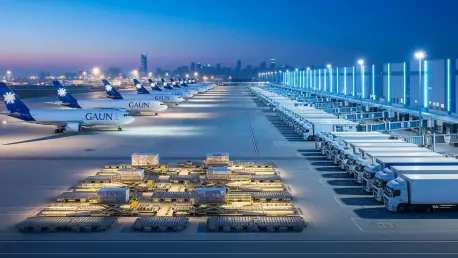

The rapid transformation of proprietary internal infrastructure into a globally accessible commercial utility has become the hallmark of Amazon’s long-term corporate strategy. This phenomenon, which famously turned a back-end web hosting solution into the multi-billion-dollar juggernaut known as Amazon Web Services, is now being replicated within the physical realm of global logistics. With the formal introduction of Amazon Supply Chain Services, the company is effectively inviting the rest of the business world to utilize the same labyrinthine network of planes, ships, and distribution centers that fueled its own retail supremacy. By commercializing these assets, Amazon is moving beyond the role of a merchant and positioning itself as the foundational architecture for modern trade. This transition signals a shift where supply chain management is no longer viewed as a cost center but as a service-oriented product capable of driving massive external revenue growth. Major industry players like 3M and Procter & Gamble have already integrated these capabilities to streamline their operations.
Scaling Physical Infrastructure as a Public Utility
The logistical backbone supporting this initiative is staggering in its scale, encompassing a multimodal network that integrates ocean freight, air transport, and expansive ground operations. By operating over 100 dedicated aircraft and a fleet exceeding 80,000 trailers, the organization provides a level of capacity that few private enterprises could ever hope to replicate independently. This infrastructure allows external partners to bypass the fragmented nature of traditional shipping, where multiple vendors often handle different stages of a single journey. Instead, businesses can now access a unified pipeline that handles everything from the initial customs clearance at a major international port to the final-mile delivery at a customer’s doorstep. This level of vertical integration reduces the friction typically associated with cross-border commerce, offering a predictable and visible path for goods as they move through the global economy. The result is a system that functions more like a utility than a traditional courier service.
Beyond the sheer volume of assets, the strategic value of this network lies in its ability to mitigate the volatility inherent in modern global trade. When supply chain disruptions occur at major transit hubs, businesses utilizing this established network benefit from the sophisticated rerouting capabilities and priority handling developed for the company’s internal operations. For manufacturers in sectors like the automotive or healthcare industries, this reliability is critical for maintaining just-in-time production schedules and ensuring that sensitive medical equipment reaches its destination without delay. The inclusion of dedicated capacity for time-sensitive shipments means that even during periods of peak seasonal demand, participating companies can maintain a consistent level of service. By treating logistics as a scalable service, the organization enables its partners to convert high fixed costs—such as warehouse leases and fleet maintenance—into variable costs that fluctuate with actual demand. This shift provides an unprecedented level of operational agility for growing enterprises.
Data-Driven Inventory and Multichannel Fulfillment
The integration of artificial intelligence and advanced forecasting models serves as the digital brain behind the physical movement of goods across this vast network. Rather than simply moving boxes from one location to another, the system uses massive datasets to predict exactly where inventory should be positioned to minimize delivery times. This proactive approach to distribution allows businesses to manage a single, unified inventory pool that serves multiple sales channels simultaneously, whether those sales occur on independent websites, social media platforms, or physical storefronts. By leveraging these AI-driven insights, companies can avoid the common pitfall of overstocking in one region while facing shortages in another. This level of inventory precision was once the exclusive domain of the world’s largest retailers, but it is now being democratized for businesses of all sizes. The ability to place products closer to the end consumer not only accelerates the delivery process but also significantly reduces the carbon footprint associated with long-distance shipping.
Reliability in the final stage of delivery is further enhanced by a robust parcel network that guarantees consistent windows of arrival, often spanning seven days a week. This service includes flexible pickup options from a company’s own facilities, effectively extending the reach of a small warehouse to a global audience without requiring additional capital investment. Advanced tracking features, such as real-time photo-on-delivery and granular transit updates, provide a level of transparency that has become the standard expectation for modern consumers. For brands like American Eagle Outfitters, this means providing a premium delivery experience that matches the quality of their physical products. The centralized management of these disparate logistical elements into a single interface simplifies the administrative burden on business owners, allowing them to focus on product innovation rather than shipping manifests. As more businesses adopt this “logistics-as-a-service” model, the traditional boundaries between manufacturing, retail, and delivery continue to blur into a single, cohesive ecosystem.
Strategic Evolution and Implementation Strategies
The transition toward a commercialized supply chain model required a fundamental shift in how the organization viewed its own internal processes and specialized labor. By treating the movement of goods as a core product offering, the company established a precedent where technical expertise in software development and physical labor in distribution are equally valued. This evolution was not merely about selling space on a truck; it was about providing a holistic solution that addressed the complexities of global trade, from regulatory compliance to regional tax nuances. Businesses that successfully navigated this transition found that their internal teams could spend more time on strategic growth and less on troubleshooting the daily minutiae of shipping delays or lost cargo. The implementation of standardized protocols across the entire network ensured that every package, regardless of its origin, was handled with the same level of care and precision. This systemic approach transformed the very nature of competition in the retail sector.
Organizations that sought to capitalize on these advancements often began by auditing their existing supply chain inefficiencies and identifying areas where a third-party utility could provide immediate relief. This process frequently involved migrating away from legacy systems that struggled to communicate with modern e-commerce platforms or international shipping databases. By adopting a unified distribution strategy, these firms were able to consolidate their operations and reduce the overhead associated with managing multiple logistics vendors. The shift also encouraged a more collaborative approach to inventory management, where data sharing between the manufacturer and the logistics provider led to more accurate production cycles. In the long term, this move fostered a more resilient economic environment, as the collective intelligence of the network helped buffer individual companies against regional economic shocks. The legacy of this period was defined by the realization that infrastructure is most powerful when it is shared, leading to a more efficient and interconnected global marketplace.