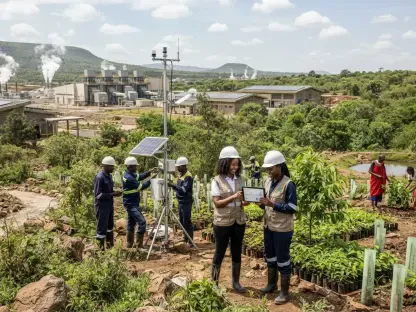

The practice of horizon scanning allows leaders to detect early signals of change on the fringes of technology and society before they become mainstream disruptions. In an era defined by rapid technological shifts and global instability, the traditional corporate strategy of linear, five-year planning is becoming obsolete. Most organizations fail not because they lack a plan, but because they suffer from continuity bias—the flawed assumption that the future will mirror the past. This mindset creates dangerous blind spots, as leaders often ignore how simultaneous disruptions in artificial intelligence and geopolitics can rewrite industry rules. True resilience requires a shift from single-point predictions to embracing a spectrum of possible futures. Strategic foresight serves as a sophisticated complement to traditional planning. Rather than trying to pinpoint what will happen, leaders must focus on making decisions today that are robust enough to succeed across various potential environments, moving away from a business as usual approach that leaves them brittle.
Methodologies for Navigating Uncertainty
To effectively anticipate what lies ahead, organizations utilize specific methodologies like horizon scanning and scenario testing. Horizon scanning involves identifying these early signals before they hit the mainstream, allowing a company to prepare for shifts in consumer behavior or regulatory landscapes. By developing alternative scenarios, leadership teams can stress-test their current strategies against hypothetical futures, revealing which of their assumptions are fragile and where their existing business models are most likely to fail under pressure. This process is not about predicting the most likely outcome but about exploring the boundaries of the possible. For instance, a logistics firm might explore a scenario where global trade corridors shift significantly, forcing a rethink of their infrastructure. By simulating these conditions, the firm identifies critical vulnerabilities in its supply chain that would have remained hidden under a standard growth model. This analytical rigor ensures that when reality diverges, the firm possesses a playbook.
Another powerful technique is backcasting, which reverses the typical direction of strategic thought to achieve long-term objectives. Instead of projecting forward from the present based on existing capabilities, leaders define a desirable long-term vision and work backward to determine the specific milestones required today to reach that goal. This proactive methodology ensures that the organization is not merely reacting to external forces but is actively shaping its own path toward a preferred outcome. It forces a departure from incrementalism, as the gap between the future vision and the current state often requires radical innovation. For example, a tech company aiming for total carbon neutrality by 2030 might realize through backcasting that it needs to invest in experimental energy storage systems by 2027 to meet its deadline. This approach provides a clear roadmap for resource allocation, grounding futuristic goals in the immediate, practical actions necessary to make them a reality. This ensures that long-term goals are actionable strategic initiatives.
Fostering a Culture of Collaborative Anticipation
Foresight is most effective when it is treated as a collective cultural exercise rather than a top-down mandate. By creating a shared language for the future, organizations can align diverse internal perspectives and ensure that every level of the workforce is attuned to emerging trends. This collaborative approach is exemplified by the Finnish government, which utilizes comprehensive foresight reports to align political factions on long-term national priorities. For a modern corporation, this means bringing together voices from different professional backgrounds to dismantle the groupthink that often reinforces outdated strategies. When a diverse group evaluates potential disruptions, the resulting strategy is more nuanced and representative of the complex reality the firm operates in. This inclusivity not only improves the quality of the insights but also fosters a sense of ownership, making it much easier to pivot when external conditions change. It transforms strategic planning from an executive retreat into an enterprise-wide conversation.
If a discussion about the future feels comfortable, it is usually a sign that the participants are not thinking critically enough or are ignoring the most significant risks. Genuine foresight should introduce a level of unease, as it challenges overconfidence and forces an examination of uncomfortable possibilities that could render current products irrelevant. This collaborative tension is essential for breaking free from the cognitive biases that prevent companies from seeing the next major disruption. Leaders must cultivate an environment where dissenting views are encouraged and where black swan events are discussed with the same seriousness as quarterly earnings. By normalizing the exploration of high-impact, low-probability events, the leadership team builds the mental muscle needed to stay calm during actual crises. The goal is to replace the false security of a fixed plan with a dynamic, intellectually honest culture that values preparedness. This shift in mindset transforms the strategic process from a static document into a living, evolving capability.
Connecting Trends and Building Anticipatory Agility
Modern leaders must also learn to connect the dots between seemingly unrelated sectors to understand how converging forces reshape the market landscape. For instance, the intersection of an aging population and advancements in automation shows how a failure in one area can compound a crisis in another. If a company relies solely on AI to solve labor shortages but ignores the specific needs of a shrinking, older demographic, it might miss critical market shifts. By looking beyond their own industry silos, businesses can better understand the ripple effects of global trends and prepare for the complex, interconnected challenges of the coming decade. A retail chain, for example, might need to consider how advancements in decentralized energy production will change the viability of large-scale warehouses. Understanding these linkages allows for more sophisticated risk management and the identification of unique opportunities that competitors are likely to overlook. This holistic view is the hallmark of a truly resilient leadership team.
The transition from a reactive posture to an anticipatory culture became the definitive strategy for long-term survival in an unpredictable world. Organizations that successfully integrated foresight into their core operations treated uncertainty as a manageable strategic variable rather than a looming threat. They invested in looking both outward at global shifts and inward at their own institutional biases, ensuring that their strategies remained flexible. To achieve this level of agility, leadership teams prioritized the development of internal foresight capabilities and established regular intervals for strategy stress-testing. They also fostered external partnerships to gain access to diverse data points and fringe innovations that signaled upcoming market shifts. By moving away from the rigid constraints of the five-year plan, these firms secured a competitive edge that allowed them to navigate the complexities of the current decade with confidence. The final step involved embedding these anticipatory practices into daily workflows.