
Thermal safety in ATEX-certified zones is achieved by replacing standard motors with specialized windings and high-grade insulation classes to manage heat generation. This engineering standard has become the cornerstone of modern industrial safety in 2026, as manufacturing processes for semiconductors and green energy components operate under increasingly volatile conditions. In these high-stakes environments, the risk of explosive interactions between equipment and ambient gases or dust requires a level of protection that exceeds traditional mechanical limits. Intelligent forklifts have emerged as the primary solution, bridging the gap between heavy-duty material handling and sophisticated digital monitoring. By integrating safety protocols into the very fabric of the machine’s software and hardware, operators are now equipped to handle hazardous materials with a precision that was unattainable in previous years. These advancements ensure that productivity remains high while the fundamental threat of industrial ignition is systematically neutralized through superior design and real-time data analysis.
Meeting Global Demand: Specialized Engineering and Integrated Design
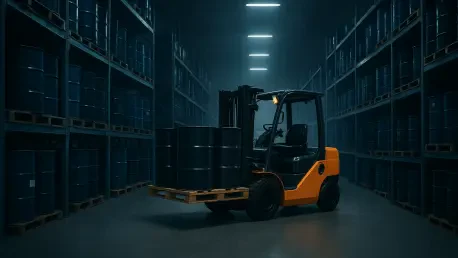
The rapid expansion of the circular economy from 2026 to 2028 has fundamentally changed the requirements for material handling equipment in specialized recycling centers. As facilities focus on the intensive processing of lithium-ion batteries and complex electronic waste, the prevalence of ATEX-certified zones has increased dramatically. To meet this specific global demand, manufacturers have introduced versatile equipment portfolios that cater to a variety of operational needs without compromising on safety standards. For instance, three-wheeled forklift configurations have been optimized for high-density warehouses with narrow aisles, while four-wheeled models provide the stability required for traversing the uneven surfaces often found in older industrial conversions. These machines now boast load capacities reaching up to two tons, proving that explosion protection does not require a reduction in mechanical power. This versatility ensures that every niche of the hazardous materials market is supported by equipment that can handle heavy cycles while preventing sparks or overheating.
Navigating Market Shifts: The Move to OEM Integration
One of the most significant breakthroughs in safety technology is the transition toward original equipment manufacturer integration for explosion protection. In the past, many companies relied on modifying standard trucks with aftermarket safety kits, which often resulted in bulky additions that obstructed the driver’s view and complicated the vehicle’s controls. By contrast, modern manufacturers are now building explosion-proof features directly into the forklift’s original contours, creating a seamless design that preserves the machine’s ergonomic integrity. This approach ensures that the vehicle retains its original “look and feel,” allowing operators to switch between standard and protected models with minimal training. The elimination of protruding external components not only improves the overall aesthetic of the machine but also reduces the risk of accidental collisions in tight spaces, as the vehicle’s footprint remains identical to its non-protected counterparts.
Maintaining operator comfort is a critical factor in preventing workplace accidents, as physical strain and limited visibility often lead to lapses in judgment during long shifts. The integrated design approach of current intelligent forklifts ensures that essential features, such as adjustable seating, generous legroom, and intuitive control layouts, are not sacrificed for the sake of safety. Operators working in hazardous zones now enjoy the same level of comfort and visibility found in standard warehouse environments, which significantly reduces the fatigue associated with operating specialized machinery. Furthermore, because the safety systems are built into the chassis, there are no additional pillars or sensors blocking the view of the fork tips or the surrounding pedestrians. This high level of ergonomic consistency allows for a more focused and productive workforce, as drivers can operate with confidence, knowing that their equipment is designed to support their natural movements while providing an invisible layer of total protection.
Technical Innovations: Advanced Thermal and Digital Security
In hazardous environments classified as Zone 1 or 21, the primary focus of engineering is the mitigation of heat generation at the source. Modern systems have transitioned from restrictive safety measures, which simply capped performance to maintain low temperatures, to monitored safety protocols. These intelligent systems use sensors embedded directly into the motor windings to provide real-time thermal feedback to the vehicle’s onboard computer. This allows the forklift to operate at its peak performance capacity while the system constantly verifies that internal temperatures remain well within the limits required for ATEX compliance. By monitoring the exact heat of the windings rather than relying on delayed external readings, the forklift can maintain a demanding duty cycle without the risk of overheating. This precise control mechanism ensures that the vehicle remains a reliable asset in high-traffic production zones, providing a level of thermal stability that protects both the operator and the facility from potential ignition events.
The implementation of artificial intelligence has further enhanced security through the use of advanced vision systems and predictive radar. These AI-enhanced cameras are now capable of distinguishing between inanimate objects and human workers, allowing the vehicle to initiate proactive braking if a person unexpectedly crosses its path. This is supplemented by radar systems that analyze the vehicle’s current speed, its steering angle, and the weight of the load it is carrying to determine the exact distance required for a safe stop. By calculating these variables in milliseconds, the forklift can provide a physics-based safety net that effectively compensates for the machine’s momentum in high-risk zones. This proactive approach to obstacle detection and collision avoidance has fundamentally changed the safety landscape, providing operators with a powerful set of tools to navigate complex environments where the presence of flammable materials makes every movement a potential risk to the entire facility.
The evolution of material handling safety culminated in a comprehensive digital infrastructure that prioritized environmental awareness and proactive protection. Geofencing technology became a standard feature, allowing forklifts to automatically adjust their operational limits the moment they entered a hazardous zone, which effectively removed the possibility of human error in speed management. At the same time, physical visibility was improved through the installation of ATEX-certified lighting solutions, such as LED stripes and warning projections, which defined a visible safety perimeter around the vehicle at all times. These systems worked together to ensure that the operator remained fully aware of their surroundings, even in environments where fog or frost might have otherwise hindered their vision. By integrating these advanced features into the core design of the forklift, industry leaders successfully created a safer, more efficient workplace that addressed the unique challenges of modern industrial production while paving the way for future innovations.