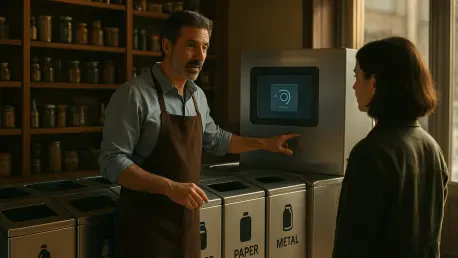

Neighborhood storefronts are evolving into community centers where technical knowledge about plastic waste management is shared directly with the public. These traditional Mexican tienditas, which have long served as the backbone of local economies, are now assuming a critical role in the country’s environmental transition by serving as decentralized collection points for recyclables. With more than one million such establishments scattered across the nation, their proximity to residential areas allows for a logistical efficiency that centralized waste management systems often struggle to achieve. By transforming the point of sale into a point of recovery, these small retailers are effectively dismantling the linear consumption model that has dominated the region for decades. This shift represents a fundamental change in how consumer goods are distributed and disposed of, leveraging the existing social fabric to foster a culture of accountability among various stakeholders. As these vendors adopt more sophisticated sorting technologies, they bridge the gap between large-scale industrial recycling and the daily habits of millions of citizens.
Integrating Sustainable Infrastructure in Local Commerce
Implementing Refill Systems: The Rise of Automated Bulk Distribution
A significant hurdle in the fight against plastic pollution has been the prevalence of single-use sachets and small-format packaging, which are common in low-income neighborhoods. To address this, many small retailers began installing automated refill stations for essential products like detergent, shampoo, and cooking oil. These machines, often developed by specialized technology firms, allow consumers to purchase exact quantities in reusable containers, thereby eliminating the need for new plastic bottles with every transaction. This transition toward bulk distribution through smart dispensers reduced the cost per milliliter for the consumer while simultaneously cutting down on the volume of waste generated at the household level. Furthermore, the data collected by these IoT-enabled machines allowed shopkeepers to manage inventory more effectively, ensuring that supply matched demand without the overhead of excess packaging. The success of these systems relied on the ease of use and the immediate economic benefit provided to the local residents in these areas.
Scaling Collection: Enhancing Reverse Logistics Networks
Beyond the hardware itself, the implementation of refill systems necessitated a complete reimagining of the traditional supply chain between wholesalers and micro-retailers. Instead of receiving pallets of individually wrapped items, store owners transitioned to high-capacity stainless steel drums or reusable plastic carboys that could be swapped out by distributors. This closed-loop delivery mechanism significantly minimized the carbon emissions associated with the production and transportation of packaging materials. Moreover, it reduced the physical storage requirements within the often-cramped spaces of neighborhood shops, allowing for a more diverse product offering within the same footprint. As these logistical practices became standardized from 2026 to 2028, the cost savings realized by eliminating primary packaging were passed along to the store owners, improving their margins and providing a buffer against economic volatility across the broader national retail landscape, which previously struggled with rising costs.
Empowering Micro-Entrepreneurs Through Technical Adoption
Strategic Partnerships: Regulatory Support and Performance Incentives
Government intervention played a supportive role by providing the regulatory clarity needed for these new business models to thrive in a competitive market. State-level initiatives in regions like Jalisco and Mexico City introduced tax incentives for retailers who successfully diverted a certain percentage of waste from landfills. These policies were designed to be flexible, acknowledging the unique challenges faced by micro-retailers compared to large supermarket chains. By reducing the bureaucratic hurdles for obtaining permits for on-site recycling and bulk dispensing, authorities made it easier for storefronts to pivot toward sustainable operations. Furthermore, collaborative platforms were established where local governments, NGOs, and the private sector could align their goals and share resources for infrastructure development. This multisectoral approach ensured that the green revolution was not a fragmented effort but a unified strategy with clear objectives and shared responsibility across the nation.
Future Directions: Standardizing the National Circular Model
The successful integration of localized circular systems into the national retail framework demonstrated that small-scale entrepreneurs were the most effective agents of environmental change. This movement proved that high-tech solutions could be successfully adapted for community use when supported by the right financial and regulatory structures. Looking ahead, the priority shifted toward expanding these localized models into the agricultural sector, where similar bulk distribution and waste recovery strategies were applied to fertilizers and seeds. The focus remained on refining the digital infrastructure to ensure that every micro-transaction contributed to a transparent and verifiable global sustainability record. Efforts were directed at standardizing the design of reusable packaging to ensure universal compatibility across different refill platforms and regions. This shift required continued collaboration between manufacturers and retailers to eliminate the final vestiges of single-use materials from the supply chain.