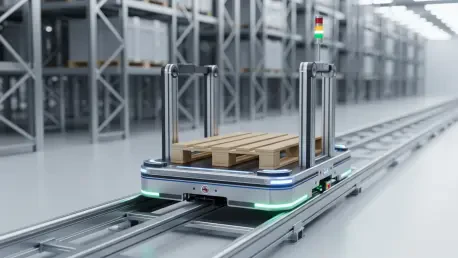

The convergence of skyrocketing urban land prices and a structural shortage of manual labor has fundamentally altered the calculus for modern distribution centers, necessitating a shift toward fully integrated robotic environments. This market analysis explores how Movu Robotics has transitioned from a traditional industrial equipment provider to a primary architect of the autonomous supply chain. By analyzing current deployment patterns and the synergy between structural engineering and artificial intelligence, a clear picture emerges of an industry that no longer treats automation as an optional upgrade but as a foundational requirement for operational survival. The following sections detail the technological and strategic milestones that have enabled this rapid transformation within the intralogistics sector.
The focus of this investigation is not merely the hardware itself but the overarching strategy that allows a business to scale in a volatile global economy. As 2026 begins, the demand for high-density storage solutions has reached an all-time high, particularly in the fast-moving consumer goods and third-party logistics sectors. Understanding the trajectory of Movu Robotics provides essential insights into how modularity and data-centric design are solving the most persistent bottlenecks in the movement of goods.
The Strategic Shift From Static Shelving to Intelligent Motion
The global supply chain is currently in the midst of a transition where the “dumb” warehouse—a space filled with static racks and manually operated forklifts—is becoming an endangered species. Industry data suggests that the move toward intelligent motion is driven by the need for higher throughput and the reality that human labor is both increasingly expensive and scarce. Movu Robotics has seized this opportunity by moving beyond the role of a component supplier to become a provider of full-scale robotic ecosystems that handle every stage of the storage and retrieval process.
This shift is characterized by a move away from rigid, fixed-path automation toward flexible, autonomous mobile robots that can adapt to changing warehouse layouts. Unlike the older generations of automated storage and retrieval systems, which were often cumbersome and difficult to modify, modern solutions are designed for modularity. This allows companies to begin with a small fleet of robots and expand their fleet as their business grows, minimizing initial capital expenditure while maximizing long-term agility.
From Racking Giants to Robotic Pioneers: The Evolution of stow Group
The success of Movu Robotics is inseparable from the decades of industrial experience provided by its parent organization, the stow Group. Traditionally known as a global titan in the manufacturing of industrial racking, stow recognized as early as 2018 that the future of the industry lay in the marriage of steel and software. The strategic decision to spin off Movu as a dedicated robotics brand in 2023 was a pivotal moment, signaling a departure from being a “steel in the ground” company to becoming an “intelligence in the aisles” innovator.
Under the guidance of experienced leadership and backed by major private equity investment, the brand has leveraged its structural heritage to solve the physical challenges of automation. While many robotics startups struggle with the complexities of heavy-load racking and seismic stability, Movu utilized the stow Group’s existing engineering expertise to build robots that work in perfect harmony with their physical environment. This historical foundation has allowed the brand to scale with a level of reliability that pure-play software companies often find difficult to achieve.
Engineering the Future of High-Density Storage
The Four-Way Shuttle Paradigm and Spatial Efficiency
The most significant technical contribution to the current warehouse landscape is the refinement of the “atlas” four-way pallet shuttle system. Traditional automation frequently relied on stacker cranes that occupied large vertical aisles, leaving vast amounts of “dead space” throughout the facility. In contrast, the four-way shuttle operates on a grid-based system, allowing robots to move across lanes and levels with the precision of a high-speed chessboard. This approach has redefined the concept of spatial efficiency, particularly in regions where land is a premium resource.
Beyond maximizing every cubic meter of storage, this decentralized architecture offers a level of operational resilience that centralized systems cannot match. In a traditional stacker crane environment, the failure of a single machine can paralyze an entire section of the warehouse. However, with a fleet of independent four-way shuttles, the system maintains high availability; if one unit requires service, the remaining robots redistribute the workload. This redundancy is a critical factor for 3PL providers who must meet strict service-level agreements.
Integrating Intelligence Through Proprietary Software Control
While the physical robots are the visible face of the operation, the true competitive advantage lies in the proprietary Warehouse Control System (WCS) developed by Movu. This software acts as a sophisticated traffic controller, managing the complex interactions of hundreds of robots simultaneously. By maintaining control over both the hardware and the digital commands, the company ensures that there is no “integration friction” between different layers of the technology stack.
The modern WCS provides more than just movement commands; it offers embedded analytics and real-time visibility into system health. This allows managers to identify potential bottlenecks before they manifest as delays, using data-led decision-making to optimize the flow of goods during seasonal peaks. This full-stack approach is becoming the industry standard, as businesses seek unified platforms that offer a “single pane of glass” view of their entire automated operation.
Addressing Global Constraints and Market-Specific Demands
The expansion of robotic solutions is not a uniform process, as different geographic markets present unique challenges. In the United States, the scale of projects is significantly larger than in Europe, often requiring massive fulfillment centers that can handle tens of thousands of pallets. To meet this demand, Movu has localized its manufacturing efforts, including a facility near Atlanta, to ensure that it remains close to its primary growth market. Furthermore, the engineering must account for regional technical requirements, such as the high-seismic standards necessary for facilities on the U.S. West Coast.
Technical versatility also extends to environmental conditions, such as the demanding requirements of cold-chain logistics. Maintaining automation in environments that reach -25°C requires specialized engineering to prevent mechanical failure and battery degradation. By developing robots that can operate seamlessly in these harsh conditions, the brand has opened up new opportunities in the food and pharmaceutical sectors, where manual labor is particularly difficult to retain due to the extreme working temperatures.
Scaling the Horizon: The Next Frontier of Intralogistics
Looking toward the immediate future, the trajectory for the intralogistics market involves even deeper integration of predictive modeling. Financial indicators suggest that the demand for these systems is accelerating, with revenue projections for the robotics division expected to surpass €300 million in the coming year. This growth is fueled by a diversification of the client base, moving from early adopters in the tech sector to traditional retailers and consumer goods manufacturers who are now embracing the “plug-and-play” nature of modern robotics.
The next evolutionary step will likely involve the application of artificial intelligence to optimize energy consumption and robot lifecycle management. As sustainability becomes a core metric for corporate performance, the ability of a robotic system to minimize its carbon footprint while maximizing throughput will be a major selling point. The transition toward these data-centric, autonomous systems is expected to make the United States the brand’s largest revenue contributor, reflecting a broader trend of reshoring manufacturing and logistics closer to the point of consumption.
Strategic Recommendations for an Automated World
For businesses navigating this technological shift, the primary recommendation is to prioritize modularity over monolithic systems. The ability to add capacity incrementally allows for a more sustainable financial model, reducing the risk of over-investment in unproven demand. Companies should seek out “standardized but flexible” solutions that can be deployed quickly and integrated with existing enterprise resource planning software. This ensures that the warehouse can grow in lockstep with the business without requiring a total overhaul of the infrastructure.
Furthermore, the integration of hardware and software should be viewed as a single strategic objective rather than two separate procurement processes. Choosing a provider that owns the entire technology stack minimizes the risk of communication errors between different vendors, which is a common cause of project delays. Finally, management should focus on spatial density as a key financial metric; by utilizing four-way shuttle technology, facilities can significantly reduce their real estate footprint, leading to substantial savings in rent, heating, and lighting costs.
Redefining Efficiency in the Age of Autonomy
The development of Movu Robotics was a clear indication that the intralogistics industry reached a point of no return regarding manual storage. The transition from static racking to a dynamic, robotic ecosystem proved that efficiency was no longer just about moving faster, but about moving smarter. By leveraging the deep engineering roots of the stow Group, the brand established a new benchmark for how hardware and software functioned together in high-density environments. This shift allowed businesses to overcome the dual pressures of land scarcity and labor shortages with a scalable, modular approach.
The industry recognized that the “chess-like” movement of the atlas system and the intelligence of the proprietary control software were essential tools for modern fulfillment. Stakeholders who adopted these autonomous solutions found themselves better equipped to handle the unpredictability of global trade and shifting consumer habits. Ultimately, the evolution of the warehouse from a passive storage site to an active, data-driven engine of commerce became the defining trend of this era. The move toward autonomy provided a definitive blueprint for the future of global logistics, ensuring that the movement of goods remained as fluid as the markets they served.