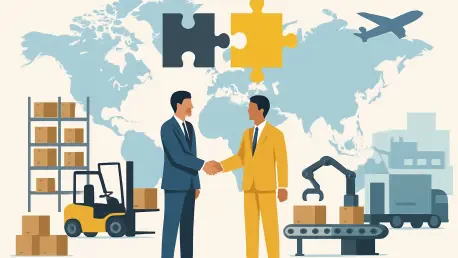

Global supply chain infrastructure is undergoing a massive transformation as industry leaders prioritize the integration of specialized vertical movement technologies to overcome the spatial constraints of modern distribution centers. On May 7, 2026, Interroll Holding AG concluded its acquisition of the Royal Apollo Group, a Dutch organization with nearly 180 years of history in material handling. This merger is specifically designed to incorporate Royal Apollo’s specialized spiral conveyor systems into Interroll’s existing portfolio. By taking over three manufacturing sites and an established service network, Interroll intends to fill critical gaps in its hardware offerings while bolstering its spare parts and lifecycle maintenance business. The shift reflects a broader industry trend where horizontal logistics alone are no longer sufficient to meet the throughput demands of high-density urban fulfillment centers. This move ensures that vertical conveying becomes a core component of the brand’s modular platform.
Strategic Synergy: Merging Vertical Expertise With Global Scale
The integration of these two entities suggests a high degree of operational harmony, as leadership from both organizations identifies clear advantages in the unified structure. For Interroll, the acquisition serves as a catalyst for expanding its addressable market and unlocking significant value through cross-selling opportunities across a wider geographic footprint. CEO Markus Asch emphasized that the addition of Royal Apollo enhances the company’s equity value by leveraging global scale. Conversely, Royal Apollo gains access to a vast international distribution network that would have been virtually impossible to develop as an independent Dutch firm. This partnership allows Royal Apollo’s vertical solutions to reach emerging markets in Asia and the Americas with unprecedented speed. The strategy now centers on aligning product development under the “Global Platforms” initiative, which standardizes equipment to simplify the work of system integrators. By combining these strengths, the organization creates a more resilient supply chain ecosystem.
Operational Evolution: Implementation and Lifecycle Management
Moving forward, the primary focus for logistics providers involved the shift toward a holistic, service-oriented approach to infrastructure rather than a simple hardware-focused model. The acquisition necessitated a transition where lifecycle services and predictive maintenance became the standard for ensuring high uptime in automated facilities. System integrators were encouraged to adopt these integrated vertical solutions to minimize installation complexity and reduce the overall footprint of sorting centers. Furthermore, the combined entity prioritized the “Global Lifetime Service” strategy, which provided long-term value for customers through localized spare parts availability and technical support. This evolution proved that the key to remaining competitive lay in the ability to offer a complete suite of solutions that combined specialized machinery with a robust global support framework. Decision-makers in the logistics sector analyzed this merger as a blueprint for future infrastructure investments, emphasizing the need for modularity and scalability. The industry successfully moved toward more sustainable and efficient vertical handling practices.