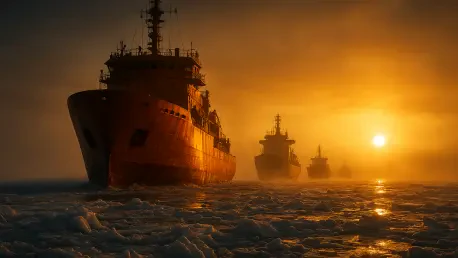

Exporting time-sensitive goods like electric vehicles from China to Europe has become significantly faster through the narrowing window of the Arctic summer season. As the perennial ice coverage continues its retreat, the Northern Sea Route (NSR) emerges not just as a hypothetical shortcut but as a tangible backbone for modern commerce. This passage, stretching across the top of the globe, slices approximately 4,000 nautical miles off the traditional journey via the Suez Canal, offering a competitive edge to manufacturers grappling with high logistics costs. However, this maritime revolution brings with it a complex tapestry of geopolitical tensions and environmental anxieties. While commercial fleets celebrate the reduction in transit times from thirty-five days down to twenty, scientists warn that the increased presence of heavy vessels could accelerate the degradation of one of the planet’s most sensitive ecosystems. The tension between profit and preservation defines this new era of navigation, forcing global powers to weigh immediate economic benefits against long-term stability.
Strategic Logistics: Navigating the High North
Economic Optimization and Route Reliability
The primary driver behind the surge in Arctic transit is the sheer efficiency gained by bypassing traditional maritime bottlenecks. For logistics companies, the route offers a reduction in fuel consumption by nearly forty percent compared to the southern alternative, which directly translates into lower operational overhead and a smaller carbon footprint per individual voyage. In the current economic climate, where fuel price volatility and carbon taxes significantly impact the bottom line, the ability to shave two weeks off a delivery schedule is invaluable. Moreover, the Northern Sea Route provides a vital insurance policy against disruptions in the Red Sea or the Malacca Strait, which have historically been susceptible to geopolitical instability and physical blockages. By utilizing specialized Arc7-class liquefied natural gas carriers and reinforced container ships, operators moved bulk commodities and high-tech components with a reliability that was once considered impossible during the winter months of the past decade.
Supporting this increased traffic is a massive investment in icebreaking technology and satellite monitoring systems designed to ensure safe passage through shifting floes. The deployment of nuclear-powered icebreakers, such as the latest vessels in the Arktika series, has extended the navigable season, allowing for almost year-round operations in certain sectors. These ships are equipped with advanced sensors that feed real-time data to a centralized Arctic monitoring hub, which uses AI-driven predictive modeling to chart the safest and most fuel-efficient paths through the ice. Furthermore, the development of deep-water ports along the Siberian coastline has created a robust support network for emergency repairs and refueling. This infrastructure not only facilitates the extraction of vast oil and gas reserves but also serves as a strategic foothold for countries looking to exert influence over the region. As navigational technology matures, the barrier to entry for international shipping firms continues to lower globally.
Environmental Governance and Safety Standards
The rapid expansion of northern shipping necessitated a proactive approach toward ecological preservation and international policy. In response to the growing threat of black carbon deposits and potential oil spills, global maritime authorities implemented stringent regulations that mandated the use of cleaner fuels and reinforced hull designs for all vessels entering the Arctic Circle. These measures were essential because the regional ecosystem remained extremely vulnerable to industrial pollutants, which could darken the ice and accelerate localized warming. Collaborative efforts between Arctic nations and international shipping conglomerates led to the establishment of protected marine areas where transit was strictly prohibited to safeguard migratory paths and indigenous food sources. Furthermore, the integration of automated spill-response drones and localized cleanup stations provided a necessary safety net for the increased traffic. By focusing on sustainable practices, the industry worked to ensure the economic advantages did not cause collapse.