
With decades of experience navigating the complexities of industrial operations, Marco Gaietti has become a leading voice in the evolution of business management within the material handling sector. His career has been defined by a deep understanding of how strategic equipment choices directly influence the bottom line, safety standards, and long-term sustainability of global logistics hubs. In this conversation, we explore the intersection of engineering and operational reality, focusing on how heavy-duty machinery is moving away from standardized models toward highly specialized, data-driven solutions.
The discussion delves into several pivotal themes, including the shift toward application-specific equipment design and the critical role of ergonomics in maintaining site safety. We also examine the transformative power of telematics in transitioning from reactive to preventive maintenance, the practical pathways for fleet electrification, and the innovative financial models that are making sustainable technology more accessible to global enterprises.
Heavy-duty environments like steel mills and ports vary significantly in their duty cycles and spatial constraints. How do you approach the challenge of providing equipment that feels like a custom fit for such demanding and diverse sites?
In the world of heavy-duty logistics, the environment dictates the engineering, not the other way around. When you walk through a steel mill or a busy inland terminal, you can feel the unique pressures—the immense heat, the grit in the air, and the sheer weight of the loads that need to move with precision. We have been building heavy-duty lift trucks since 1959, and that history has taught us that a standard solution is often a compromise that businesses cannot afford. By working closely with customers to understand the specific geometry of their spaces and the intensity of their duty cycles, we can deliver trucks that are literally designed for their world. This collaborative process ensures that every improvement we make is grounded in real operating conditions, allowing the machinery to perform reliably whether it’s handling delicate paper rolls or massive shipping containers.
Safety is often discussed as a series of protocols, but you’ve emphasized that it must be designed into the machine itself. In what ways can ergonomic design and integrated features drive operational performance in high-intensity environments?
Safety isn’t just a feature you bolt on at the end of production; it is the very foundation of high performance in a multi-shift site with mixed traffic. We live by the motto “Safety never ends,” which serves as a constant reminder that as sites evolve and risks change, our equipment must adapt to protect the operator. A comfortable, healthy operator environment—one with excellent visibility from the cabin and intuitive controls—significantly reduces the physical fatigue that often leads to unplanned stops or incidents. When an operator feels stable and in control while navigating tight areas, the entire flow of the warehouse or yard becomes more steady and predictable. By focusing on the reliability of brakes, steering, and hydraulics through design, we create an environment where safety and productivity are two sides of the same coin.
The concept of uptime is the lifeblood of logistics, yet unplanned maintenance remains a major hurdle. How does real-time telematics change the way a fleet manager views their operations and total cost of ownership?
Uptime depends entirely on having equipment that is ready for the real work on-site, and the only way to ensure that is through visibility. With solutions like TRUCONNECT, we provide users with a window into the soul of the machine, tracking everything from energy consumption and battery health to shocks and idle time. This data is securely transmitted to the yourKONECRANES customer portal, where it is transformed into actionable reports that highlight usage patterns before they escalate into costly downtime. Instead of waiting for something to break, managers can plan preventive maintenance ahead of time, which significantly lowers the total cost of ownership. It changes the conversation from “why did this stop?” to “how can we keep this moving more efficiently?” by giving leaders the tools to make smarter, data-driven decisions.
Transitioning to a greener fleet is a significant goal for many companies today. What are the practical steps an operation can take to reduce its environmental impact without sacrificing the power needed for heavy-duty work?
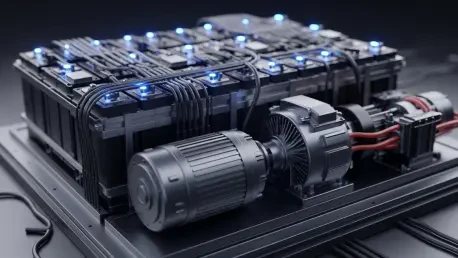
The journey toward sustainability doesn’t have to be an all-or-nothing leap; there are several practical paths depending on a site’s specific needs. For those looking to make an immediate impact, our Generation C lift trucks can run on HVO100, a fossil-free chemical copy of diesel that can reduce fossil-based CO2 emissions by up to 90% while using familiar refueling routines. For operations that want to stick with combustion engines but cut fuel use, we offer eco-efficiency options like Flow Drive, which maintains full performance while increasing active operating time. However, for those ready for full electrification, our electric forklifts and reach stackers use efficient Li-ion batteries that deliver zero tailpipe emissions and lower noise levels. The key is finding the right fit for your loads and duty cycle, ensuring that environmental goals actually support day-to-day productivity.
The “Battery as a Service” model is an innovative approach to equipment acquisition. How does this subscription-based system help businesses manage the risks and costs associated with new technology?
Adopting electric heavy-duty equipment can be daunting due to concerns over capital expenditure and battery longevity, which is why the Battery as a Service (BaaS) model is so transformative. It allows a customer to purchase the electric truck itself while subscribing to the Li-ion battery set-up through a monthly fee based on actual usage. This effectively balances CAPEX and OPEX, making the transition to a zero-emission fleet much more financially manageable. We monitor the battery performance remotely in real time, which alleviates concerns about degradation or the need for future upgrades. It provides a level of flexibility that ensures the technology remains an asset rather than a liability, allowing the business to focus on its core logistics operations.
What is your forecast for the future of heavy-duty material handling?
I believe we are entering an era where the “intelligence” of a lift truck will be just as important as its lifting capacity. We will see a deeper integration of connected tools and local support networks, ensuring that even as technology becomes more complex, the service remains personal and immediate. Electrification will continue to expand, but it will be supported by increasingly sophisticated digital solutions that optimize energy use and safety in real-time. Ultimately, the industry will move toward a model where the equipment, the data it generates, and the local expertise of distributors work in a perfect, circular harmony to protect uptime and the environment simultaneously.