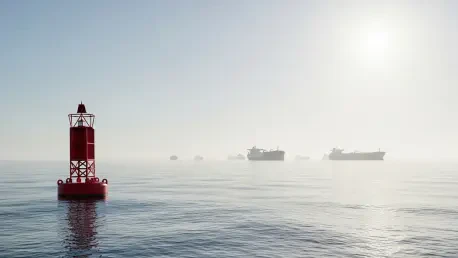

The sudden and dramatic collapse of confidence across international prediction markets has signaled a deep-seated anxiety regarding the viability of global energy security through the remainder of this calendar year. As of July, the Strait of Hormuz remains largely impassable to commercial traffic, forcing the global shipping community to confront a reality where the world’s most vital energy chokepoint stays closed indefinitely. Market sentiment on high-volume prediction platforms like Polymarket has shifted significantly, with the probability of a resolution by December plummeting from an optimistic eighty-five percent to a precarious fifty-one percent. This sharp decline in probability suggests that the previous belief in a swift diplomatic solution has been replaced by a grim acceptance of a volatile and unpredictable phase in the ongoing standoff. The current atmosphere is defined by a standoff between the United States and Iran that shows no signs of easing as both nations maintain a state of high alert and readiness.
Military Escalation: The Deterioration of Regional Security
The primary driver of the current instability is the intensification of military posture and aggressive rhetoric emanating from Washington, which has placed the entire Persian Gulf on edge. President Trump has recently signaled the possibility of launching unprecedented strikes against Iranian strategic assets, a move that would represent a significant escalation from the existing economic pressures. This shift follows a series of retaliatory attacks that have already damaged critical infrastructure, such as the strike on a telecommunications tower in Kuwait that heightened regional fears. Such incidents have effectively paralyzed local diplomatic efforts, as the focus has moved entirely toward military readiness and containment strategies. Each new development in this cycle of violence reinforces the perception that the conflict is no longer confined to proxy battles but is instead moving toward a direct confrontation that could fundamentally alter the geopolitical map for the rest of 2026.
Simultaneously, the theater of conflict has expanded as Houthi militants in the Red Sea region have escalated their operations to target Saudi Arabian oil tankers with increasing precision and frequency. This expansion has created a multifaceted crisis that prevents safe passage through both the Strait of Hormuz and the Bab el-Mandeb, essentially trapping energy exports within a tightening circle of violence. Since the initial closure of the Strait in February, the international community has struggled to find a viable alternative to these maritime routes, as the sheer volume of global oil and gas passing through these waters cannot be easily diverted. The Houthi actions are viewed not as isolated incidents but as part of a coordinated effort to stretch naval resources thin and force a total rethink of maritime security. Consequently, the world’s most critical energy artery has remained effectively shuttered, leaving major economies to scramble for dwindling stockpiles and alternative supply chains.
Market Uncertainty: The Economic and Strategic Outlook
Financial indicators provide a sobering perspective on the depth of the current crisis, with millions of dollars being traded on prediction platforms as investors attempt to hedge against further disruption. The massive drop in confidence from July into the second half of the year suggests that professional traders no longer see a clear path toward a diplomatic de-escalation between the involved powers. Instead, the situation is increasingly viewed as a coin-flip, where the outcome depends more on unforeseen tactical decisions than on traditional international relations. Technical indicators across energy markets suggest a deeply bearish trend for regional stability, meaning that every report of a new strike or failed negotiation further erodes the probability of the Strait reopening. This environment of high-stakes waiting has left the global economy in a state of paralysis, as long-term investments in energy and infrastructure are placed on hold until a sense of certainty returns to the region.
The aviation industry also faced unprecedented challenges as the likelihood of a total closure of Iranian airspace climbed above sixty percent, suggesting that the conflict expanded far beyond maritime trade and into the skies. Major airlines were forced to reroute hundreds of daily flights, significantly increasing fuel costs and flight times while placing additional strain on already congested corridors in neighboring countries. This development indicated that the strategic risks were not limited to the water but permeated every aspect of regional transport and logistics. To mitigate these ongoing threats, corporations and governments accelerated the diversification of their supply routes and invested in advanced satellite monitoring to track potential disruptions in real-time. Leaders prioritized the development of more resilient energy networks and established a roadmap for independence from 2026 to 2028. By focusing on these actionable steps, the international community built a foundation for a long-term stability.