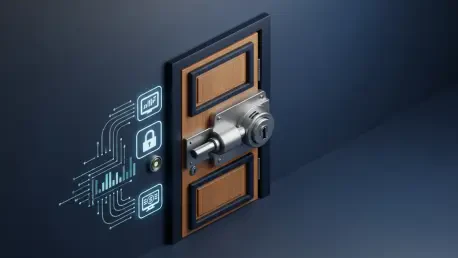

The rhythmic clicking of a mechanical deadbolt remains one of the most reassuring sounds in a modern household, signaling a definitive end to the day and a physical barrier that requires no software updates or cloud connectivity to function. While the tech industry continues to push the narrative that every object in a residence must be digitized for maximum efficiency, many experienced technology critics are choosing to move in the opposite direction regarding their home security. This professional skepticism is not born from a fear of the new, but from a decade of witnessing how frequently high-end gadgets fail at the most inconvenient moments. When a smartphone freezes, it is an annoyance; when a smart lock fails to engage or recognize an authorized user, it becomes a fundamental breach of domestic utility and personal safety. The transition from a fully automated entry system back to a traditional mechanical key often feels less like a regression and more like a hard-won realization that some problems were already solved perfectly centuries ago. In an era where software bloat and subscription models dominate the landscape, the simple physical interaction of a key in a cylinder provides a level of transparency and reliability that digital alternatives struggle to replicate consistently.
The Industry Promise and the Linear Growth of Smart Homes
The path toward a fully automated residence usually begins with low-stakes devices that offer immediate, tangible benefits without compromising the core functionality of the home. Most consumers enter this ecosystem through smart lighting or voice-controlled speakers, discovering that the ability to dim the lights via a smartphone or set a timer for a coffee maker adds a genuine layer of convenience to their daily routines. As these individual components begin to communicate through unified standards like Matter or Thread, the appeal of adding more complex hardware becomes increasingly seductive to the average homeowner. The initial success of a few smart bulbs creates a sense of trust in the stability of the ecosystem, leading users to believe that the same level of reliability will naturally extend to more critical infrastructure like climate control and security. This gradual expansion is exactly what manufacturers rely on, positioning the smart lock as the logical crown jewel of a modern, connected living space that promises a future free from the bulk of traditional keychains.
This vision of a keyless existence is marketed with high-production imagery of sleek, minimalist door hardware that responds effortlessly to a tap or a proximity sensor. The tech industry paints a picture of a frictionless lifestyle where groceries are carried inside without fumbling for keys and where guests are granted access via temporary digital tokens sent through a messaging app. For the modern professional, this elimination of physical barriers represents the pinnacle of streamlined living, offering a sense of control that feels distinctly futuristic. The narrative suggests that by digitizing the front door, the homeowner is not just buying a lock, but an entire management system that tracks entries, notifies the family of arrivals, and integrates with the security alarm. However, this marketing often obscures the reality that adding layers of digital abstraction to a physical entry point introduces new categories of failure that simply do not exist in the world of traditional hardware. The allure of the digital promise frequently blinds users to the fundamental trade-off between superficial convenience and the unwavering dependability required for a home’s primary security boundary.
The integration of smart locks into a broader automated network often creates a deceptive sense of security through the constant stream of data and notifications. Homeowners find comfort in the activity logs that detail every time a door is opened or closed, believing that this visibility equates to a more secure environment. Yet, this data-centric approach to security ignores the fact that a traditional lock does not need to report its status to be effective; its effectiveness is inherent in its physical construction. The complexity of managing digital keys, setting up geofencing parameters, and ensuring that every family member’s device is correctly synced can quickly turn into a part-time job for the resident tech enthusiast. When the system works, it feels like magic, but the psychological toll of wondering if a software update might break the auto-unlock feature or if a cloud outage will render the remote access useless is a heavy price to pay for the minor convenience of not carrying a physical key. This friction between the promised ease of use and the actual maintenance required is where the skepticism of the professional tech journalist begins to take root.
Power Dependencies and Mechanical Vulnerabilities
The most glaring weakness of any smart lock is its total reliance on an internal power source, typically in the form of alkaline or lithium batteries that eventually drain. Unlike a mechanical lock that utilizes the kinetic energy of a human hand to move the bolt, a smart lock requires an electric motor and a wireless radio to be powered at all times to remain functional. While manufacturers have improved battery life and added low-power warnings, the reality of the “dead battery lockout” remains a persistent threat that can happen at the most inopportune times. For someone who has spent years testing gadgets, the memory of being stuck outside in the rain because a lock’s batteries died faster than anticipated is a powerful deterrent against trusting these systems for primary entry. This dependency creates a fragile link in the chain of home security, where the simple act of entering one’s own home is contingent on the health of a few chemical cells hidden behind a plastic panel.
Stable wireless connectivity is the second pillar of smart lock functionality, and it is arguably even more prone to failure than the physical power source. Whether the device uses Wi-Fi, Bluetooth, or a specialized hub, any interference or network downtime can effectively sever the user’s control over the digital features of the lock. In a world where home networks are increasingly crowded with dozens of connected devices, the risk of a signal drop or a router malfunction is a constant reality that can disable remote unlocking and guest access. For the tech-savvy individual, the realization that a simple internet outage could prevent them from checking if their door is locked from a remote location is a significant source of anxiety. Traditional locks are immune to the vagaries of the electromagnetic spectrum, providing a binary state of reliability that does not fluctuate based on the quality of a neighbor’s Wi-Fi signal or the current status of a cloud provider’s server farm.
The mechanical components of a smart lock are often compromised to make room for the bulky electronics and motorized assemblies required for automation. In many cases, the physical cylinder and bolt are manufactured with less focus on raw strength and more focus on how easily they can be moved by a small, battery-powered motor. This can lead to situations where a slight misalignment of the door frame, caused by seasonal changes or house settling, creates enough friction to jam the motor entirely. A human turning a key can feel that resistance and apply the necessary force to overcome it, but a smart lock motor will simply give up and report a “jammed” error to the user’s phone. This lack of mechanical intuition means that the digital lock is actually more fragile than its traditional counterpart when faced with the messy, physical realities of a real-world home. For those who prioritize durability, the choice to stick with a “dumb” lock is a deliberate move to ensure that the physical barrier remains the most robust part of the system.
Human Error and the Friction of Digital Interfaces
Digital interfaces for home security often introduce a level of ambiguity that can lead to unintended lapses in physical safety. When using a traditional key, the act of locking the door is a deliberate, tactile experience that leaves no doubt in the user’s mind about the status of the deadbolt. In contrast, many smart locks rely on touch-sensitive pads, palm-press triggers, or proximity sensors that can be finicky and unresponsive depending on environmental conditions. A user might walk away from their door assuming the auto-lock feature will engage, only to find later that a software glitch or a slightly ajar door prevented the bolt from sliding into place. This reliance on automation can erode the healthy habits of checking the door, replacing them with a dangerous dependence on a system that may not always communicate its failures clearly. The professional journalist understands that the more steps there are between a user and a secured door, the more opportunities there are for something to go wrong.
The complexity of smart lock logic often creates significant confusion for guests, delivery personnel, and maintenance workers who are not familiar with a specific brand’s user interface. While a physical key or a standard deadbolt turn is a universal language, the requirement to place a palm over a screen to wake it up or to wait for a specific light pattern before pulling a handle is often unintuitive. In practice, this leads to situations where visitors inadvertently leave the door unlocked because they were unsure of how to engage the electronic system correctly. This human-centric friction is a major hidden cost of smart home technology, as it shifts the responsibility of security from a simple physical action to a specialized knowledge of a digital product. For a homeowner, the risk of a guest accidentally leaving the house vulnerable is often much higher than the risk of a professional burglar picking a traditional mechanical lock.
Maintaining a secure digital perimeter requires a level of constant vigilance regarding software updates, app permissions, and account security that many users eventually find exhausting. A smart lock is not a “set it and forget it” device; it is a computer attached to a door that requires regular firmware patches to address security vulnerabilities and improve performance. For the tech professional, this adds yet another item to an already long list of devices that need management, creating a sense of “update fatigue” that can lead to negligence. If a security patch is ignored, the lock could potentially be exploited by a digital vulnerability, turning the very feature that was supposed to provide peace of mind into a liability. The traditional mechanical lock, by contrast, requires zero digital maintenance and remains as secure on day one thousand as it was on day one, provided the physical key remains in the right hands.
The Critical Concept of Unnecessary Points of Failure
Engineering principles dictate that every additional component in a system represents a new potential point of failure, and smart locks are the ultimate manifestation of this problem. A standard mechanical lock consists of a few moving metal parts that have been refined over hundreds of years to work in harmony with minimal wear. A smart lock adds a circuit board, a wireless radio, a motorized actuator, a battery compartment, and a software layer that must communicate with an external server and a mobile application. If any single one of these disparate elements fails—whether it is a capacitor on the board, a bug in the code, or a server outage at the manufacturer’s headquarters—the lock’s advanced features become useless. For a tech journalist who sees hardware fail for a living, the accumulation of these unnecessary points of failure makes the smart lock look like an over-engineered solution to a problem that was already solved with elegant simplicity.
In the hierarchy of home needs, the entry point is a mission-critical system that must be treated with a higher standard of reliability than a television or a smart speaker. While a glitch in a streaming device is a minor inconvenience that can be solved with a reboot, a glitch in a door lock can leave a family stranded outside or exposed inside. The consequences of failure at the front door are so high that many experts argue it is the one area of the home where the “move fast and break things” ethos of the tech industry should never be applied. By opting for a traditional lock, the homeowner is essentially practicing a form of risk management that prioritizes the core function of the device over its secondary features. The goal is to ensure that the primary method of securing the home is as robust and predictable as possible, free from the cascading failures that can plague complex digital ecosystems.
The concept of a “fail-secure” or “fail-safe” state is much harder to guarantee in a digital environment than in a mechanical one. If a mechanical lock breaks, it is usually because of a physical obstruction that can be diagnosed and often bypassed by a locksmith using specialized tools. If a smart lock’s software becomes corrupted during an over-the-air update, the device might enter a state where it is neither locked nor unlocked reliably, or it might become completely unresponsive to both digital and physical inputs. This lack of transparency makes it difficult for the average user to troubleshoot the device in a crisis, often leading to expensive emergency calls or the need to replace the entire unit. For the seasoned observer, the inherent reliability of a metal key—which does not require a handshake with a server to turn—is a sophisticated form of engineering that no amount of code can truly replace.
Real-World Risks and the Myth of the Sophisticated Hacker
Public debates about smart locks often center on the terrifying image of a shadowy hacker remotely bypassing a home’s security with a laptop, but this scenario is largely a distraction from more mundane risks. In reality, most home burglaries are crimes of opportunity involving smashed windows or kicked-in doors rather than sophisticated digital exploits. The digital layer of a smart lock does not necessarily make the door more susceptible to hackers, but it does introduce new behavioral vulnerabilities that can be just as dangerous. For example, the use of easy-to-guess numeric codes or the physical wear on specific buttons on a keypad can give away a combination to an observant intruder. These low-tech exploits of high-tech hardware prove that adding electronics to a door often just shifts the security risks from one category to another without providing a definitive net gain in safety.
Hardware quirks and software bugs are far more likely to cause a “nightmare” scenario for a smart lock owner than an intentional digital attack. A motorized bolt that fails to fully extend because of a slight temperature-induced expansion of the door frame can trigger a false “locked” notification, leaving the house actually open to anyone who tries the handle. Similarly, a proximity-based “auto-unlock” feature might trigger while the homeowner is still inside the house but near the door, inadvertently unlocking the entrance for a passerby. These types of glitches are common in the world of consumer electronics, but when they occur at the primary entry point of a residence, they represent a significant failure of the product’s fundamental purpose. The tech journalist recognizes that the reliability of a security device should be measured by its worst-day performance, and in that regard, the mechanical lock is vastly superior.
The perceived sophistication of a smart lock can also lead to a false sense of security that causes homeowners to neglect other, more important aspects of home defense. People may spend hundreds of dollars on the latest biometric entry system while ignoring a weak door frame or a large, easily breakable glass pane right next to the handle. This “security theater” often prioritizes the high-tech appearance of safety over the actual physical integrity of the structure. By stripping away the digital distractions and focusing on high-quality mechanical hardware, a homeowner can invest in reinforced strike plates and heavy-duty deadbolts that provide real resistance to forced entry. The rejection of smart locks is often a rejection of the idea that technology is a shortcut to safety, favoring instead the proven methods of physical fortification that have stood the test of time.
A Hybrid Strategy for Modern Home Monitoring
The most effective way to secure a home in the modern era is to separate the act of physical locking from the act of digital monitoring. This hybrid approach allows a homeowner to enjoy the benefits of a connected home—such as real-time alerts and video surveillance—without the inherent risks of a motorized, internet-connected deadbolt. By using a high-quality “dumb” lock for the physical bolt, the foundation of the home’s security remains a purely mechanical system that is immune to software bugs, battery failures, and cloud outages. Meanwhile, a smart doorbell or a separate outdoor camera can provide the intelligence and visibility that homeowners crave, allowing them to see who is at the door and receive motion notifications without ever compromising the physical integrity of the entry point. This clear division of labor ensures that even if the internet goes down or the camera’s battery dies, the house remains firmly locked and accessible only to those with a physical key.
Contact sensors and integrated alarm systems offer another layer of high-tech awareness that does not require the automation of the lock itself. These small, battery-efficient sensors can notify a homeowner if a door has been opened or if it has been left ajar for too long, providing valuable data without the complexity of a motorized bolt. This setup creates a redundant system where the mechanical lock provides the strength and the sensors provide the information, resulting in a more resilient overall strategy. If a sensor fails, the door is still physically locked; if the lock were smart and failed, the entire entry point could be compromised. For the tech professional, this layered defense is far more logical than a single, complex device that tries to handle both physical security and digital communication simultaneously. This strategy recognizes that while data is valuable, the ability to turn a physical piece of metal to secure one’s home is a non-negotiable requirement for peace of mind.
By choosing to keep the primary lock mechanical, homeowners avoid the inevitable obsolescence that plagues almost all consumer electronics. A well-made mechanical lock can easily last for several decades with minimal maintenance, whereas a smart lock is likely to become outdated, unsupported, or physically broken within five to seven years. In a world where electronic waste is a growing concern and software support windows are shrinking, the longevity of traditional hardware is both a practical and an environmental advantage. The decision to reject smart locks was a calculated move by those who understand the lifecycle of technology best, favoring a solution that will still work perfectly long after the current generation of smart home hubs has been relegated to a landfill. Ultimately, the smartest home is one that utilizes technology to inform and enhance, but relies on the unwavering laws of physics and mechanics to protect what matters most. In the end, the transition back to traditional hardware proved that the most sophisticated security system was the one that never needed a reboot or a Wi-Fi password to keep the world at bay.