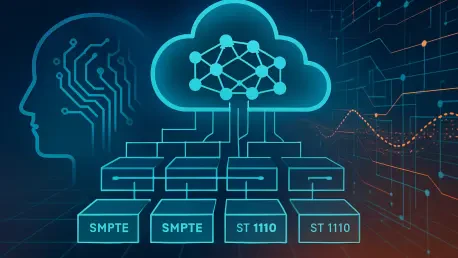

While artificial intelligence has held the second-place ranking since 2023, its weighted importance is rapidly approaching that of infrastructure-focused leaders. This transition reflects a broader industry realization that connectivity alone is no longer the primary differentiator for media organizations. Instead, the value has shifted toward how effectively data is managed and manipulated across high-capacity IP networks. From 2026 to 2028, the industry observed a significant migration away from fixed-function hardware toward software-defined ecosystems. These environments leverage the SMPTE ST 2110 suite of standards to ensure interoperability while allowing microservices to handle complex processing tasks. The integration of neural networks into these signal paths allowed for a more responsive broadcast environment. Consequently, the focus shifted from simple transport to intelligent orchestration, where the network became aware of the content it carried, enabling a more efficient and scalable distribution model for modern audiences.
Scaling Infrastructure: The Transition to IP Fabric
Part 1: Standardizing Connectivity via IP Fabrics
The implementation of robust IP foundations became the critical prerequisite for any advanced AI deployment within the media sector. By utilizing the flexibility of Internet Protocol, broadcasters established a decoupled environment where video, audio, and metadata existed as independent streams. This granular control allowed for the insertion of specialized processing nodes that analyzed traffic in real time without interrupting the primary delivery path. Network Management and Orchestration protocols served as the glue, providing a standardized way for devices to discover and connect with each other across diverse subnets. As organizations scaled their operations, the ability to rapidly reconfigure these virtualized routes became a key competitive advantage. This agility proved essential for covering large-scale live events where hardware constraints previously limited the number of available feeds. Modern control rooms now operate with a level of abstraction that prioritizes workflow logic over physical cabling.
Part 2: Virtualized Environments and Elastic Demand
Cloud-native architectures have redefined the limits of production capacity by offering elastic resources that grow with the needs of the content creator. Transitioning from 2026 to 2028, media firms increasingly embraced hybrid models that combined on-premises edge computing with public cloud scalability. This approach mitigated the risks of high latency while providing the sheer horsepower required for compute-heavy tasks like high-dynamic-range upconversion and multi-format encoding. Virtual machines and containerized applications allowed engineers to spin up entire broadcast chains in minutes rather than weeks. This capability transformed the financial model of television production, shifting heavy capital expenditures into more manageable operational costs. Furthermore, the inherent redundancy of these distributed networks ensured that a single point of failure no longer threatened a national broadcast. The result was a more resilient infrastructure that could withstand the demands of a fragmented, multi-platform media market.
Content Optimization: Leveraging Generative Power
Part 3: Algorithmic Automation in Real Time
Automation has evolved from simple scheduling tasks to sophisticated decision-making processes that enhance the viewer experience. Machine learning models integrated into the IP fabric now perform real-time content moderation, automatic highlight generation, and precise ad-insertion without human intervention. This was particularly evident in sports broadcasting, where algorithms identified key plays and generated social media clips instantly, reaching audiences within seconds of the live action. The precision of these tools allowed for hyper-personalized streams, where metadata-driven engines tailored the viewing experience to individual preferences. By analyzing viewer behavior and content characteristics simultaneously, broadcasters maximized the value of their libraries while reducing the manual labor required for archiving and tagging. The efficiency gains were not merely incremental; they represented a fundamental change in how media was produced and consumed, enabling niche content to find its audience with unprecedented speed.
Part 4: Strategic Implementations and Ethical Security
Security and ethics became the primary focus for organizations that sought to protect their intellectual property in an automated world. Technical teams implemented advanced watermarking and blockchain-based verification to ensure the authenticity of content distributed across global networks. They recognized that as AI tools became more prevalent, the risk of unauthorized manipulation increased, necessitating a proactive approach to cybersecurity. Decision-makers prioritized the training of staff to manage these new hybrid workflows, bridging the gap between traditional broadcast engineering and modern data science. These steps proved effective in maintaining brand integrity while fostering innovation in high-risk production environments. Organizations that successfully integrated these protocols achieved a more stable operational posture and provided a blueprint for sustainable growth. They ultimately decided that human oversight remained essential, using technology to augment rather than replace creative expertise. This strategic alignment established a secure foundation for future media services.