
The quiet hum of a modern manufacturing facility no longer signals human activity alone, but rather represents a sophisticated, continuous dialogue between physical hardware and its digital counterpart that is rapidly evolving into a self-governing entity. For many years, the concept of the digital twin was largely restricted to providing a high-fidelity mirror of physical assets, allowing engineers to visualize performance through a virtual lens without immediate intervention. This traditional approach prioritized visibility, offering a window into the inner workings of jet engines, power grids, and assembly lines to assist human operators in making better-informed decisions. However, the industrial landscape is now witnessing a fundamental transformation as Digital Twin 2.0 takes center stage, moving beyond passive observation toward active, independent management. These systems no longer merely reflect what is occurring on the factory floor; they possess the innate ability to influence and control their physical counterparts without constant supervision.
Industrial Autonomy: The Transition From Visibility to Action
To fully appreciate the magnitude of this technological leap, it is essential to examine the limitations that defined the first generation of digital twins, which were primarily focused on solving the visibility problem. In the initial phase, often referred to as Digital Twin 1.0, the primary goal was to aggregate vast streams of data from thousands of industrial sensors into a centralized, digestible dashboard. While this provided engineers with an unprecedented view of their operations, the system remained fundamentally reactive and tethered to human intervention. When a discrepancy occurred or a performance metric dipped below a certain threshold, the twin would alert the operator, who then had to manually diagnose the root cause and implement a physical fix. This bottleneck created a significant delay between the detection of an issue and its ultimate resolution, limiting the overall agility of the production environment and keeping the virtual model in a subservient, descriptive role.
Digital Twin 2.0 effectively shatters this bottleneck by ushering in an era of industrial autonomy where the virtual system itself acts as the primary decision-maker. This new standard closes the operational loop by analyzing environmental context and predicting potential failures long before they manifest as physical breakdowns. Unlike its predecessor, which only sounded an alarm, an autonomous twin possesses the agency to adjust performance settings, reroute production flows, or reconfigure machine parameters in real-time to maintain optimal efficiency. This transition from descriptive and diagnostic behavior to prescriptive and autonomous action is what defines the modern industrial landscape. By empowering digital entities to take direct responsibility for physical outcomes, organizations are achieving a level of operational resilience that was previously impossible. This evolution ensures that the digital twin is no longer just a secondary record of truth, but a proactive partner in the manufacturing process.
Technical Foundations: Edge Computing and Collaborative Intelligence
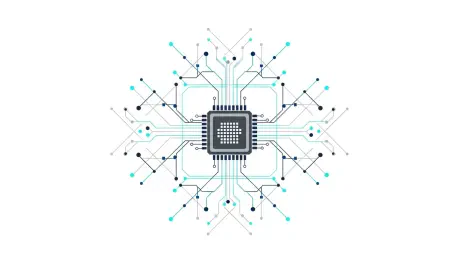
The shift toward autonomous industrial systems is underpinned by several critical technological pillars, with the widespread adoption of edge computing serving as a foundational element. In high-stakes industrial environments, the luxury of time is nonexistent, and the latency associated with sending massive datasets to a distant cloud server for processing is often unacceptable. Edge computing solves this challenge by processing sensor data directly at the source, enabling the digital twin to make split-second decisions that are synchronized with the physical reality of the machinery. This real-time capability is the bedrock of autonomy; without the ability to process and act upon information instantaneously, a system cannot truly be considered independent. By moving intelligence to the edge, companies are ensuring that their autonomous twins can respond to sudden mechanical shifts or environmental changes with the same speed and precision as a local human operator, but with far greater consistency.
Alongside advancements in processing speed, the integration of sophisticated artificial intelligence and multi-agent systems has introduced a layer of cognitive reasoning that mimics human logic. Modern digital twins utilize deep learning algorithms to identify subtle, non-linear patterns in data that would be invisible to traditional statistical models or even the most experienced human analysts. Furthermore, the use of multi-agent architectures allows for a decentralized approach to problem-solving, where specialized digital agents collaborate on specific operational facets such as energy optimization, mechanical stress management, or supply chain alignment. These agents communicate and negotiate with one another to find the most efficient solution to complex industrial challenges, providing a granular level of control that a single, monolithic model could never achieve. This collaborative intelligence ensures that the twin can handle multifaceted problems without being overwhelmed by the sheer volume of variables involved.
Practical Evolution: Self-Healing Systems and Automotive Excellence
The practical applications of Digital Twin 2.0 are particularly evident in industries where even a few minutes of unplanned downtime can result in millions of dollars in lost revenue. The market is currently witnessing the rise of self-healing maintenance protocols, where autonomous twins analyze vibrations, acoustic signals, and thermal loads to predict exact failure windows with staggering accuracy. If a critical sensor begins to provide erratic data, the twin is now capable of performing synthetic data injection, effectively filling in the gaps based on historical patterns to maintain the integrity of the internal model. This ensures that the virtual representation remains a reliable guide for the physical hardware even when external conditions are less than ideal. By automating the maintenance cycle, these systems reduce the need for periodic manual inspections and move the industry toward a state of constant readiness, where repairs are performed precisely when needed and often handled by the system itself.
In the automotive sector, the impact of these autonomous virtual models is especially profound, particularly regarding software-defined vehicles and the management of electric vehicle battery systems. The industry has moved toward the implementation of executable digital twins, or xDTs, which are streamlined versions of the full model that are small enough to run directly on a vehicle’s onboard computer. This allows an electric vehicle to manage its battery discharge and thermal cooling autonomously in response to real-time driving conditions and environmental factors. Furthermore, the data collected during these real-world operations is continuously fed back into the centralized manufacturing twin, creating a closed-loop cycle of autonomous improvement. This feedback loop allows for the refinement of future vehicle designs and production processes without requiring extensive human review of every data point. The result is a self-optimizing ecosystem where the lessons learned on the road directly inform the next generation of industrial output.
Strategic Integration: Engineering Rigor and Organizational Synergy
As these systems gain more independence, the level of engineering rigor required to build and maintain them has increased significantly to ensure safety and reliability. Because an autonomous twin has the power to make decisions that affect physical hardware and personnel, the data feeding the model must be of the highest quality to avoid catastrophic errors. Engineers are now prioritizing the development of physics-informed machine learning models, which combine the flexibility of artificial intelligence with the rigid constraints of the fundamental laws of physics. These models act as a necessary safety check, ensuring that the autonomous system never makes a recommendation or takes an action that is physically impossible or structurally dangerous. This blend of data-driven insights and physical laws provides a robust framework for autonomy, allowing the system to innovate within safe boundaries. Ensuring this level of precision requires a shift in focus from mere data collection to rigorous model validation.
The successful transition to this autonomous framework was ultimately achieved by organizations that treated the digital twin as a core strategic asset rather than a secondary software tool. Leaders who navigated this period prioritized the breaking down of internal silos, ensuring that design, maintenance, and operations teams shared a unified data architecture from the outset. It became evident that building a resilient autonomous ecosystem required a continuous investment in data governance and cybersecurity to protect against emerging threats to independent systems. To maintain a competitive edge, companies had to embrace specialized partnerships that provided the technical depth necessary for scaling complex models across global operations. Moving forward, the primary focus must shift toward establishing industry-wide interoperability standards and refining the ethical boundaries of machine-led decision making. By securing these foundational elements, enterprises ensured that their journey into industrial autonomy remained both safe and profitable.