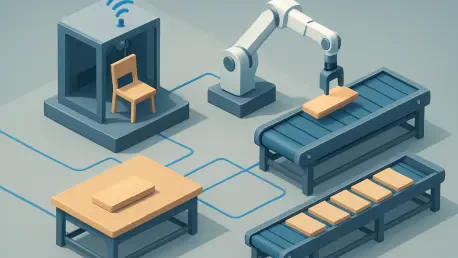

The customization paradox requires manufacturers to produce unique, high-quality furniture at mass-production speeds, a feat only possible through automated point-to-point platforms. These specialized CNC machines represent the intersection of computational precision and heavy industrial engineering, fundamentally altering how panel-based products are designed and assembled. In the current landscape of 2026, the market for point-to-point machinery is witnessing a significant surge, with a valuation of $6.3 billion that is projected to climb to $10.2 billion by 2036. This growth, characterized by a compound annual rate of 4.9 percent, is not merely a reflection of increased demand but a structural shift in the woodworking and furniture manufacturing sectors. The transition from traditional mass production to batch-size-one workflows has made manual setups obsolete, as manufacturers prioritize machines that can instantly pivot between disparate tasks like vertical drilling, horizontal boring, and intricate routing without downtime. As the global supply chain continues to prioritize localized, high-value production over low-cost mass exports, the role of point-to-point platforms as the central nervous system of the modern workshop has never been more critical. The next decade will see these machines evolve from isolated workstations into integrated, data-driven nodes within the broader smart factory ecosystem, ensuring that profitability is maintained even as consumer demands for personalization reach new heights.
The Evolution of Workflow: Beyond Raw Spindle Speed
Efficiency in the modern woodworking facility is no longer defined by the maximum RPM of a spindle or the rapid-traverse speed of a machine head in isolation. Instead, the focus has shifted toward usable capacity and the continuity of the production workflow, where success is measured by the time elapsed between a design’s approval and the emergence of a finished part. This shift in perspective is driving the adoption of point-to-point systems that prioritize set-up reduction and seamless material handling over simple mechanical velocity. As furniture designs become increasingly complex, featuring varied hardware and non-standard geometries, the ability of a machine to adjust its configuration dynamically is the primary factor in determining overall equipment effectiveness. Modern shops are moving away from batch processing, where large quantities of identical parts are produced and stored, in favor of a lean approach that emphasizes the production of single, unique pieces in a continuous flow. This transition requires a level of agility that only advanced computerized numerical control (CNC) platforms can provide, making the point-to-point machine the cornerstone of a competitive, agile manufacturing strategy in an era where speed to market is a decisive competitive advantage.
Digital integration has become the dominant trend in this sector, as manufacturers recognize that the physical machine is only as effective as the data that drives it. The current market landscape is heavily influenced by the rise of CAD/CAM control systems that bridge the gap between architectural vision and industrial execution. By eliminating the need for manual programming at the machine interface, these systems allow for a direct transfer of digital information, which virtually removes the potential for human error in the translation process. This connectivity is particularly vital in the cabinetry and office furniture sectors, where every project may involve unique hole patterns for hinges, drawer slides, and specialized connectors. The sophistication of contemporary software allows for the automatic generation of tool paths and drilling patterns based on the specific attributes of a panel, such as its thickness, density, and intended hardware. Consequently, the point-to-point machine has transformed from a mere tool into a sophisticated data processor that happens to interact with wood. This digital-first approach ensures that even the most complex, customized orders can be processed with the same reliability and speed as standardized components, enabling manufacturers to scale their operations without a proportional increase in technical staff or programming overhead.
Technical Versatility: Multi-Axis and Six-Sided Machining
The expansion of machine versatility is currently being driven by the widespread adoption of multi-axis configurations and six-sided machining capabilities. These advanced systems are designed to process every surface of a panel in a single work cycle, which eliminates the traditionally labor-intensive process of manually flipping workpieces to access different faces. By integrating vertical and horizontal drilling units with high-performance routing spindles and integrated grooving saws, modern point-to-point borers can complete an entire machining sequence with extreme precision. This all-in-one approach significantly reduces the cumulative tolerances that often occur when a part is handled multiple times across different machines. Furthermore, the reduction in manual handling not only lowers labor costs but also minimizes the risk of cosmetic damage to delicate surfaces, which is a critical consideration in the production of high-end, pre-finished cabinetry. As leading manufacturers position their point-to-point platforms as comprehensive machining cells, the distinction between a simple borer and a full-scale processing center continues to blur, providing workshops with a compact yet powerful solution for high-throughput production requirements.
Another critical aspect of modern technical versatility is the evolution of workholding technologies, with the Pod and Rail configuration maintaining its status as a preferred choice for many sophisticated manufacturers. This system utilizes adjustable vacuum pods mounted on movable rails, allowing the machine to support the workpiece securely while providing unobstructed access to the edges and the underside of the panel. Such flexibility is indispensable for executing horizontal drilling, side routing, and the creation of complex profiles that are common in modern interior design. In contrast to flat-table nesting systems, Pod and Rail point-to-point machines excel in processing heavy, solid-wood components and oversized panels that require specialized edge treatments. The ability to quickly reposition these pods—often automated through the machine’s control system—allows for rapid transitions between different part sizes and shapes, further supporting the industry’s move toward customization. This mechanical agility, combined with high-torque spindles and multi-tool changers, ensures that a single machine can handle a vast array of tasks, from basic carcass drilling to the intricate shaping of custom furniture legs and decorative elements.
Market Segmentation: The Dominance of CNC Borers
Within the broader point-to-point market, CNC borers have emerged as the leading machine category, driven by the fundamental necessity of precision hole placement in modern furniture assembly. Because nearly every piece of panel-based furniture relies on standardized hardware like dowels, minifix connectors, and concealed hinges, the boring operation remains the most frequent and repetitive task in the production cycle. Automating this process is no longer a luxury but a requirement for ensuring that components produced across different shifts or even different facilities fit together perfectly during final assembly. High-speed boring heads, equipped with dozens of independently controllable spindles, allow these machines to execute complex hole patterns in a matter of seconds. This level of repeatability is impossible to achieve through manual methods, and the reduction in assembly-time errors provides a rapid return on investment. As the market progresses toward 2036, the demand for dedicated boring solutions is expected to remain robust, particularly as small and medium-sized enterprises look to modernize their assembly processes to compete with larger, more automated competitors.
The cabinetry sector continues to be the primary engine of demand for point-to-point technology, accounting for approximately one-third of the total market share. The kitchen and bathroom industries, in particular, require a high volume of parts that are structurally similar but rarely identical in their dimensions or internal configurations. Point-to-point machines allow these variations, such as differing shelf heights or hardware brands, to be handled automatically through barcode-driven program selection. This capability is essential for manufacturers who offer extensive catalogs of customizable options, as it allows them to maintain high throughput without the need for constant manual intervention. Furthermore, the rising consumer appetite for high-quality, custom-made storage solutions has forced manufacturers to move away from rigid production lines toward more flexible, cell-based manufacturing environments. In these settings, the point-to-point machine acts as the primary processing node, receiving data from the design office and delivering perfectly machined parts to the assembly area, thereby streamlining the entire value chain from the initial order to the final installation.
Digital Backbone: ERP Integration and Networked Production
The integration of point-to-point machinery into larger Enterprise Resource Planning (ERP) systems is transforming the shop floor from a collection of isolated tools into a synchronized, networked environment. Modern production cells are now designed to communicate in real-time with management software, providing owners and managers with instant visibility into machine status, part counts, and maintenance requirements. This level of connectivity is facilitated by the adoption of standardized communication protocols that allow machines from different manufacturers to exchange data seamlessly. When an order is entered into the system, the ERP software can automatically generate the necessary machining programs and send them directly to the relevant point-to-point platform. This digital workflow eliminates the time-consuming process of manual data entry and ensures that the machine is always working on the most current revision of a design. By creating a transparent link between the front office and the production floor, manufacturers can optimize their resource allocation, reduce lead times, and provide customers with accurate updates on the progress of their orders.
Error reduction is perhaps the most significant benefit of this networked approach, as barcode and QR code technology allow operators to load the correct program for any given part with a simple scan. Once a panel is identified by the system, the point-to-point machine can automatically adjust its tool settings, vacuum pod positions, and drilling parameters without any manual input from the operator. This “lights-out” capability is particularly valuable in facilities that employ workers with varying levels of technical expertise, as it shifts the responsibility for accuracy from the human operator to the machine’s control system. Furthermore, the data collected by these networked machines can be used for predictive maintenance, identifying potential issues before they result in costly unplanned downtime. By analyzing vibration patterns, temperature fluctuations, and tool wear, the system can alert technicians to perform servicing during scheduled breaks, ensuring that the machine remains operational during peak production hours. This shift toward data-driven management is a key factor in the market’s growth, as it allows manufacturers to achieve higher levels of efficiency and reliability than ever before.
Regional Growth Drivers: Innovation in the European Market
Italy has solidified its position as a global leader in woodworking innovation, boasting the highest projected growth rate in the point-to-point machine sector over the next decade. This dominance is the result of a unique concentration of high-end furniture producers combined with aggressive government incentives that encourage the adoption of Industry 4.0 automation technologies. Italian manufacturers have historically been early adopters of advanced CNC systems, using them to maintain their reputation for design excellence and craftsmanship while scaling their production volumes. The focus in the Italian market is currently on the development of highly specialized, compact machines that offer the same capabilities as their larger counterparts but within a smaller footprint, making them ideal for the dense manufacturing clusters found in regions like Brianza and Pesaro. These innovations often set the standard for the rest of the world, as Italian engineers push the boundaries of what is possible in terms of machine speed, tool-change efficiency, and software sophistication. The synergy between machine builders and furniture designers in this region creates a feedback loop that continues to drive the market toward more refined and capable point-to-point solutions.
In contrast, the German market for point-to-point machinery is defined by technical maturity and a rigorous focus on interoperability and digital networking standards. While the growth rate in Germany may be more modest compared to emerging markets, it is driven by a steady cycle of equipment replacement as manufacturers upgrade to high-value, highly automated systems that can integrate into pre-existing connected cell architectures. German woodworkers prioritize machines that offer extreme durability and the highest levels of precision, often investing in systems that feature advanced sensor arrays and integrated quality control mechanisms. The emphasis here is on creating a completely seamless digital thread that runs from the initial CAD drawing through to the final, flat-packed product. Consequently, German point-to-point machines are frequently part of larger, roboticized production lines where material handling is entirely automated. This commitment to engineering excellence and systemic integration ensures that German manufacturers remain competitive in a global market, even in the face of high domestic labor and energy costs, by maximizing the output of every square meter of factory floor space.
Regional Growth Drivers: The Americas and Emerging Markets
In the United States, the investment case for point-to-point machines is increasingly centered on labor productivity and the mitigation of a persistent skilled labor shortage. As the domestic woodworking industry struggles to find craftsmen with traditional woodworking skills, shop owners are turning to CNC technology to bridge the gap, allowing a single operator to manage the output of multiple traditional workstations. The focus in the American market has shifted toward user-friendly interfaces and robust local support networks, as manufacturers prioritize machines that can be quickly mastered by employees with limited prior experience. There is a strong demand for versatile, multi-purpose machines that can handle a variety of tasks—from architectural millwork to commercial fixtures—allowing shops to diversify their service offerings without investing in multiple specialized tools. This trend is bolstered by a strong domestic construction market and a growing preference for American-made cabinetry, which has led many companies to bring their manufacturing back onshore by utilizing high-efficiency automation to offset higher domestic wages.
Mexico and Brazil represent dynamic growth narratives within the Americas, characterized by a transition from manual craftsmanship to industrial-scale automation. In Mexico, the market is highly fragmented, consisting of thousands of small and medium-sized shops that are looking to modernize their operations to compete in export markets, particularly the United States. For these businesses, the entry-level point-to-point machine is often their first foray into CNC technology, making accessible financing and dealer-led technical training critical factors in their purchasing decisions. In Brazil, the furniture industry is undergoing a long-term modernization push as manufacturers realize that automation is the only viable path to lowering per-unit production costs and competing with imported goods. The demand in this region is for robust, reliable machinery that can withstand demanding production schedules while offering a clear and rapid return on investment. As economic stability improves and access to capital becomes more widespread, these regions are expected to contribute significantly to the global demand for point-to-point platforms, particularly in the mid-range and entry-level segments.
Economic Efficiency: The Path to Mass Customization
The primary economic driver for the point-to-point market is the resolution of the customization paradox, where manufacturers must find a way to offer bespoke products at price points that are competitive with mass-produced alternatives. Point-to-point machines achieve this by virtually eliminating the cost and time associated with machine changeovers. In a traditional manufacturing environment, switching from one cabinet design to another would require manual adjustments to fences, drill bits, and stops, a process that could take several minutes or even hours. In contrast, a modern CNC borer can transition between entirely different part programs in the time it takes for the next panel to be loaded onto the machine bed. This capability allows manufacturers to accept small-batch or even single-item orders without sacrificing the efficiency of a high-volume production line. The resulting reduction in setup time directly correlates to increased profitability, as the machine spends more time processing material and less time sitting idle. This flexibility is the bedrock of the mass customization trend, enabling companies to cater to the specific tastes of individual consumers while maintaining the economic benefits of industrial-scale operations.
Beyond setup reduction, the economic value of point-to-point technology is also found in the dramatic reduction of material waste and the improvement of first-pass quality. Because these machines operate with a level of precision that far exceeds human capability, the occurrence of mis-drilled holes or incorrectly sized panels is virtually eliminated. In an industry where the cost of raw materials—particularly high-quality hardwoods and specialized laminates—continues to rise, the ability to get a part right the first time is a significant financial advantage. Furthermore, the integration of nesting-like capabilities into some point-to-point platforms allows for better material utilization, as software can optimize the placement of holes and routes to minimize off-cuts. This precision also extends to the assembly phase; parts that are machined with perfect accuracy fit together more easily, reducing the labor required for final assembly and eliminating the need for on-site adjustments during installation. These cumulative savings in labor, material, and time make the point-to-point machine one of the most effective capital investments a modern woodworking shop can make, providing a stable foundation for long-term growth and competitiveness.
The Software Frontier: Artificial Intelligence and User Interface
As the hardware components of point-to-point machines reach a high level of technical maturity, the primary differentiator between competing brands has shifted toward the sophistication of the software ecosystem. The battle for market dominance is no longer fought solely on the strength of the steel frame or the power of the spindle, but on the ability of the machine’s software to communicate seamlessly with existing design, management, and logistics platforms. Modern control software is becoming increasingly intuitive, utilizing graphical interfaces that resemble smartphone applications rather than traditional industrial code. This evolution is critical for addressing the global labor shortage, as it reduces the learning curve for new operators and allows them to become productive in a matter of days rather than months. Furthermore, the rise of cloud-based software solutions allows for remote monitoring and diagnostics, enabling manufacturer technicians to troubleshoot machine issues from halfway around the world, thereby minimizing downtime and reducing the need for expensive on-site service visits.
Artificial intelligence is also beginning to make its mark on the point-to-point market, particularly in the areas of toolpath optimization and predictive analytics. Advanced algorithms can now analyze a design and automatically determine the most efficient sequence of operations, taking into account factors like tool wear, material density, and machine kinematics. This optimization can shave seconds off every cycle, which adds up to significant gains in throughput over the course of a production year. Additionally, AI-driven systems can monitor the health of the machine in real-time, detecting subtle changes in motor current or vibration that might indicate an impending component failure. By providing operators with actionable insights before a breakdown occurs, these systems are transforming maintenance from a reactive chore into a proactive strategy. As we move closer to 2036, the integration of AI and machine learning will likely lead to even greater levels of autonomy, with machines capable of self-correcting for material variations and environmental changes without any human intervention, further cementing software’s role as the heart of the modern point-to-point system.
Sustainability Through Precision: Reducing the Carbon Footprint
Sustainability has evolved from a corporate buzzword into a core operational requirement, and point-to-point machines are playing a vital role in helping manufacturers meet their environmental goals. The primary environmental contribution of these machines is their extreme accuracy, which directly translates to a reduction in material waste. By ensuring that every cut and every hole is perfectly placed, manufacturers can significantly reduce the volume of panels that must be scrapped due to errors. This conservation of wood and composite materials not only saves money but also reduces the carbon footprint associated with the harvesting, processing, and transportation of raw timber. Furthermore, modern point-to-point systems are designed with energy efficiency in mind, utilizing high-efficiency motors and regenerative braking systems that capture energy during deceleration and feed it back into the machine’s power supply. These technical improvements, while small on an individual basis, contribute to a substantial reduction in total energy consumption across a large-scale manufacturing facility.
In addition to material and energy savings, point-to-point machines support sustainability by enabling the production of higher-quality, longer-lasting products. The precision of CNC machining allows for the creation of tighter joints and more robust assembly methods, which increases the durability and lifespan of the resulting furniture. In a global economy that is increasingly moving away from disposable, low-quality goods, the ability to produce furniture that stands the test of time is a key component of a sustainable business model. Moreover, the flexibility of these machines allows manufacturers to implement just-in-time production strategies, reducing the need for large warehouses full of finished inventory. This reduction in storage requirements leads to lower energy costs for heating, cooling, and lighting, and minimizes the risk of inventory becoming obsolete and destined for a landfill. By aligning environmental responsibility with bottom-line profitability, point-to-point technology is helping the woodworking industry transition toward a more sustainable and circular economic model where resources are used with the utmost respect and efficiency.
The Competitive Landscape: Ecosystems and Specialists
The global market for point-to-point machinery is currently led by a group of European and Asian industrial giants, categorized into two distinct strategic groups: integrated ecosystem leaders and flexible specialist providers. Companies like HOMAG and IMA Schelling fall into the first category, focusing on providing full-spectrum production environments where the point-to-point machine is just one part of a larger, roboticized workflow. Their strategy is built on the concept of a holistic factory, where every piece of equipment is designed to work together under a single control system. This approach provides manufacturers with maximum efficiency and a single point of accountability, making it highly attractive to large-scale producers of kitchen and office furniture. These industry leaders invest heavily in research and development, often pioneering new technologies like laser edge-banding and fully automated sorting systems that complement their point-to-point boring platforms. By offering a complete solution from raw board storage to the final packaging line, these companies are essentially selling a turnkey manufacturing capability rather than just a machine.
In contrast, specialist providers such as the Felder Group, Vitap, and Biesse cater to a broader range of the market, including mid-sized workshops and specialized architectural millwork firms. These companies focus on providing high-end features in more configurable, space-efficient, or cost-effective packages, allowing smaller businesses to access advanced CNC technology. Specialists often find success by identifying niche requirements that the larger ecosystem providers might overlook, such as vertical boring machines with extremely small footprints or systems designed specifically for high-speed hardware insertion. This diversity in the market ensures that manufacturers of all sizes can find a solution that fits their specific needs and budget. For many shops, the choice between an ecosystem leader and a specialist comes down to a balance between long-term scalability and immediate operational flexibility. As the market continues to evolve, the competition between these two groups is driving a rapid pace of innovation, with features that were once reserved for million-dollar production lines now becoming standard on entry-level machines, thereby democratizing access to high-precision manufacturing.
Future Technological Horizons: Robotic Convergence and Smart Factories
Recent industry developments have highlighted a clear shift toward the convergence of point-to-point machines and robotic handling systems, signaling the next frontier in the evolution of the smart factory. Trade fairs are increasingly showcasing “connected cells” where autonomous mobile robots or stationary robotic arms handle the loading and unloading of workpieces, allowing the point-to-point borer to operate at its maximum theoretical capacity without being limited by human intervention. This robotic integration is being further enhanced by the introduction of camera-based part identification technology. These vision systems allow a machine to recognize a workpiece as it enters the processing area and automatically select the correct drilling and routing program based on its visual characteristics. This eliminates the need for physical labels or barcodes, further streamlining the workflow and reducing the potential for errors. By combining the precision of CNC machining with the tirelessness of robotics, manufacturers can achieve a level of productivity that was previously unattainable, paving the way for truly autonomous “dark factories” where production continues around the clock with minimal human oversight.
The strategic evolution of point-to-point technology served as a testament to the industry’s resilience and its commitment to digital transformation. To remain competitive in the coming decade, manufacturers must prioritize the integration of these platforms into a unified data environment, ensuring that information flows freely between the design studio and the factory floor. The actionable next step for businesses is to move beyond viewing the point-to-point machine as a standalone asset and instead treat it as the “brain” of the production cell. This requires an investment not just in the hardware, but in the software and human talent necessary to manage a digital workflow. By embracing robotic convergence and AI-driven optimization, shops of all sizes can unlock new levels of efficiency and customization. As we progress toward 2036, the manufacturers who successfully bridge the gap between digital vision and physical reality will be the ones who lead the market, transforming the customization paradox from a challenge into a profitable reality. The future belongs to those who view automation as a collaborative partner in the pursuit of excellence, using technology to enhance human creativity rather than replace it.