


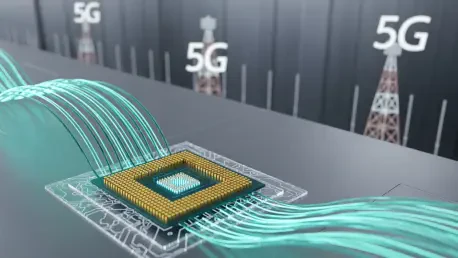

The rapid convergence of high-speed 5G telecommunications and advanced semiconductor architecture has redefined the possibilities for localized data processing across decentralized networks. By moving intelligence from distant cloud servers to the immediate edge, organizations can now achieve near-instantaneous response times that were previously impossible due to latency constraints. The partnership between Latvian Mobile Telephone and Infineon Technologies serves as a primary example of how the industry is addressing the inherent complexity of this transition. Historically, deploying artificial intelligence at the network periphery required a fragmented array of hardware and software components that often lacked interoperability. This collaboration sought to eliminate these barriers by providing a unified framework that combined robust connectivity with high-performance silicon. This approach allowed developers to focus on application logic rather than the underlying infrastructure.
Technological Synergy: Infrastructure and Hardware
Hardware Integration: The Silicon Foundation
Infineon’s contribution to this ecosystem centers on its advanced microcontroller families, such as the PSoC and AURIX lines, which now feature dedicated hardware acceleration for neural networks. These chips are designed to handle complex inferencing tasks locally, significantly reducing the amount of data that must be transmitted to a central hub. By integrating AI-capable processing units directly into the silicon, the partnership ensured that edge devices could maintain high performance while operating within strict power envelopes. This technical achievement was critical for battery-operated sensors and remote industrial equipment that required long operational lifespans without frequent maintenance. Furthermore, the inclusion of hardware-based security features ensured that the data processed at the edge remained protected from physical and digital tampering. The availability of standardized development tools further lowered the entry barrier for engineers looking to implement sophisticated machine learning models in compact formats.
Connectivity Layer: Driving Real-Time Data
LMT provided the necessary communication fabric to support these intelligent devices, leveraging its 5G infrastructure to enable seamless data exchange across vast distances. The role of the telecommunications provider extended beyond simple signal transmission; it involved the creation of dedicated network slices that prioritized low-latency traffic for critical AI applications. In cross-border scenarios, this connectivity was essential for maintaining the operational continuity of autonomous systems as they moved between different network jurisdictions. By integrating Infineon’s hardware with LMT’s 5G capabilities, the two companies created a synchronized environment where data could be offloaded or synchronized in real time. This synergy was particularly effective for mobile edge computing, where the physical location of the device changed frequently but the requirement for high-bandwidth connectivity remained constant. The result was a reliable link that transformed isolated sensors into a cohesive, intelligent network.
Sector Implementation: Industrial and Defense
Security Standards: Hardened Edge Solutions
The implementation of these technologies was particularly impactful in the defense and public safety sectors, where reliability and security were non-negotiable requirements. In these environments, the ability to process visual and acoustic data locally allowed for faster situational awareness during critical missions. LMT and Infineon demonstrated how hardened hardware, combined with encrypted 5G channels, could support drone swarms and remote monitoring arrays in regions with challenging electronic conditions. Because the AI processing occurred on the device itself, the systems remained functional even when the primary communication link was temporarily degraded or jammed. This local autonomy provided a strategic advantage by ensuring that decision-making processes were not entirely dependent on external connectivity. Moreover, the modular nature of the integrated solution meant that hardware could be easily updated or replaced to meet the evolving security demands of military and governmental organizations.
Strategic Outcomes: Lessons for the Global Industry
The final results of the collaboration between LMT and Infineon proved that the democratization of edge intelligence was achievable through deliberate hardware and software alignment. The project successfully demonstrated that standardized development kits and pre-integrated communication modules significantly reduced the time to market for new products. Developers who utilized these tools reported a substantial decrease in the effort required to optimize neural networks for low-power microcontrollers. By establishing a clear blueprint for connected edge AI, the partnership provided a scalable model that was adopted by other industries, including smart city planning and autonomous logistics. The move toward a more integrated stack simplified the procurement process and allowed for more predictable maintenance cycles. Ultimately, the initiative highlighted the importance of cross-industry cooperation in overcoming the technical hurdles of the modern digital landscape and established a new benchmark for how connectivity and silicon can work in tandem.







