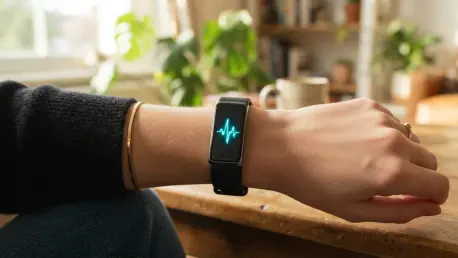

Transitioning to the six-G frontier will provide one-centimeter positioning accuracy, which is essential for the next generation of surgical robotics. This technological leap marks a definitive turning point for the Medical Internet of Things (IoMT), a sophisticated ecosystem where physical medical devices and digital networks converge to redefine the boundaries of patient care. Currently, this digital infrastructure integrates everything from simple wearable fitness trackers to high-stakes implanted sensors and smart hospital furniture, creating a continuous flow of health data. As the healthcare industry shifts toward a more proactive, predictive model, the IoMT functions as the critical backbone, allowing for real-time monitoring and highly informed clinical interventions. By bridging the gap between physical health events and digital analysis, this network reduces the lag in diagnosis and treatment, ultimately transforming the hospital from a reactive institution into an intelligent environment that prioritizes the patient experience.
Market Dynamics: The Economic Impact of Telemedicine
The global healthcare market is experiencing an unprecedented financial expansion, with current projections suggesting the sector will exceed hundreds of billions of dollars by 2028. This surge is driven by a fundamental shift in patient behavior and provider priorities, where remote monitoring has moved from a niche convenience to a primary standard of care. This transition was heavily influenced by the immediate necessity for digital health solutions during previous global health crises, but its staying power stems from tangible operational benefits. Hospitals are seeing reduced readmission rates and lower overhead costs as patients manage chronic conditions from the comfort of home using connected peripherals. The financial momentum is also attracting massive venture capital, which in turn accelerates the development of more specialized sensors designed for specific pathologies, ensuring that the market remains both diverse and highly competitive as we approach the end of the decade.
Despite the optimistic financial outlook, the industry is currently grappling with the challenges of rapid technological scaling. The speed at which new IoMT devices are entering the consumer and clinical markets has occasionally outpaced the development of robust, universal infrastructure. This discrepancy often leads to significant gaps in data integrity and system interoperability, where a device from one manufacturer may not communicate effectively with a hospital’s central management software. Addressing these foundational issues is paramount for long-term sustainability, as the proliferation of connected health tools must be matched by rigorous safety standards and reliable data verification. Developers are increasingly focused on building unified platforms that can handle the massive influx of telemetry without compromising the stability of the overall network. Ensuring that these systems are resilient against technical failure is essential for maintaining trust in a digital-first medical model.
Communication Standards: Balancing Performance and Power
Effective communication within the IoMT requires a nuanced selection of protocols tailored to specific clinical environments and hardware limitations. Bluetooth Low Energy (BLE) remains the cornerstone for portable, battery-operated devices such as continuous glucose monitors and pulse oximeters, offering a balance between reliable data transmission and low energy consumption. In contrast, hospital settings often utilize Zigbee for its superior mesh networking capabilities, which allow for the seamless scaling of thousands of sensors across large physical campuses without a single point of failure. This specialized selection process ensures that every device, whether it is a simple step counter or a complex cardiac monitor, operates within its optimal power envelope. By matching the communication standard to the application, providers can maintain constant connectivity while minimizing the need for frequent battery replacements, which is critical for devices that must remain operational for many years.
Looking beyond current capabilities, the ongoing transition toward six-G networks is poised to unlock revolutionary applications that were once relegated to science fiction. These high-speed, low-latency networks facilitate the use of holographic healthcare and ultra-precise telesurgery, where surgeons can manipulate robotic tools from thousands of miles away with zero perceived delay. The extreme positioning accuracy offered by these next-generation cellular standards is vital for tracking assets and monitoring patients within digital twin hospitals—virtual replicas of physical facilities used to optimize operational flow and predict patient outcomes. As these networks become more prevalent, the ability to transmit massive volumes of high-definition imaging data in real time will allow for instant specialist consultations across borders. This shift toward high-bandwidth infrastructure is not just an incremental improvement; it is a fundamental reconfiguration of how medical expertise is applied.
Edge Computing: Decentralizing Medical Data Processing
The traditional centralized cloud model is rapidly giving way to a more efficient four-layer architecture that prioritizes speed and efficiency. At the center of this evolution is edge computing, a strategy that involves processing medical data locally on the device or at a nearby gateway rather than sending every packet of information to a distant server. By performing analysis at the edge of the network, healthcare systems can drastically reduce the latency involved in critical decision-making processes. For instance, an IoMT sensor detecting a sudden cardiac arrhythmia can trigger an immediate alert for hospital staff in milliseconds, potentially saving a life before the data could even be uploaded to a cloud database. This localized processing capability is becoming increasingly important as the volume of medical data grows, preventing network congestion and ensuring that the most vital clinical signals are prioritized over routine health logging and other administrative tasks.
Beyond performance benefits, the implementation of edge computing offers a substantial advantage for the preservation of patient privacy. Because the majority of raw medical data is analyzed locally, only the essential, de-identified insights need to be transmitted across external networks to the cloud. This approach significantly shrinks the potential attack surface available to cybercriminals, as sensitive personal health information remains confined to the local hardware or secure hospital gateway. This architectural design aligns with the growing demand for data sovereignty, where patients and providers maintain tighter control over their digital footprints. Furthermore, by applying machine learning models directly on the device, the system can provide personalized health feedback without ever exposing the underlying biometric data to third-party services. This decentralized model represents a proactive step toward building a more secure and trust-based relationship between medical technology and its many users.
Security Frameworks: Defending Against Quantum Threats
The impending arrival of mature quantum computing presents a unique set of challenges for long-term medical data protection. One of the most pressing concerns is the harvest-now, decrypt-later tactic, where malicious actors steal encrypted genomic or clinical records today with the intention of unlocking them once quantum processing power becomes available. To mitigate this threat, the healthcare industry is actively migrating toward Post-Quantum Cryptography (PQC), which utilizes complex mathematical problems that are resistant to quantum-level attacks. This transition is particularly critical for data that remains sensitive over a patient’s entire lifetime, such as genetic predispositions or chronic illness history. By implementing quantum-resistant algorithms now, organizations can ensure that the health data collected today remains secure for decades to come. This proactive stance is necessary because the cost of a future data breach would be catastrophic for the reputation of the healthcare provider.
While Post-Quantum Cryptography focuses on software-level defense, Quantum Key Distribution (QKD) offers a hardware-centric solution that leverages the laws of physics to secure communications. By using the properties of quantum states to generate and share cryptographic keys, QKD provides a method of data transfer that is theoretically immune to eavesdropping. Currently, the deployment of this technology is limited by its high cost and the requirement for specialized fiber-optic infrastructure, often exceeding hundreds of thousands of dollars per link. Consequently, its application is presently reserved for high-value scenarios, such as the secure transfer of research data between major medical centers or government health agencies. However, as the technology matures and becomes more accessible, it is expected to play a central role in the core infrastructure of the global health network. This dual approach, combining PQC with QKD, creates a formidable defense against the computational threats of the next several decades.
Strategic Evolution: Moving Toward Adaptive Healthcare
Achieving the full potential of the IoMT requires the industry to move past the current fragmentation of hardware and software platforms. One of the most significant hurdles remains the lack of universal interoperability, as devices from different manufacturers often utilize proprietary data formats that do not easily integrate with standard Electronic Health Records. Establishing global standards for data exchange is critical to ensuring that a patient’s health information can follow them across different care settings without manual intervention. Simultaneously, researchers are making strides in energy harvesting technologies, which aim to power sensors using body heat, movement, or biochemical energy. This innovation is particularly vital for implanted devices, as it could eliminate the need for invasive procedures to replace depleted batteries. By solving these physical and digital challenges, the industry can transition from a collection of gadgets to a truly cohesive and intelligent healthcare infrastructure.
The integration of AI-driven adaptive architectures and secure digital networks transformed the healthcare landscape into a more resilient and responsive system. By 2030, these advancements allowed clinical environments to automatically reconfigure their security settings based on a patient’s immediate medical needs, prioritizing life-saving data transmission during critical emergencies. The successful implementation of quantum-resistant cryptography and edge-based intelligence ensured that patient privacy remained intact even as data volumes expanded exponentially. Moving forward, stakeholders should focus on the continued development of standardized communication protocols and the wide-scale adoption of privacy-preserving AI models to maintain this momentum. The evolution of the IoMT proved that digital innovation could fundamentally improve global health outcomes while upholding the highest ethical standards. Practical next steps for providers included upgrading legacy infrastructure to support six-G capabilities and training personnel for automated systems.