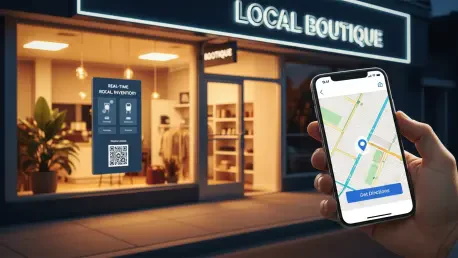

The landscape of local commerce has undergone a radical transformation where digital ecosystems now dictate the success of even the smallest neighborhood storefronts. Today, local marketing is no longer just about appearing in search results; it involves crafting a seamless journey that effectively bridges the gap between a smartphone screen and a physical doorstep. Small and medium-sized enterprises have reached a pivotal moment where they can finally compete with global giants by utilizing hyper-local relevance and highly personalized user experiences. This shift is driven by a consumer base that values both the convenience of modern technology and the inherent authenticity of community-based businesses. By integrating mobile-first infrastructure with sophisticated data analytics, local shops are transforming simple digital interactions into deep, lasting connections that foster significant growth. The modern storefront is essentially a hybrid entity where technical precision meets traditional service, creating a robust foundation for long-term survival in an increasingly competitive marketplace.
Establishing a Technical and Local Foundation
Optimizing for Mobile Discovery: Infrastructure and Experience
As mobile devices remain the primary tool for immediate local discovery, businesses must prioritize a mobile-first infrastructure to maintain a competitive edge. A company’s technical health is now measured by lightning-fast load times and navigation that feels intuitive to a user on the move. In this environment, a frictionless mobile interface is not merely a convenience but a fundamental requirement to prevent potential customers from abandoning a site in favor of a competitor’s more responsive page. Technical optimization extends beyond simple aesthetics, involving the implementation of light-weight coding and high-performance hosting environments that ensure every button click is met with an instantaneous response. When a local business invests in a robust mobile foundation, it sends a clear signal of professional reliability to the consumer. This technical stability serves as the bedrock upon which all other digital marketing strategies are built, ensuring that the first point of contact is consistently positive and efficient.
Beyond speed, the actual utility of a mobile site determines whether a user converts into a physical visitor or continues their search elsewhere. Features such as one-click directions, integrated booking systems, and live inventory updates must be accessible within seconds to satisfy the high expectations of current consumers. A failure to provide this level of technical integration often results in a significant loss of potential revenue, as modern shoppers prioritize efficiency above all else. Furthermore, local businesses must ensure that their mobile platforms are fully compatible with emerging technologies like voice-activated search and augmented reality overlays. By focusing on the user’s mobile journey from the initial discovery phase to the final interaction, enterprises can create a sense of trust and reliability that is difficult for larger corporations to replicate. A well-maintained technical foundation ensures that the digital gateway to the business is always open and functional, welcoming the community at any hour.
Dominating Hyper-Local Search: Authority and Community
Success in the current market requires moving beyond generic search engine optimization toward a high-precision, hyper-local strategy that captures intent-driven traffic. This involves the meticulous management of digital footprints to ensure that a company’s Name, Address, and Phone number are synchronized across every available platform to build algorithmic authority. Active management of business profiles on major search engines and the creation of localized content signal to search algorithms that a business is the most relevant choice for nearby consumers. This consistency prevents consumer confusion and strengthens the brand’s visibility in localized map packs and voice search results. Furthermore, incorporating neighborhood-specific keywords and regional landmarks into the content strategy helps ground the business within its specific geographic context. By focusing on these granular details, local enterprises can dominate their immediate vicinity and rank higher than any global competitor.
The strategy of hyper-local search also relies heavily on building local citations and acquiring high-quality reviews from the immediate community. Search engines prioritize businesses that demonstrate active engagement with their surroundings, making community-focused content a vital component of any digital strategy. Regularly updating social media with localized stories, events, and partnerships further reinforces the brand’s position as a pillar of the community. This holistic approach to search optimization ensures that when a potential customer looks for a specific service nearby, the business appears not just as a choice, but as the obvious solution. Additionally, leveraging local data and geo-specific trends allows business owners to adjust their messaging in real-time to reflect the unique needs of their neighborhood. Ultimately, dominating hyper-local search is about proving relevance and reliability to both the search algorithm and the human beings living within the same zip code.
Scaling with Intelligence and Integration
Automating the Customer Experience: Precision and Efficiency
Artificial intelligence is currently acting as a force multiplier, allowing small marketing teams to operate with the efficiency of a full-scale corporate department. Automated tools and sophisticated chatbots provide immediate fulfillment of consumer intent, answering questions and processing requests at any time of the day or night. Meanwhile, predictive analytics help local business owners understand which specific strategies are driving actual physical traffic to their storefronts, allowing for more informed decision-making. These technologies have democratized high-level marketing, turning complex data sets into actionable steps for any local shop owner, regardless of their technical background. By automating routine tasks, staff are free to focus on providing the high-quality, in-person service that remains the hallmark of local commerce. The integration of these intelligent systems ensures that the business remains responsive and data-driven, creating a seamless operational flow.
Creating a unified digital ecosystem means that every automated tool works in harmony to nurture the customer relationship from the first click to the final sale. By blending organic search efforts with automated email sequences and strategic paid advertisements, businesses create a self-sustaining cycle of engagement. This approach ensures that no lead is lost and every customer interaction is recorded and analyzed for future improvements. Precision targeting in paid advertising allows for the strategic allocation of resources, ensuring that marketing budgets are spent on reaching the most relevant local leads at the most opportune moments. These automated systems also facilitate personalized outreach, making every customer feel recognized and valued without requiring manual intervention from the business owner. In the modern marketplace, this level of technical integration is the key to scaling a local business while maintaining the personal touch that defines entrepreneurship.
Advancing Toward a Proactive Market Strategy: Innovation and Action
The transition toward a fully integrated digital ecosystem provided local businesses with a roadmap for navigating the complexities of the modern marketplace. Those who successfully adopted a mobile-first philosophy and prioritized hyper-local data saw a measurable increase in both foot traffic and digital engagement. It became clear that the most effective strategies were those that treated every online interaction as a precursor to a physical visit, ensuring a cohesive brand experience across all touchpoints. Moving forward, the focus shifted toward refining these automated systems to be even more responsive to fluctuating community needs and micro-trends. Business owners realized that the key to sustained growth laid in the continuous optimization of their digital presence rather than a one-time setup. To remain competitive, the next logical step involved deeper investments in predictive customer behavior modeling and immersive technologies that further blurred the lines.
To maintain this momentum, local enterprises began exploring localized augmented reality advertisements and hyper-targeted geo-fencing to capture consumer attention during the final mile of their journey. The focus moved from broad awareness to precision utility, where a business provided the exact solution a customer needed at the precise moment they were in proximity. Looking ahead, the integration of biometric authentication for loyalty programs and AI-driven inventory forecasting will further streamline the local shopping experience. Businesses that remained agile and willing to experiment with these emerging tools continued to thrive despite the shifting digital landscape. The ultimate goal remained the creation of a frictionless bridge between the digital and physical worlds, ensuring that the local storefront remained an indispensable part of the neighborhood fabric. By staying committed to these technological advancements, small business owners ensured their relevance for years to come.