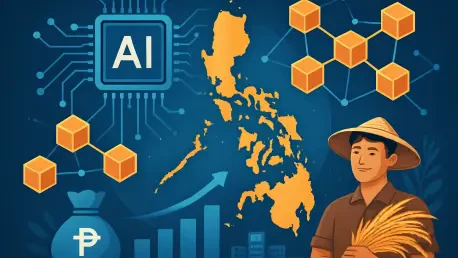

The sudden convergence of decentralized ledgers and generative intelligence at the SMX Convention Center has signaled a profound shift in how the Philippine archipelago approaches its digital future. More than a thousand industry experts, developers, and local creators gathered for the AI & Blockchain Talks: Manila event to witness the transition from speculative digital assets to concrete economic tools that drive national productivity. This gathering, facilitated by Binance Academy and local partner BlockShoals, arrives at a critical juncture where the Philippines is no longer just a consumer of global trends but an active laboratory for technological integration. By focusing on utility rather than hype, the forum established a framework for applying these innovations to solve persistent local challenges in finance and security. The atmosphere reflected a professional maturity, suggesting that volatile experimentation has given way to a strategic era of implementation that could redefine the nation’s growth trajectory for years to come.
Strengthening Economic Infrastructure Through Synergy
The symbiotic relationship between artificial intelligence and blockchain technology represents the bedrock of this new economic paradigm, where each system addresses the inherent weaknesses of the other. While AI provides the immense computational power required to manage complex smart contracts and identify market risks in real time, blockchain offers a decentralized ledger that ensures data integrity and removes the vulnerabilities of centralized computing. A prime example of this integration is the Binance Agent OS, a framework that empowers users to deploy autonomous agents capable of interpreting vast datasets to execute sophisticated trading strategies. This technology does not simply automate existing processes; it transforms them by providing a level of transparency and security that was previously unattainable in centralized systems. By anchoring AI outputs onto a verifiable blockchain, the market can cultivate a digital environment where efficiency is balanced with accountability and retail trust.
The narrative surrounding these advancements has shifted from the fear of human displacement toward a vision of radical empowerment and the unleashing of human potential across diverse sectors. Industry leaders emphasized that the deployment of AI-driven agents is intended to handle grueling, high-volume data processing tasks that often bog down human professionals. By offloading these complexities to intelligent systems, Filipino workers can refocus their efforts on high-level strategic decisions, creative problem-solving, and relationship management. This partnership between man and machine serves as a catalyst for economic growth, as it allows for a more granular analysis of market trends without sacrificing the nuanced judgment of a human expert. The objective is to create a workforce that is not only tech-savvy but also capable of leveraging these tools to produce higher-quality output. In this context, the synergy of AI and blockchain acts as a force multiplier for the local economy.
Mitigating Risks: Democratizing Digital Access
As the Philippine digital economy expands, the rise of automated intelligence has unfortunately paved the way for more sophisticated fraudulent schemes, specifically those involving “guaranteed-return” bots. Experts at the recent Manila forum took a firm stance against these platforms, reminding the public that no algorithm, regardless of its complexity, can predict market volatility with absolute certainty. Any platform or software that promises fixed profits in a decentralized market should be immediately flagged as a categorical risk to personal capital. This warning is particularly vital in a culture where digital literacy is still catching up with the rapid pace of financial innovation. By deconstructing the mechanics of these scams, industry veterans are urging a shift away from speculative greed and toward a more sober understanding of market dynamics. The consensus remains that sustainable wealth is built through education and the use of verifiable tools rather than through shortcuts.
A significant breakthrough in the democratization of technical knowledge has been the use of artificial intelligence to bridge the linguistic gap that often excludes Filipinos from the global digital economy. By translating complex Web3 concepts and technical documentation into Tagalog, AI tools are effectively lowering the barrier to entry for individuals who might find English-centric jargon intimidating. Local content creators have begun leveraging large language models to summarize dense white papers and news articles, providing the community with accessible information in their native tongue. This localization is crucial for fostering an inclusive ecosystem where literacy is not restricted to a small group of experts. As these tools become more refined, they allow for a broader segment of the population to participate with confidence. The ability to access information in a familiar language empowers users to make more informed decisions, which is essential for the long-term success of any emerging technological sector.
Redefining Labor: The Evolution of Workforce Dynamics
The ongoing integration of automated systems is fundamentally altering the traditional career path for junior staff within the Philippine labor market, as many entry-level tasks are now being automated. This technological shift creates a complex dilemma for local employers who must now navigate the choice between hiring young, AI-literate candidates or investing in the upskilling of seasoned professionals who possess institutional knowledge but lack modern technical skills. Observations from the Global AI Council suggest that the role of the entry-level worker is being redefined from a “doer” of manual tasks to an “editor” or “manager” of AI-generated content. This evolution necessitates a rapid overhaul of traditional training programs and curricula to ensure that the next generation is prepared for a hybrid environment. The challenge lies in managing this transition without causing widespread unemployment, as companies seek to balance automation with the necessary human oversight in all workflows.
Despite the anxieties surrounding job security, the prevailing strategy among top-tier firms is to utilize artificial intelligence as a force multiplier that increases the total output per individual. Rather than viewing technology as a reason to reduce headcount, forward-thinking executives are integrating these tools to scale their operations and optimize internal workflows. This augmentation approach allows companies to expand their service offerings and improve client satisfaction without a proportional increase in overhead costs. For instance, creative studios and technical firms are using AI to draft initial models or code, which are then refined by human experts, ensuring a high standard of quality while reducing time-to-market. This methodology not only preserves existing jobs but also makes them more engaging by removing repetitive chores and allowing employees to engage in more meaningful work. The goal is a more productive economy where technology supports human ingenuity for sustainable growth.
National Governance: Achieving Long-Term Stability
The Philippine government took a proactive stance in managing this technological transition by establishing regulatory frameworks that balanced the need for innovation with the necessity of investor protection. The Philippine Securities and Exchange Commission’s Strategic Sandbox initiative served as a primary example of this approach, providing a controlled environment where firms tested new technologies under official oversight. For instance, local entities like BlockShoals Technologies navigated these pre-phase requirements, which prohibited public trading until specific safety and compliance standards were met. This cautious but supportive regulatory environment was designed to prevent the market from becoming a lawless space while still allowing for the development of cutting-edge financial products. By creating clear pathways for compliance, the state signaled to global investors that the country remained a stable jurisdiction for digital innovation, ensuring growth was ethically grounded.
At the national level, legislative efforts such as Senate Bill No. 2563 and the establishment of the National Artificial Intelligence Council under Executive Order 131 demonstrated a commitment to a social safety net. These policies protected workers from the potential downsides of rapid automation by mandating advance notice, retraining programs, and increased separation pay for those displaced by new technologies. This legislative foresight suggested that the Philippines fostered an environment where technological progress did not come at the expense of social stability or individual livelihoods. By prioritizing the welfare of the workforce, the government ensured that the benefits of the digital economy were distributed more equitably across society. Furthermore, these initiatives provided a roadmap for other emerging economies to follow, showing how proactive governance turned disruption into opportunity. The focus remained on creating a resilient economy that adapted to challenges while empowering its citizens.