
Apple’s refusal to require secondary manufacturer accounts for LG and Schneider Electric hardware marks a significant departure from traditional smart home onboarding procedures. This strategic pivot reflects a broader movement toward ecosystem consolidation, where software layers dictate the terms of physical hardware interactions. By the start of 2026, the smart home market had become notoriously fragmented, requiring users to juggle dozens of proprietary apps just to manage basic lighting or security. Apple’s Home Collection addresses this friction by providing a curated suite of accessories that exist entirely within the native Home app environment. This collaboration represents a middle ground between the closed ecosystem of the past and the open standards of the future, ensuring that third-party innovations benefit from first-party security protocols. As homeowners seek more reliable ways to integrate technology into their living spaces, this unified approach suggests that the era of the app for everything is finally coming to an end.
Mechanical Solutions: Physical Innovation in Visual Security
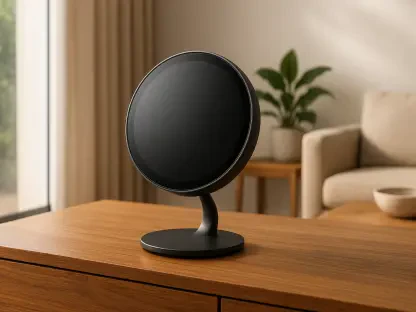
The collaboration with LG Electronics has introduced a new standard for domestic surveillance through 2.5K resolution cameras that prioritize tangible security. A primary highlight of this partnership is the LG Indoor Cam Plug-In, which incorporates a unique mechanical solution to address common privacy anxiety. Rather than relying solely on a software-controlled status light, this device physically tilts its lens downward into its housing when it recognizes that a resident has arrived home. This provides a visible, non-digital confirmation that the camera is no longer monitoring the private space, offering peace of mind that digital indicators often fail to provide. By integrating this hardware-level privacy feature, the system appeals to users who remain skeptical of purely software-based security toggles. This shift toward physical shutters and mechanical indicators represents a maturing of the smart camera market, moving away from purely digital promises toward verifiable hardware reality.
Furthermore, the visual security suite includes a sophisticated video doorbell with a dual-camera setup designed specifically to monitor both human visitors and ground-level deliveries. This configuration effectively eliminates common blind spots found in traditional security hardware, where packages left at the base of a door are often invisible to the primary lens. Outdoor security is similarly enhanced with the introduction of Floodlight and Outdoor Cams that utilize advanced color night vision. This technology replaces the grainy, monochromatic footage typical of older systems with clear, high-definition imagery, ensuring that home perimeters are monitored with exceptional fidelity regardless of lighting conditions. By integrating these devices directly into the Apple Home app, users gain a streamlined view of their property without having to navigate various manufacturer-specific interfaces. This hardware-software synergy ensures that the security suite is both powerful and accessible for the average homeowner.
Frictionless Access: Advancements in Entry and Climate Systems
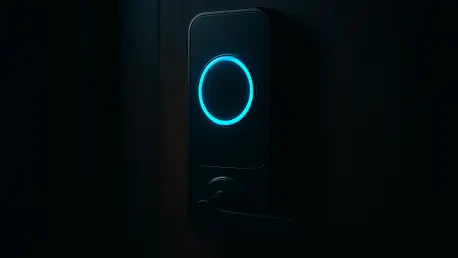
Physical entry into the modern home has been completely reimagined through the LG Smart Deadbolt, which utilizes Ultra Wideband technology for a hands-free experience. Unlike older smart locks that require a user to physically tap their phone or watch against a sensor, Ultra Wideband allows the system to detect the precise proximity and direction of an authorized device. This allows the door to unlock automatically as the person approaches, facilitating a seamless entry process that feels almost invisible. The system is built on the Aliro and Matter standards, ensuring it remains compatible across different platforms and hardware generations. Crucially, the lock is designed for local operation, meaning it stays functional via digital keys even during a complete internet outage. This provides a reliable safety net for users who have traditionally been wary of smart locks failing during network disruptions, while also offering a physical backup key for maximum redundancy.
Climate control has also seen a significant technological upgrade through a partnership with Schneider Electric, focusing on the deployment of adaptive temperature technology. Instead of relying on a single thermostat located in a central hallway, the system uses a network of distributed sensors to monitor heat and humidity across the entire floor plan. This allows the software to adjust heating and cooling based on real-time occupancy data and resident sleep patterns, maximizing both individual comfort and overall energy efficiency. By moving away from static scheduling toward intelligent, data-driven adjustments, the system ensures the home environment is always optimized for the people living inside it. This approach naturally leads to significant energy savings, as the system can identify when specific rooms are unoccupied and adjust the climate accordingly. The integration of Schneider Electric’s industrial expertise with Apple’s user-centric software design creates a climate system that is both highly technical and incredibly simple to manage.
Privacy Standards: Edge Computing and Data Sovereignty
In an era where data sovereignty is a major concern for the modern consumer, Apple is positioning privacy as the core value proposition of its Home Collection. By utilizing edge computing, sensitive tasks such as facial recognition and lock triggers are processed locally on a home hub, such as an Apple TV 4K, rather than being sent to external corporate servers. This approach ensures that personal biometric data and activity logs stay within the walls of the home, unreachable by third-party advertisers or unauthorized entities. Technology analysts increasingly view this privacy by design model as a necessary evolution for the industry, moving away from viewing security as a secondary feature and toward it being a foundational requirement. This local processing also reduces latency, ensuring that automation happens instantly without waiting for a cloud handshake. This commitment to local intelligence marks a significant turning point in how smart devices interact with the personal lives of their owners.
To maintain trust, especially following various privacy controversies involving smart home manufacturers in previous years, Apple has implemented strict end-to-end encryption for all data handled through its Home app. This means that neither LG, Schneider Electric, nor Apple itself can access camera footage or private home logs without the user’s explicit authorization. Video history is managed through iCloud+ using Private Cloud Compute, which allows for advanced AI searches and descriptions while keeping the raw data inaccessible to third parties. This security wrapper ensures that even when using hardware from external partners, the user’s digital footprint remains siloed and protected against data mining. For many users, this encryption layer is the deciding factor in adopting a smart home system, as it provides a level of protection that individual manufacturers often cannot provide on their own. By acting as a secure gateway, the system establishes a new baseline for how domestic data is protected.
Market Dynamics: Pricing and Global Regulatory Landscapes
The Apple Home Collection is clearly positioned as a premium offering in the marketplace, with price points reflecting the high-end hardware specifications and integrated security features. For example, the entry-level indoor camera starts at approximately two hundred dollars, while more complex devices like the floodlight camera and smart deadbolt reach significantly higher price tiers. This reflects a strategy aimed at consumers who are willing to pay a premium for a frictionless and highly secure lifestyle. By tying video storage and advanced AI features to existing iCloud+ subscriptions, Apple also reduces subscription fatigue, allowing users to consolidate their monthly costs into a single ecosystem. This financial model benefits both the manufacturer and the consumer, as it provides a predictable revenue stream while offering the user a more cohesive value proposition than paying for multiple disparate cloud services from different brands.
However, the rollout of this advanced collection is currently restricted by geographic and regulatory factors that complicate global expansion. Initial availability is limited to the United States and Canada, with a partial launch scheduled for the United Kingdom later in the year. Notably, the European Union has been excluded from the early phase due to ongoing regulatory friction regarding the Digital Markets Act and local privacy standards. This delay highlights the challenges of launching sophisticated, AI-driven home systems in a complex global regulatory environment, even as the hardware itself represents a significant leap forward in smart home technology. For international consumers, this staged rollout means that the full benefits of the Home Collection may not be realized until local legal frameworks and technical requirements are fully harmonized. These hurdles demonstrate that even the most advanced technology must navigate a thicket of international laws before becoming a global standard.
Strategic Legacy: Evaluating the Shift in Smart Living
Apple’s 2026 Home Collection established a new precedent for how hardware giants and software leaders negotiated user data rights. Homeowners who adopted these integrated systems prioritized the reduction of digital noise and the strengthening of physical privacy boundaries. To maximize the utility of these devices, users regularly updated their home hubs and ensured that their network infrastructure supported the high bandwidth required for 2.5K video streaming. Moving forward, the industry watched as this model influenced product roadmaps from 2026 to 2028 and beyond, proving that privacy could successfully coexist with convenience. The transition toward locally processed AI and mechanical privacy shutters represented a logical step for an audience that grew weary of perpetual surveillance. By choosing hardware that lacked a mandatory cloud umbilical cord, early adopters secured their digital sovereignty while enjoying the benefits of a modern, automated household.
The success of this initiative relied on the consumer’s willingness to invest in a unified ecosystem rather than chasing the lowest price point for individual gadgets. By the end of the initial rollout, it was clear that the partnership model allowed for faster innovation in physical design while maintaining a consistent security posture. Homeowners were encouraged to audit their smart home configurations, moving away from legacy devices that required separate manufacturer accounts and toward those that adhered to unified privacy standards. This shift suggested that the future of smart living would be defined by who controls the encryption keys rather than who builds the plastic housing. As the market continued to mature, the lessons learned from this collection informed a broader movement toward ethical technology in the home. Those who embraced this change found that a more secure home was not just about better locks, but about having absolute control over the data generated within their most private spaces.