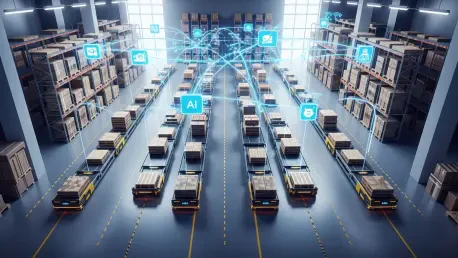

The traditional image of a warehouse defined by heavy machinery and manual labor is rapidly fading as logistics giants pivot toward intelligent, software-driven ecosystems. While the distinctive red forklift has long served as a cornerstone of industrial material handling, the current marketplace demands more than just robust steel and hydraulic power. Modern logistics providers are now forced to navigate a landscape where rapid delivery windows and extreme operational complexity are the standard requirements rather than the exceptions. This shift has catalyzed a fundamental transformation, moving the focus away from individual machines and toward the total orchestration of the warehouse environment. By prioritizing safety, energy management, and comprehensive operational efficiency, the industry is redefining what it means to move goods in a globalized economy. This evolution requires a sophisticated blend of hardware and internal software capabilities to ensure that every movement within a facility is calculated, safe, and optimized for maximum output.
Global Synergy and Advanced Intelligence
Harnessing Cross-Border Innovation: The Twin Radical Approach
To maintain a competitive edge in a world of accelerating technological change, the industry is increasingly adopting a twin radical approach to research and development. This strategy effectively marries the rigorous engineering and safety standards historically associated with European manufacturing with the high-speed innovation cycles found in the Asian tech sectors. By operating distributed R&D centers across these distinct regions, the organization benefits from a continuous, twenty-four-hour innovation loop that ensures progress never halts. This globalized development framework allows for the rapid testing of new concepts in diverse markets before they are scaled globally, providing a unique vantage point on emerging logistics trends. Such a dual-geographic presence ensures that the resulting solutions are not only mechanically sound but also digitally agile enough to meet the demands of the most fast-paced e-commerce environments. This collaborative model facilitates a cross-pollination of ideas that keeps the technological roadmap focused on both stability and groundbreaking speed.
Strategic Tech Alliances: Merging Physical and Digital Worlds
A pivotal element of this digital transformation is the integration of advanced artificial intelligence through strategic partnerships with leading technology firms like Nvidia. By utilizing the Omniverse platform, the company is developing sophisticated digital twins of entire warehouse operations to simulate complex scenarios without interrupting physical workflows. These high-fidelity simulations allow autonomous vehicles and robotic systems to learn and adapt to their environments in a virtual space before they ever touch a real-world warehouse floor. This methodology significantly reduces the risks associated with deploying new automation technologies and accelerates the time-to-market for intelligent logistics solutions. Furthermore, these digital environments enable real-time adjustments to warehouse layouts and traffic patterns, ensuring that the interplay between human workers and automated systems remains seamless. Through these alliances, the company is effectively bridging the gap between physical machinery and the cognitive capabilities of modern AI, turning every forklift into a data-gathering node.
Shaping the Future of Supply Chain Management
Moving Toward Productivity-as-a-Service: The New Commercial Model
The commercial landscape of material handling is undergoing a significant shift as businesses move away from traditional asset ownership toward service-based models. Instead of capital-intensive investments in a fleet of vehicles, many companies are now opting for outcome-oriented agreements that guarantee specific performance metrics. This Productivity-as-a-Service approach allows warehouse operators to pay for actual throughput, such as a set number of successful picks or a specific volume of goods moved per hour. By shifting the responsibility of maintenance, software updates, and fleet optimization to the provider, businesses can focus their internal resources on their core competencies and customer service. This model also provides much-needed financial flexibility, as costs become operational rather than capital expenditures, making it easier to scale logistics capacity up or down in response to seasonal fluctuations. As this trend matures, the relationship between equipment providers and their clients is evolving into a long-term partnership focused on continuous improvement and shared operational goals.
Digital Resilience: Strategies for Long-Term Operational Success
The focus of logistics management ultimately shifted toward building digital resilience and creating environments where humans and robots worked in perfect synergy. Industry leaders recognized that the high complexity of global supply chains necessitated a move toward fully orchestrated systems that could adapt to unforeseen disruptions in real-time. By moving beyond the limitations of external software and developing deep in-house expertise, the sector successfully streamlined the integration of AI across all operational levels. To prepare for the next phase of industrial growth, companies began prioritizing the upskilling of their workforces to manage these advanced digital platforms effectively. Future considerations centered on the further integration of sustainable energy solutions into the automated fleet to minimize the environmental footprint of large-scale distribution centers. These steps ensured that the transition to intelligent logistics was not just a technological upgrade but a sustainable business strategy. The industry moved toward a future where data-driven insights served as the primary catalyst for achieving unprecedented levels of productivity and safety.